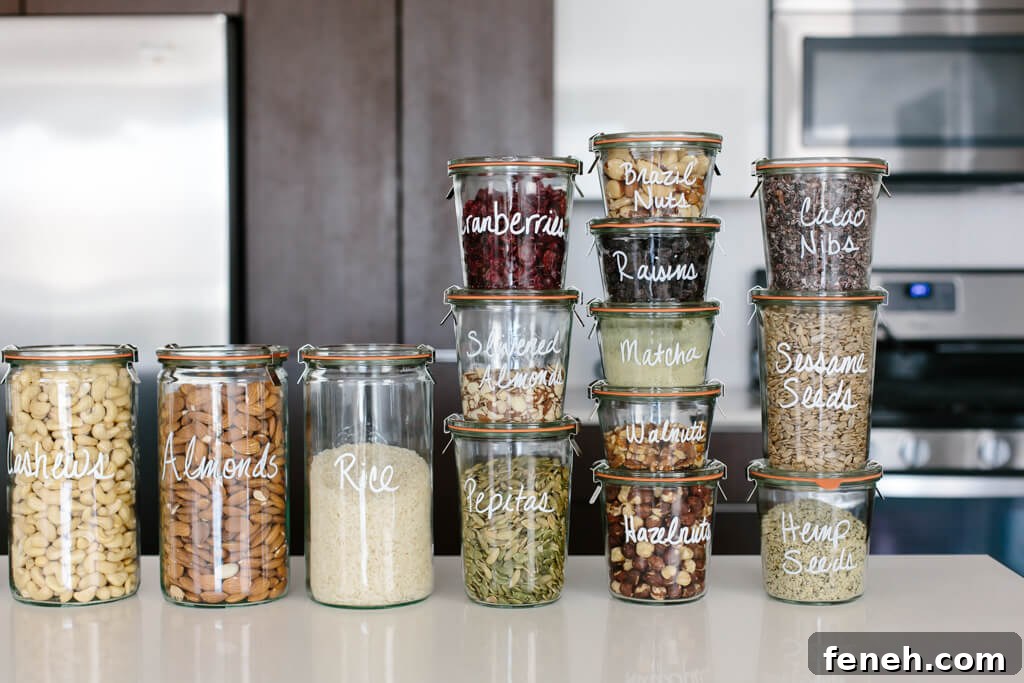
Create a healthy pantry and find ingredients quickly—even in a small space—using glass containers and simple organization ideas. Personalize jars with handwritten labels using a water-based paint pen for a tidy, unified look.
Moving forced me to sort through everything, which can feel overwhelming, but it ended up being liberating. Clearing clutter created more “white space” in my home and offered a calmer, more intentional environment. Over time my style has shifted toward minimalist, warm-modern, Scandinavian-inspired, and rustic SoCal neutrals—clean, white spaces make me happy.
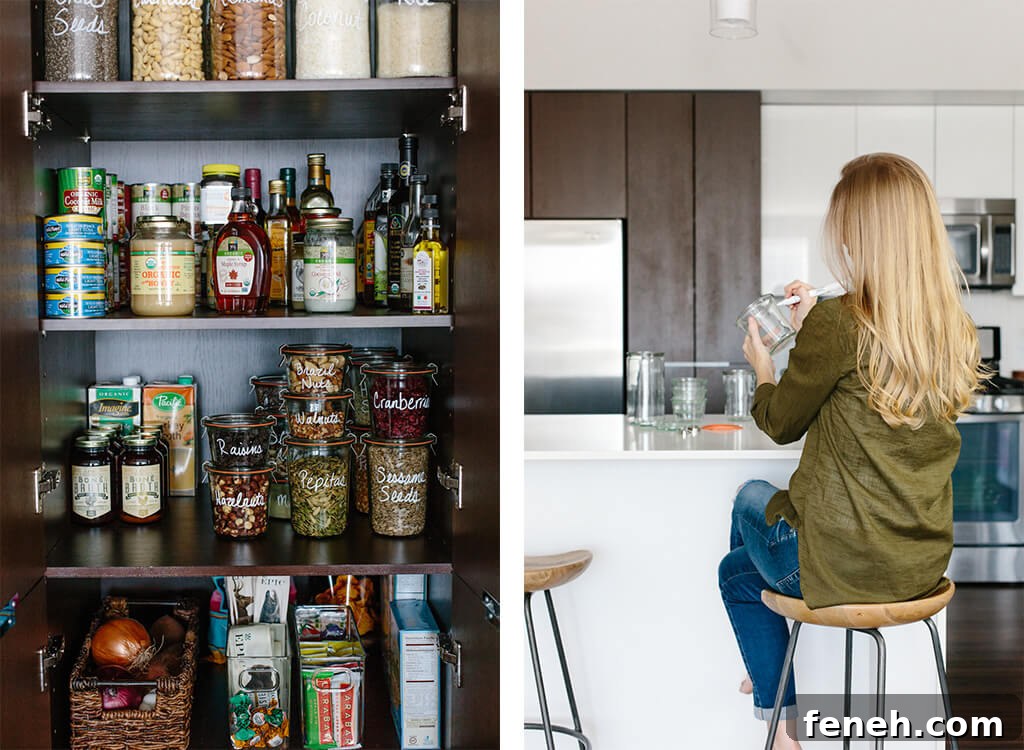
When I recently relocated I donated or discarded many items. As a foodie who spends most of my time in the kitchen, I prioritized setting up the pantry first. Years ago I stored dried goods in BPA-free plastic containers, but research shows that some BPA-free plastics still pose risks. This time I replaced plastic with glass for safety and longevity.
Watch my pantry organization video by clicking below:
And subscribe to my YouTube Channel for weekly cooking videos!
Pantry organization: moving everything from plastic to glass
My primary goal for this pantry makeover was to eliminate plastic. I wanted bulk goods and raw ingredients stored in materials that feel safer and more durable. I also discovered that many plastic containers weren’t as airtight as advertised—several batches of nuts went rancid in old pop-top containers.
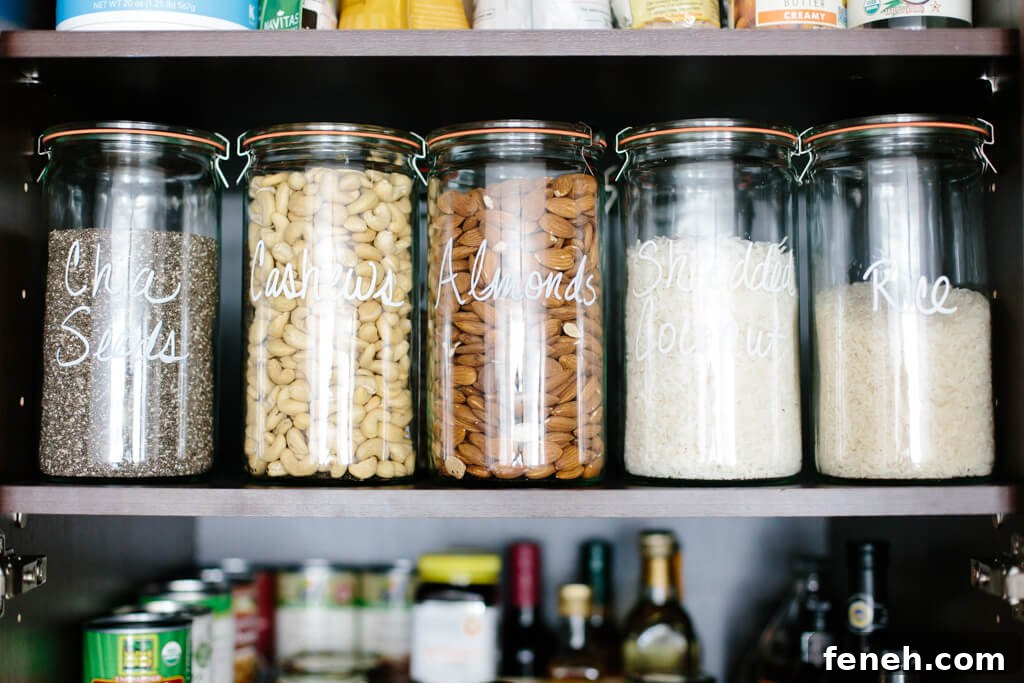
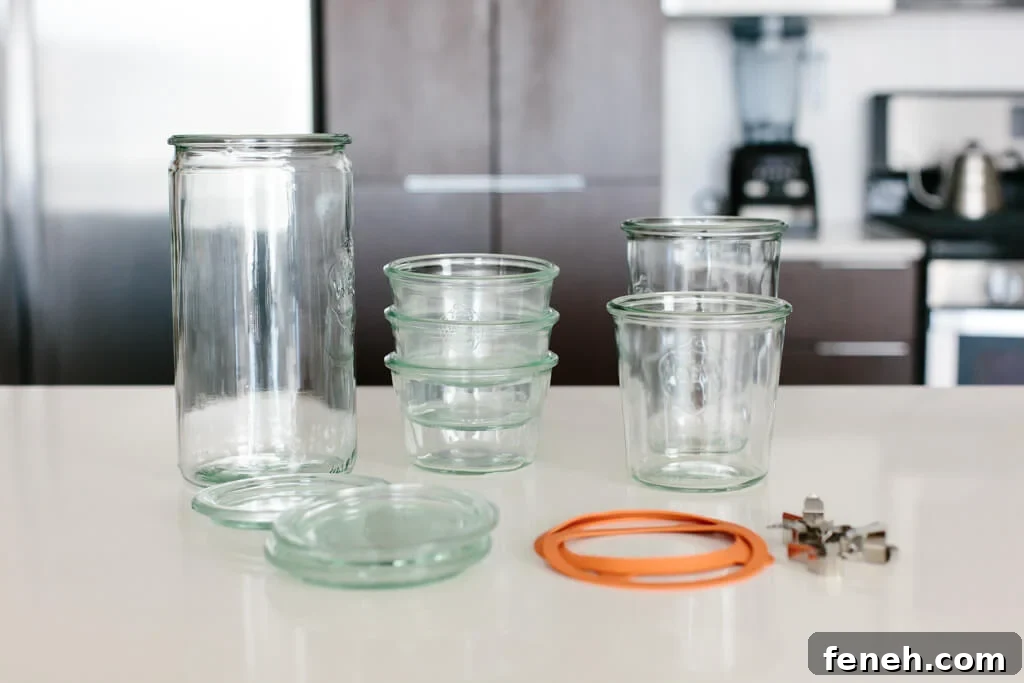
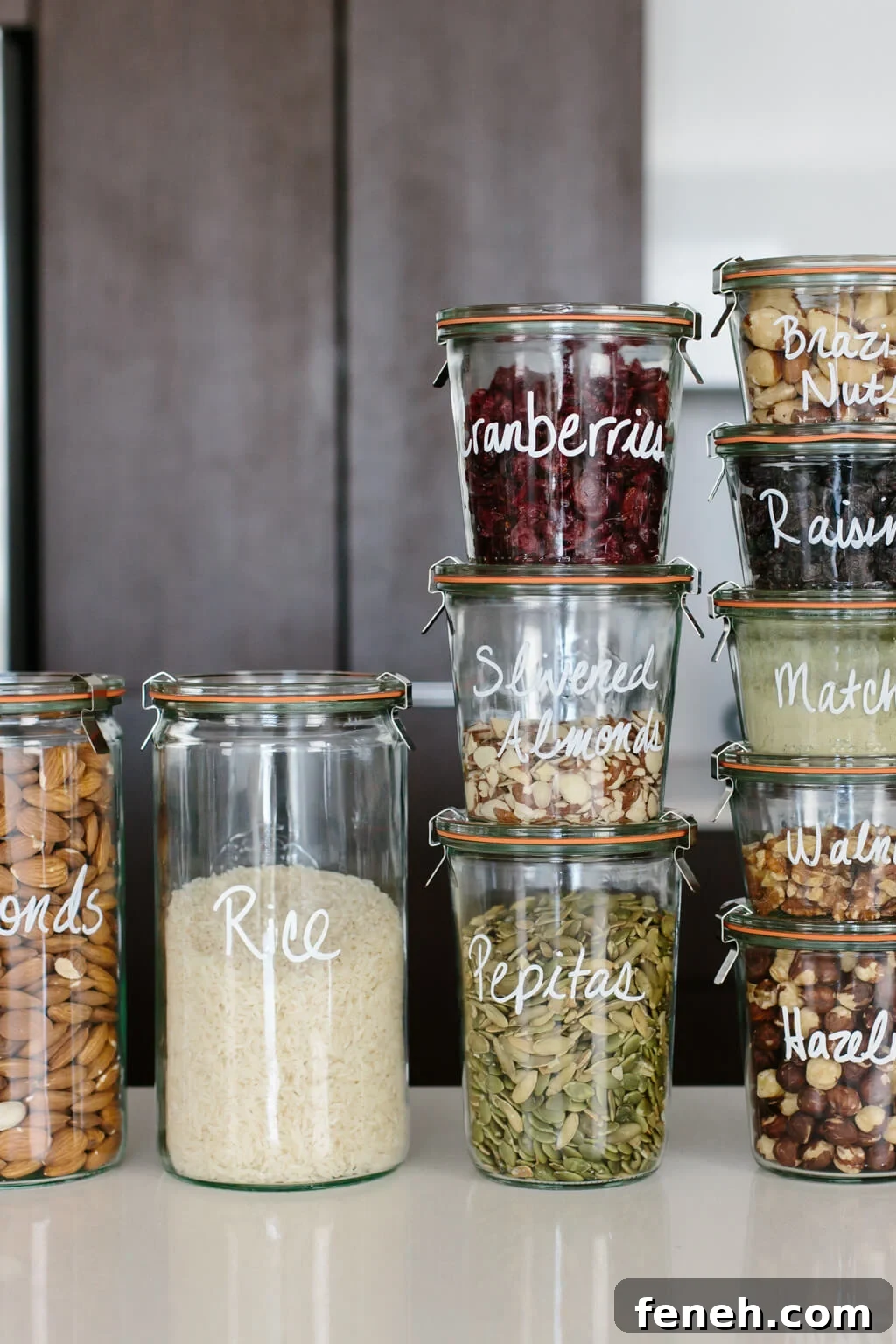
I switched to Weck glass jars and love them. They’re practical and cost-effective. The cylindrical jars are large enough for bulk ingredients yet easy to grab with one hand. With rubber gaskets and metal clips, the lids create a reliable airtight seal that keeps food fresher longer.
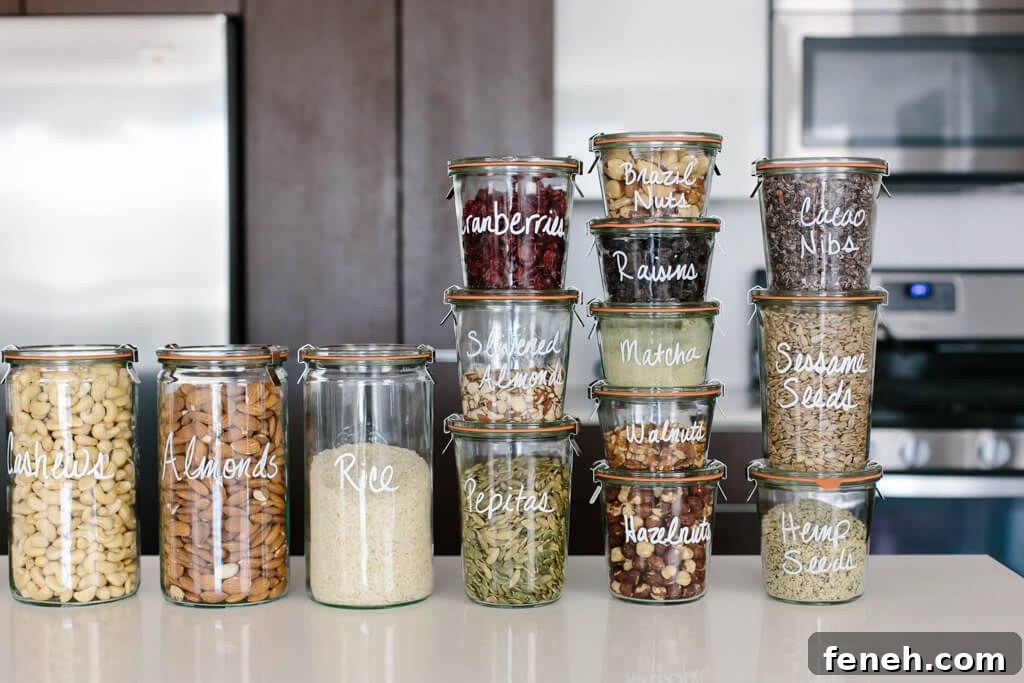
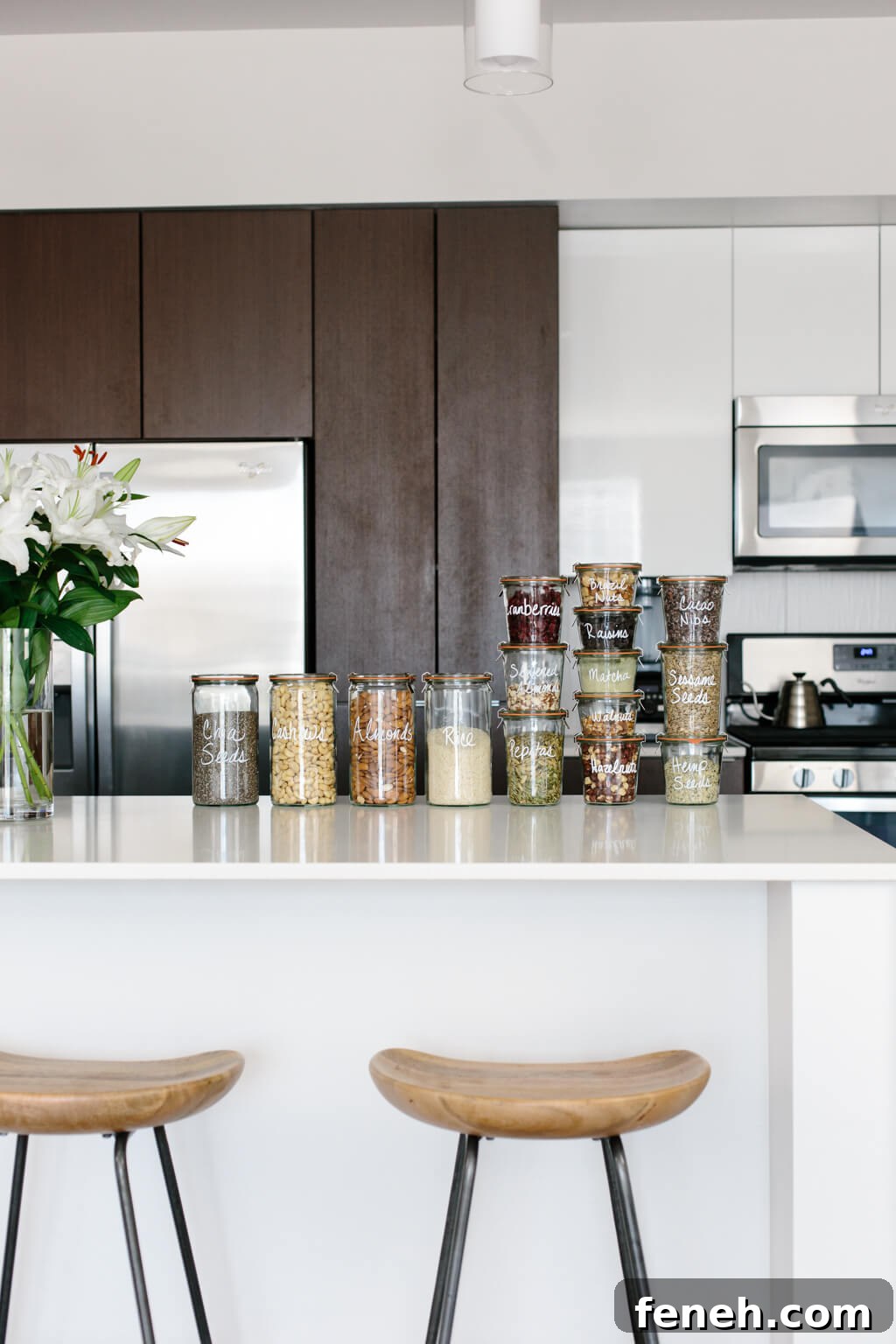
For consistency I used four Weck jar sizes that share the same lid diameter. This creates a uniform row of cylindrical jars and allows the tapered mold jars to stack neatly, maximizing vertical space.
Pantry jars I used:
- 1.5 Liter Cylindrical Jar (974)
- 3/4 Liter Mold Jar (743)
- 1/5 Liter Mold Jar (742)
- 1/4 Liter Mold Jar (741)
These jars are dishwasher-safe, which makes swapping contents or deep-cleaning simple. I use the glass lids and gaskets for guaranteed airtight storage of nuts, seeds, and berries, though cork lids are an aesthetic alternative.
Large countertop jars for flours
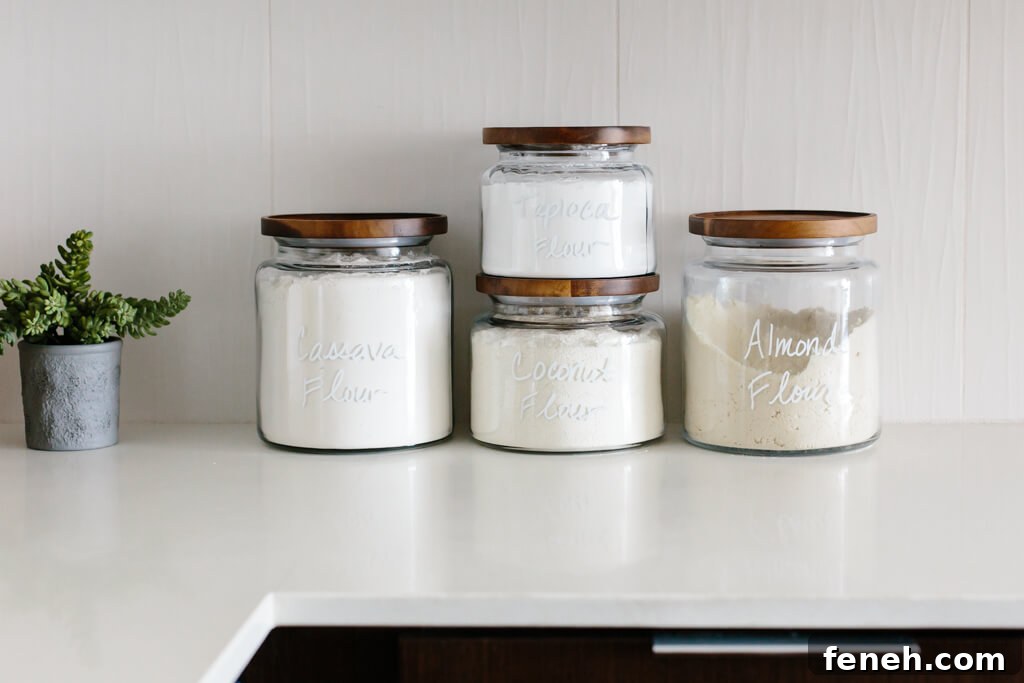
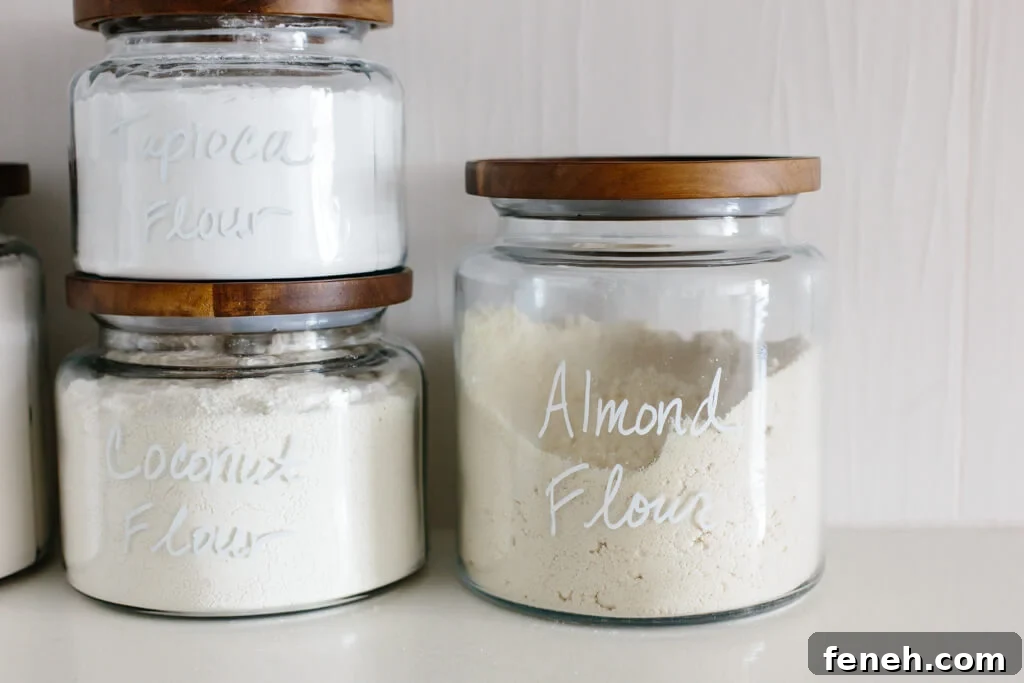
As someone who bakes gluten-free, I keep several flours—almond, tapioca, coconut, cassava—on hand. I chose large Montana jars with acacia wood lids for these flours because the wide openings make scooping easy, and the wood lids complement my kitchen’s wood tones.
Countertop jars I used:
- Anchor Hocking Montana Jars with acacia wood lids (48 oz, 64 oz and 94 oz)
These jars are large, attractive, and functional—perfect for frequently used baking ingredients that can live on the counter.
Customizing jars with paint markers
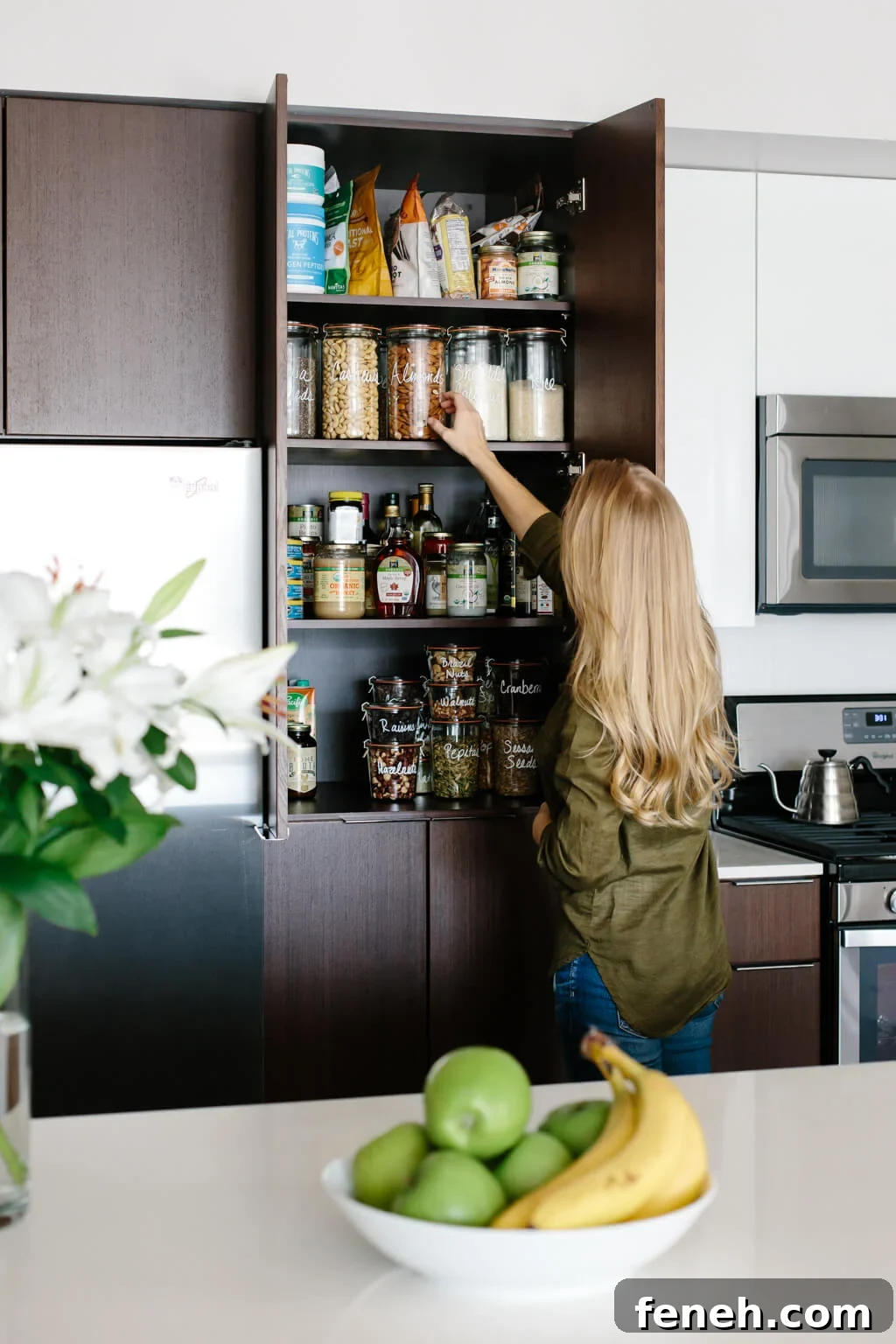
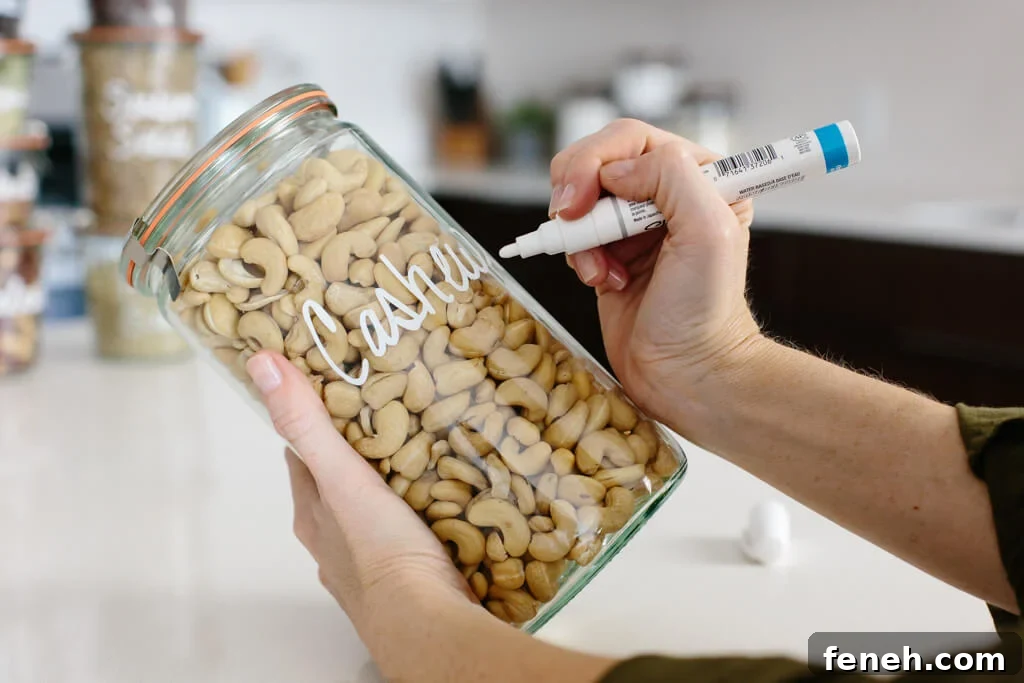
Labeling jars was one of the most enjoyable parts of reorganizing. Handwritten labels make ingredients easy to spot, especially in a dark pantry. I was inspired by similar projects and used a water-based paint marker for a clean, minimal look in white.
Choose a water-based paint marker rather than oil-based. I used a medium tip for legibility, but fine tips work if you prefer smaller lettering. If you make a mistake, wipe it quickly with a paper towel before it dries. Once dry, the ink resists smudging but can be removed later with water and a sponge.
Wood basket and snack containers
I store sweet potatoes, onions, and garlic in a long, narrow wood basket with handles. It slides in and out of a small pantry easily, and adding felt furniture sliders to the bottom prevents shelf scratches. A narrow basket is ideal for compact spaces.
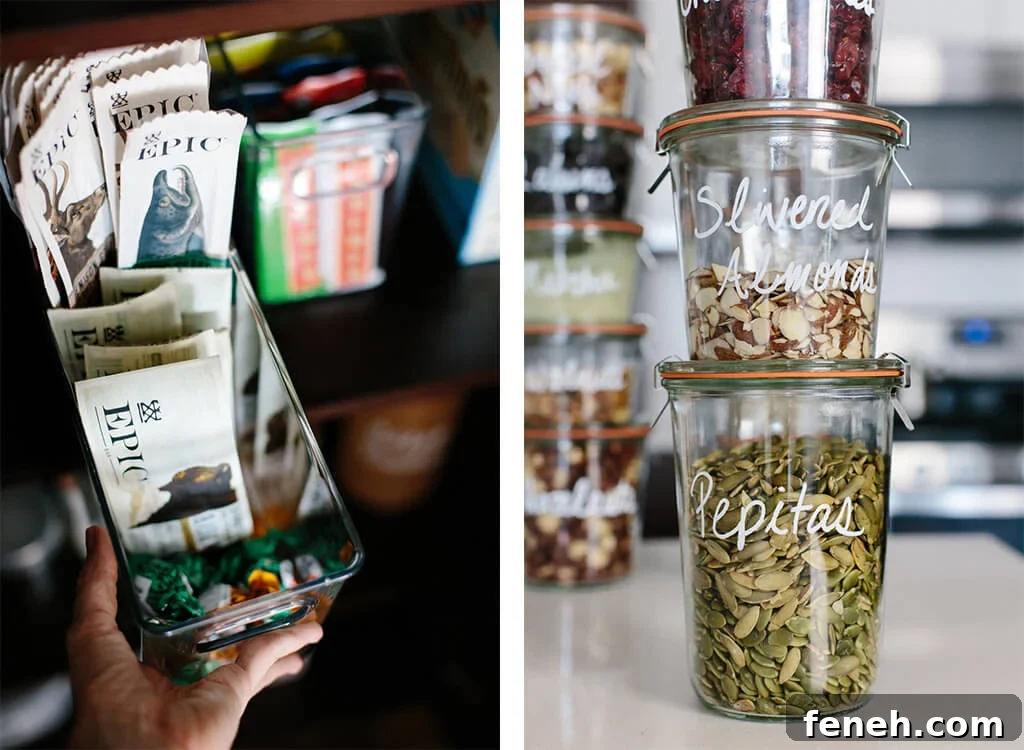
For snacks I chose narrow, handled containers that keep bars and fruit strips upright and easy to access. The compact size helps maintain order and prevents tiny items from getting lost on pantry shelves.
Pantry ingredients and food
A healthy pantry emphasizes whole foods and minimally processed ingredients. Because I avoid potential gluten cross-contamination, I buy sealed bags of staples—cashews, almonds, chia seeds—and transfer them into my glass jars at home.
Fresh pantry items like nuts, seeds, and dried berries are best used within a few months, so avoid overbuying. Eating healthfully isn’t about deprivation, so I keep a selection of snacks I enjoy that use clean ingredients.
Favorite pantry staples, snacks and essentials
- Wild Planet Tuna
- Organic Coconut Oil
- Organic Avocado Oil
- Organic Coconut Milk
- Organic Honey
- Organic Maple Syrup
- Organic Coconut Sugar
- Raw Cacao Powder
- Simply Organic Vanilla Extract
- Organic Apple Cider Vinegar
- Larabars
- Epic Bars
- Alter Eco Organic Truffles
- Vital Proteins Collagen
Kitchen items I use regularly:
- Counter stools that match the kitchen aesthetic
- High-quality blender
- Reliable tea kettle
- Utensil holder
- Knife block
- Wood cutting board
I hope this peek into my pantry offers practical ideas and inspiration for organizing your own space. Thoughtful container choices, consistent labeling, and a focus on fresh ingredients can transform even a small pantry into an efficient, beautiful part of your kitchen. If you’d like more lifestyle or pantry organization videos, I’d love to hear about it in the comments.