This post assumes you already have some experience with sourdough baking. If you’re brand new to sourdough, I recommend starting with Tartine Bread, which inspired the method below. I built my approach off the Basic Country Loaf from Tartine and used King Arthur Flour’s starter instructions to create my own starter. If you’re familiar with sourdough, you’ve likely wondered what to do with the discard starter that accumulates with each feeding, and whether you can bake sourdough during a workday. To solve both problems I experimented with using mostly discard starter, reducing the inoculation percentage dramatically, and extending the bulk fermentation so the dough can rise slowly while I’m at work. The result: flavorful loaves made using discard starter and a schedule that fits a weekday routine.
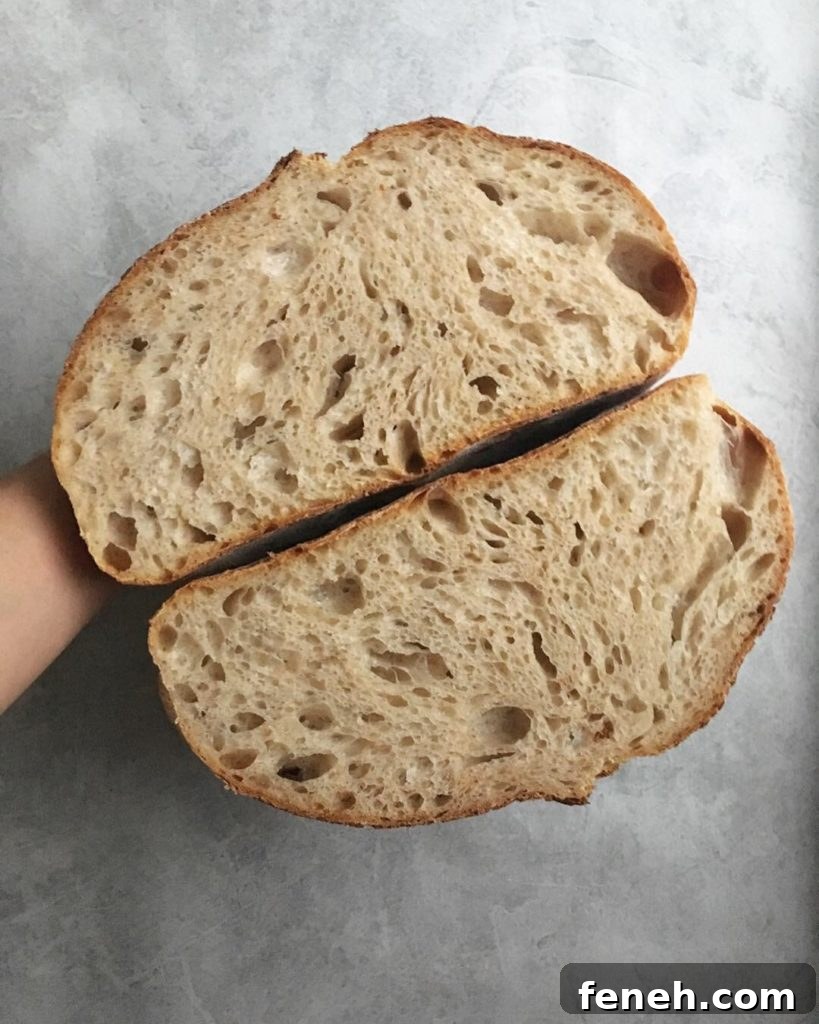
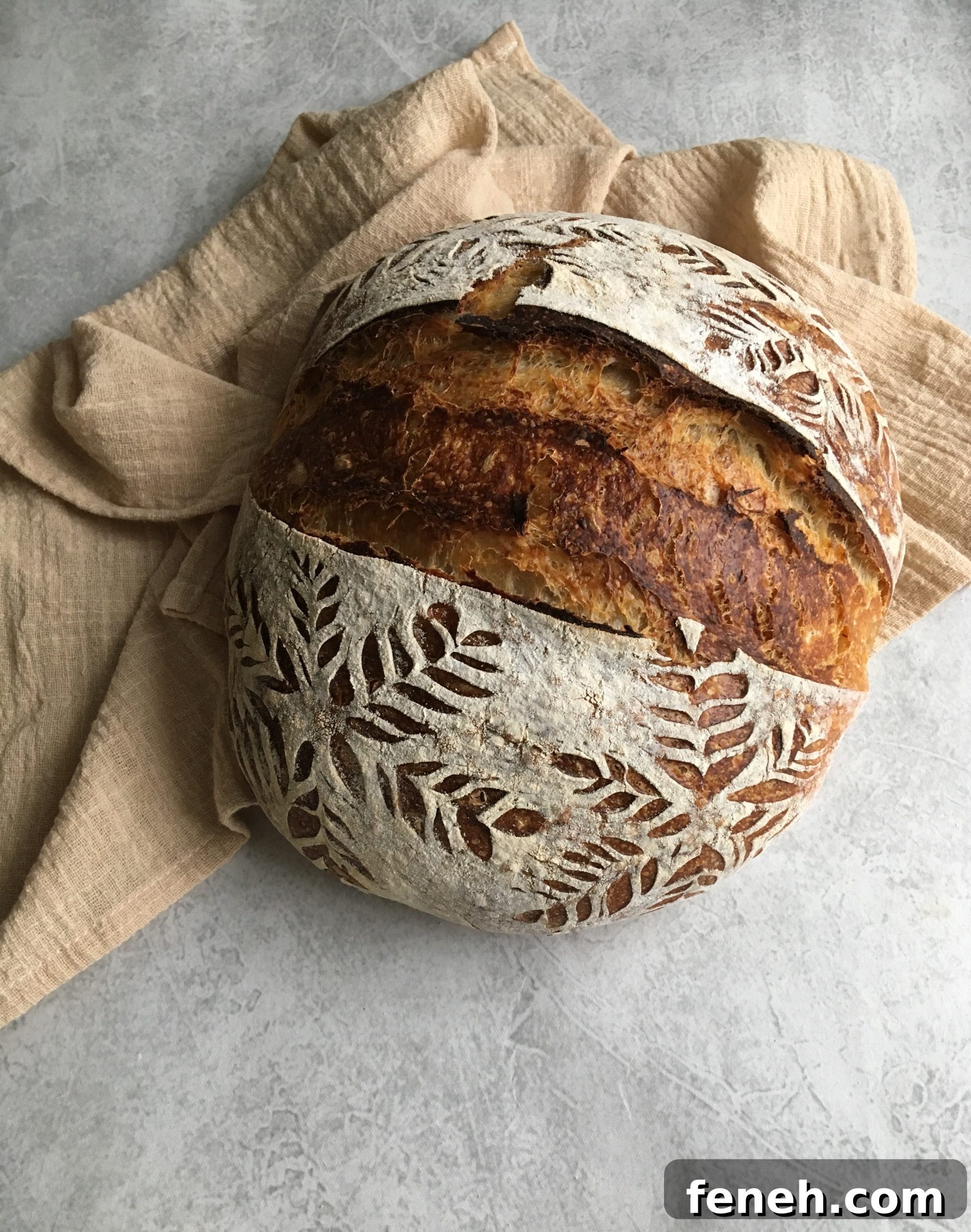
My results have been encouraging. Here are some of the discard loaves I’ve baked:
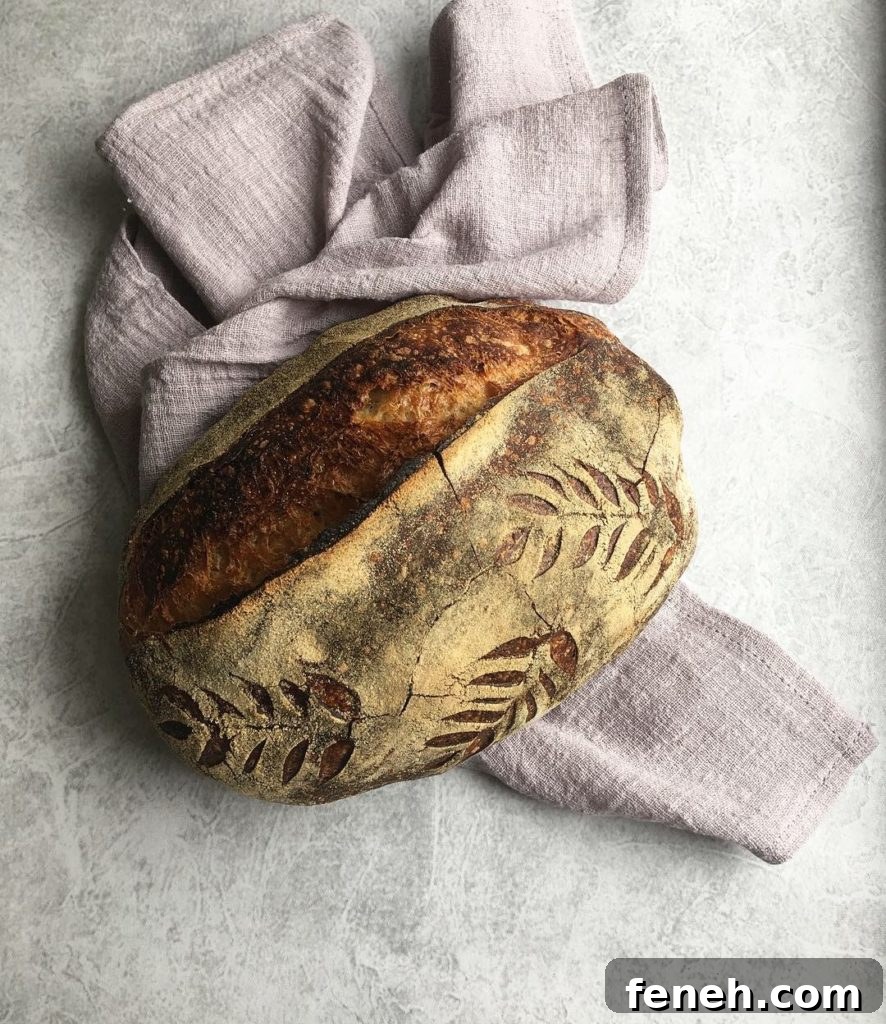
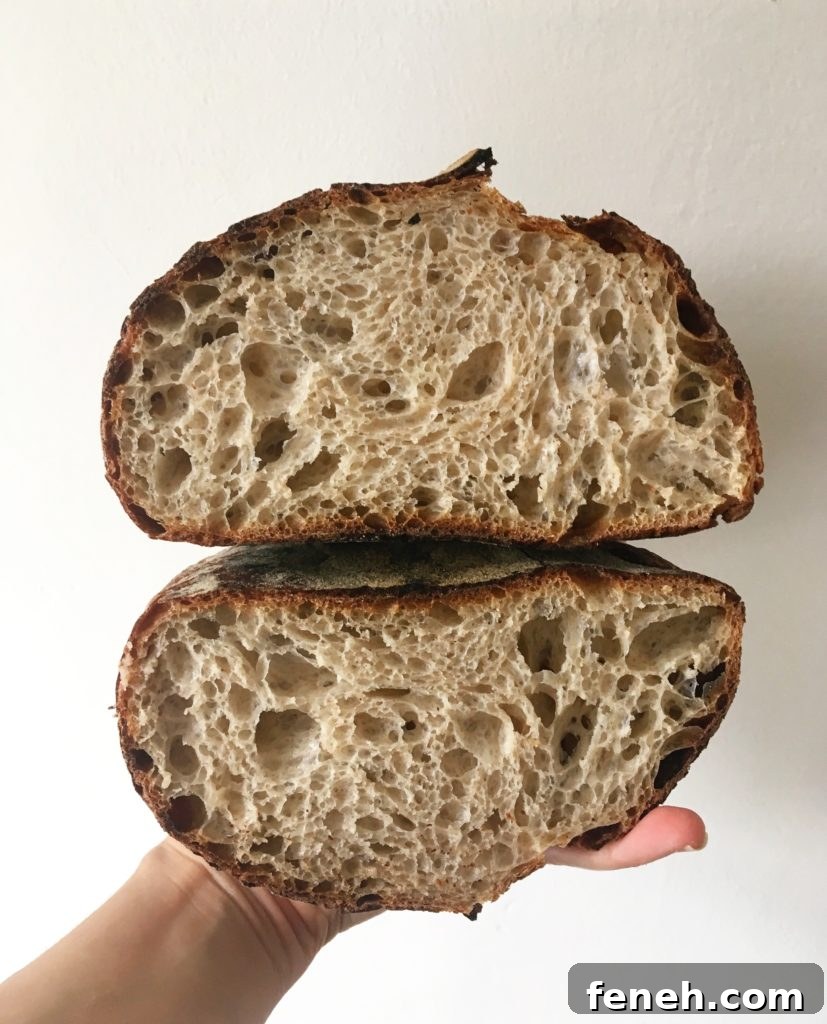
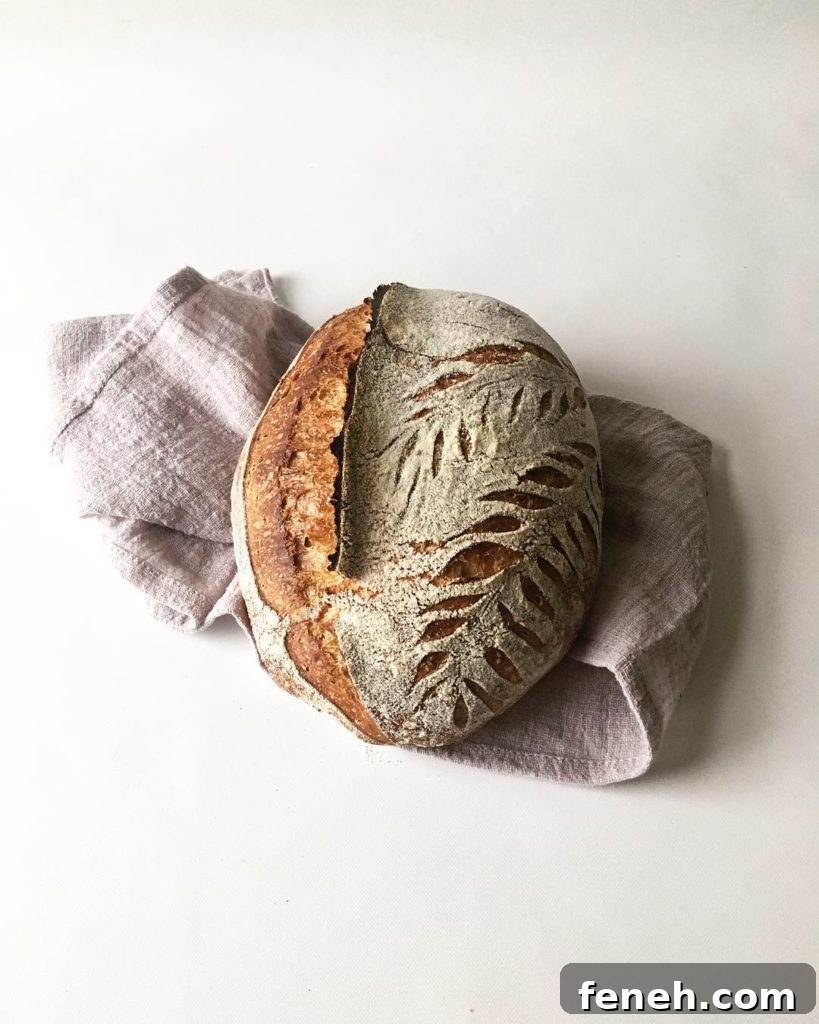
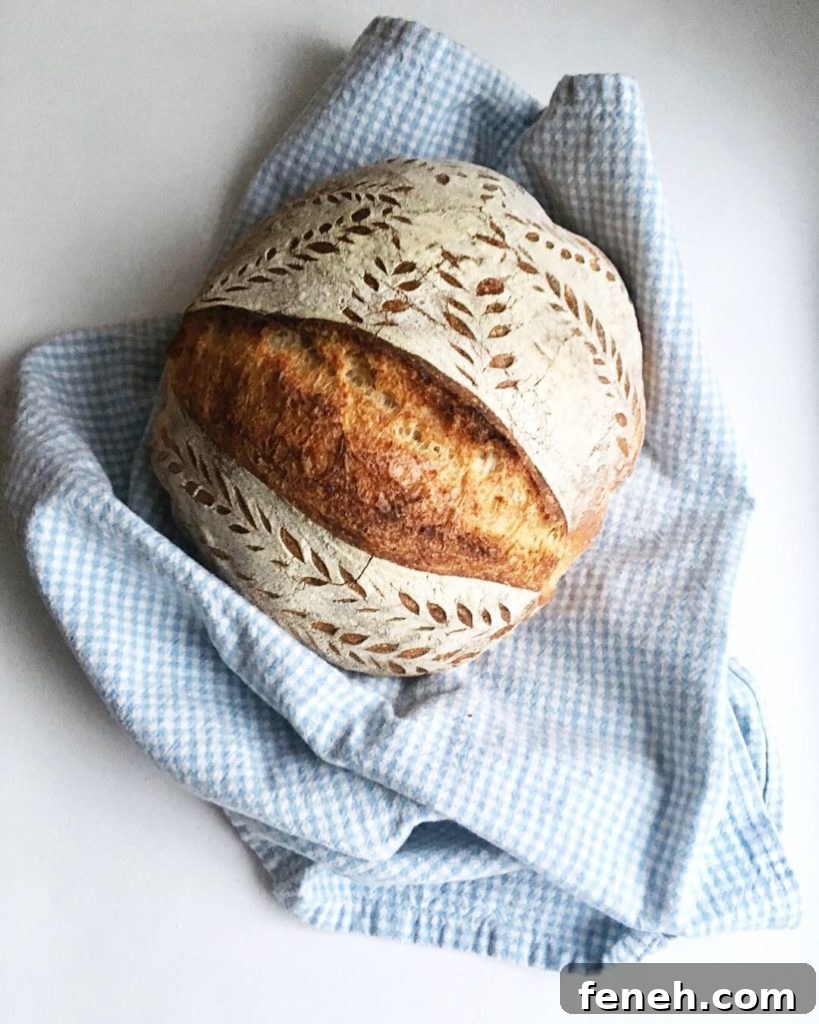
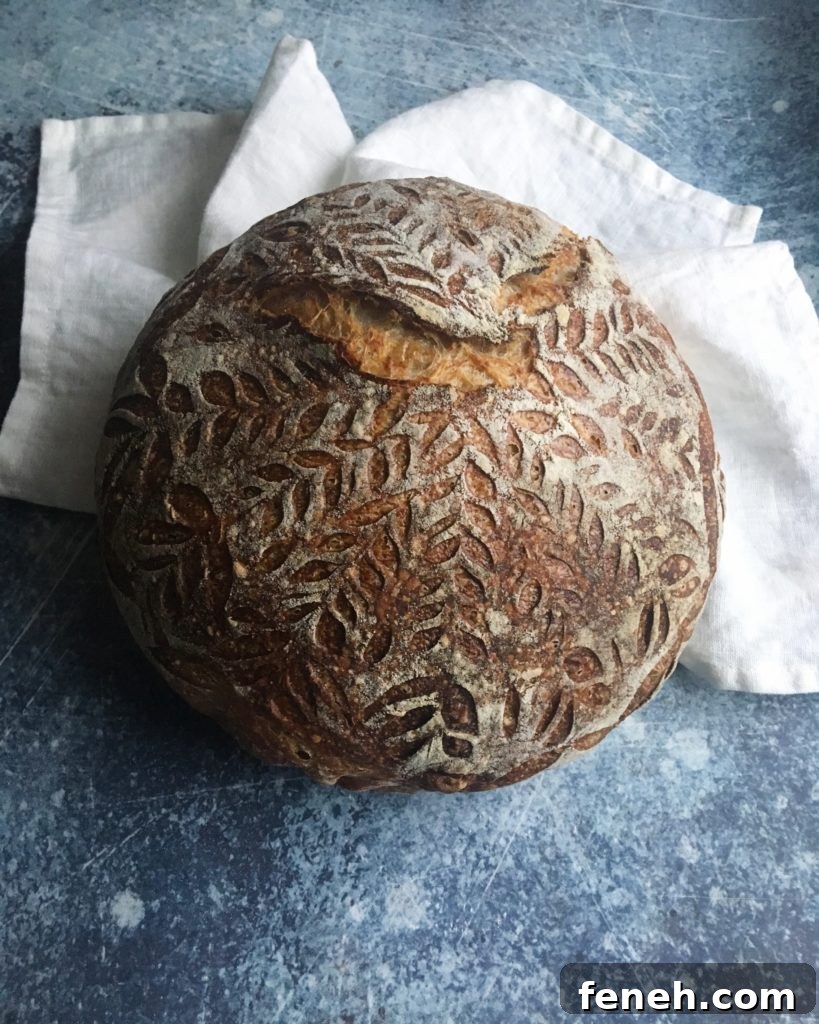
In short, this method modifies the Tartine approach in three ways: use a much smaller percentage of discard starter instead of a levain, mix the dough with fridge-cold water, and after 2–3 stretch-and-folds let the dough complete a long, undisturbed bulk fermentation of 10 hours or more. These adjustments tame the acidity of discard, slow fermentation, and allow the dough to rise while you’re away from home.
Reducing the Inoculation Percentage
Using less discard starter serves two purposes. Discard tends to be quite sour, so keeping the inoculation low (I rarely exceed 10%) helps avoid an overly acidic loaf. A smaller inoculation also prolongs the bulk fermentation, which is beneficial for a weekday schedule—you can leave the dough at home and return to shape it later. The slower rise is intentional here.
Using Cold Water to Mix the Dough
Mixing with fridge-cold water further slows fermentation. I use chilled bottled spring water because my tap water is heavily chlorinated; if your tap water is fine, you can use that chilled instead. The cold water helps keep fermentation on a schedule that fits a workday.
Extending the Bulk Fermentation
After stretch-and-folds, I transfer the dough to a clear, well-insulated container and let it rise undisturbed for about 10–12 hours at roughly 75°F. My target is approximately a 60%–90% increase in volume—sometimes more or less depending on starter activity and room temperature. The long bulk rise gives flexibility: the discard’s lower activity means the dough can tolerate a wider window of proofing without developing an overly sour taste.
Final Thoughts
This method isn’t exact science; room temperature, recent refresh of your discard, and dough quantity affect timing. A larger batch often needs more time because it warms more slowly. While Tartine recommends about a 30% rise as a guideline, I’ve successfully baked loaves after bulk rises that doubled in volume. With discard starter, the slower activity allows a broader acceptable range. These notes are intended to guide your experiments—sourdough baking thrives on iteration. If you have tips on working with discard or extending bulk fermentation, please share them. Discoveries are part of the joy of sourdough baking.

Country Loaf with Discard Sourdough Starter
A classic country loaf made with discard starter. Adapted from Tartine Bread.
Ingredients
-
450
g
all-purpose and/or bread flour
preferably King Arthur -
50
g
whole wheat flour
or another whole grain flour -
50
g
discard sourdough starter
or less (see notes) -
375
g
cold spring water, divided
or more (see notes) -
10
g
table salt or fine sea salt
Instructions
-
Pour 350 g cold spring water into a large, wide mixing bowl and add the discard starter. Mix to disperse the starter.
-
Mix in the all-purpose (or bread) flour and whole wheat flour with your hands or a bowl scraper until no dry bits remain.
-
Let the mixture rest for 25–30 minutes.
-
Add the salt and the remaining 25 g cold spring water, working it into the dough with your hands.
-
Transfer the dough to a large, clear, well-insulated container and cover it. Rest for 30 minutes.
-
Perform three sets of stretch-and-folds separated by 30 minutes. For example, do the first set at minute zero, the second at 30 minutes, and the third at 60 minutes.
-
Leave the covered dough at warm room temperature (about 75°F) for 10–12 hours, aiming for a 60%–90% increase in volume. If the dough hasn’t risen when you return, speed fermentation by placing the container in a turned-off oven with the pilot light on. I generally wait until the dough has risen to roughly halfway between 1 L and 2 L before shaping.

-
Turn the dough out, pre-shape it, and rest for 15–30 minutes.
-
Shape the loaf and transfer it to a cloth-lined banneton dusted with a mix of white rice flour and all-purpose or bread flour.
-
Cover the banneton (a plastic shower cap works well) and refrigerate overnight.
-
To bake in a preheated Dutch oven: place the pot with its lid in the oven and preheat to 500°F. Remove the banneton, dust the dough with white rice flour, turn it onto a piece of baking parchment, score as desired, and transfer the loaf to the preheated pot using the parchment. Cover and bake at 500°F for 20 minutes, then remove the lid, lower the oven to 450°F, and bake another 25–35 minutes until the crust is dark enough for your preference.
-
To bake with a cold start: remove the banneton, turn the loaf onto parchment, score, place it in an unheated Dutch oven, cover, and put the pot in a cold oven. Heat to 500°F, then bake covered for 20 minutes. Remove the lid, lower the oven to 450°F, and bake uncovered for 25–35 minutes.
-
Cool the loaf completely on a wire rack before slicing.

Recipe Notes
- This batch yields one large loaf (about 1.75 lb). Halve the quantities for a smaller loaf or double for two loaves. Larger dough amounts may slow the bulk rise because they take longer to warm up.
- If your room is around 74–75°F, this recipe with cold water should reach the desired rise in 10–12 hours. If your kitchen is cooler, allow more time, use warmer water, or place the container in a turned-off oven with the pilot light on to encourage fermentation.
- Do not increase the discard starter above about 10%—more discard makes the loaf too sour.
- If your kitchen is warm or you’re working with a small dough quantity, you can reduce inoculation further; I’ve gone as low as 5%.
- Tartine specifies all-purpose flour, but bread flour or a mixture works well too.
- Whole grain flour adds flavor but doesn’t have to be whole wheat—you can use rye, spelt, or blends for good results.
- The recipe uses 375 g total water (75% hydration). Feel free to experiment with higher hydration; I’ve gone up to 80% with success.
- Both preheated-pot and cold-start methods work. Preheating can produce slightly more oven spring, but the difference is small.