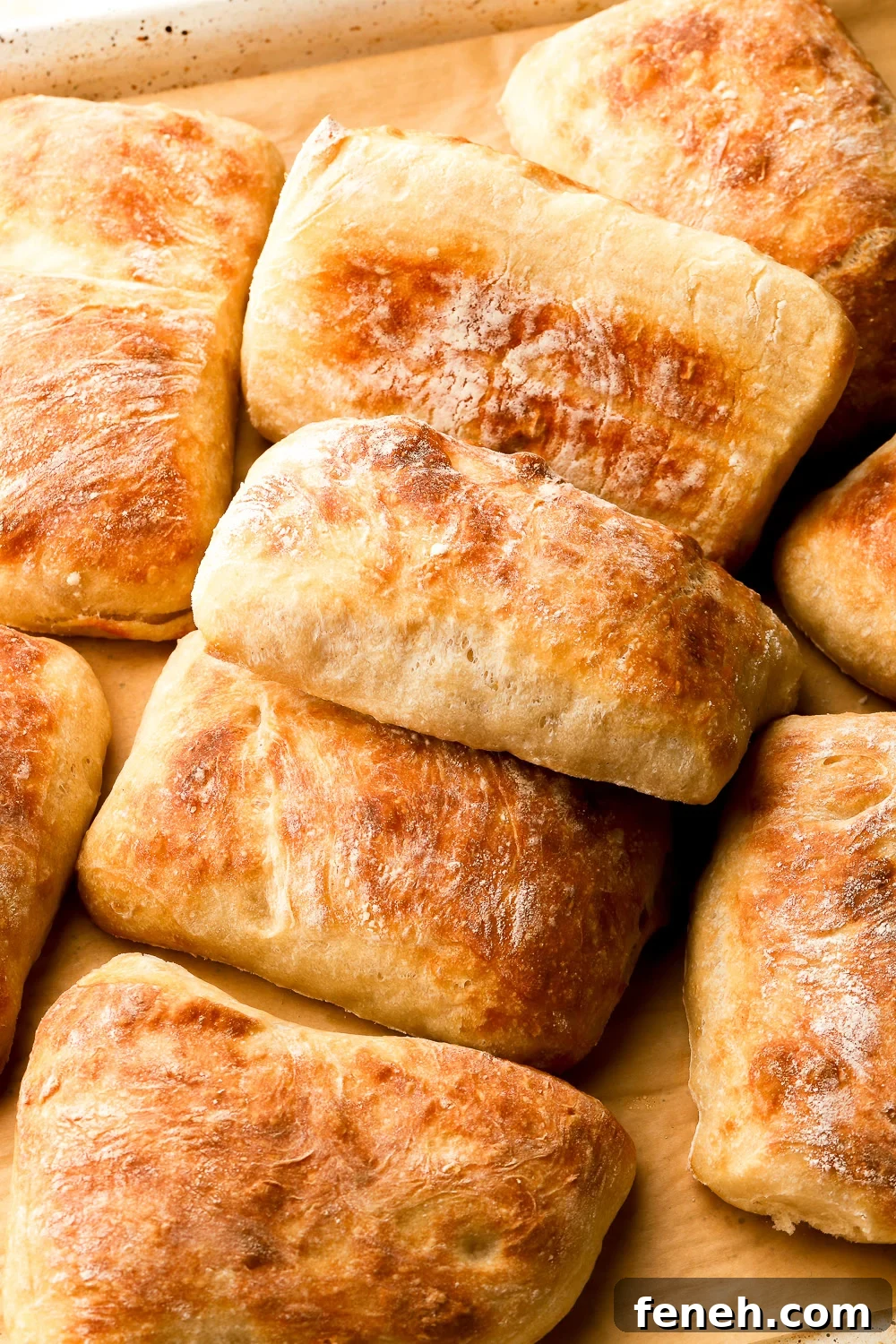
If you’ve been here a while, you know my weakness: homemade bread. I love ciabatta for sandwiches, and when I didn’t have any at home I decided to make my own.
My favorite Italian bread formula is an 80% hydration dough, which is exactly what ciabatta needs. I adapted that recipe to make a quicker version for rolls, and the result was phenomenal.
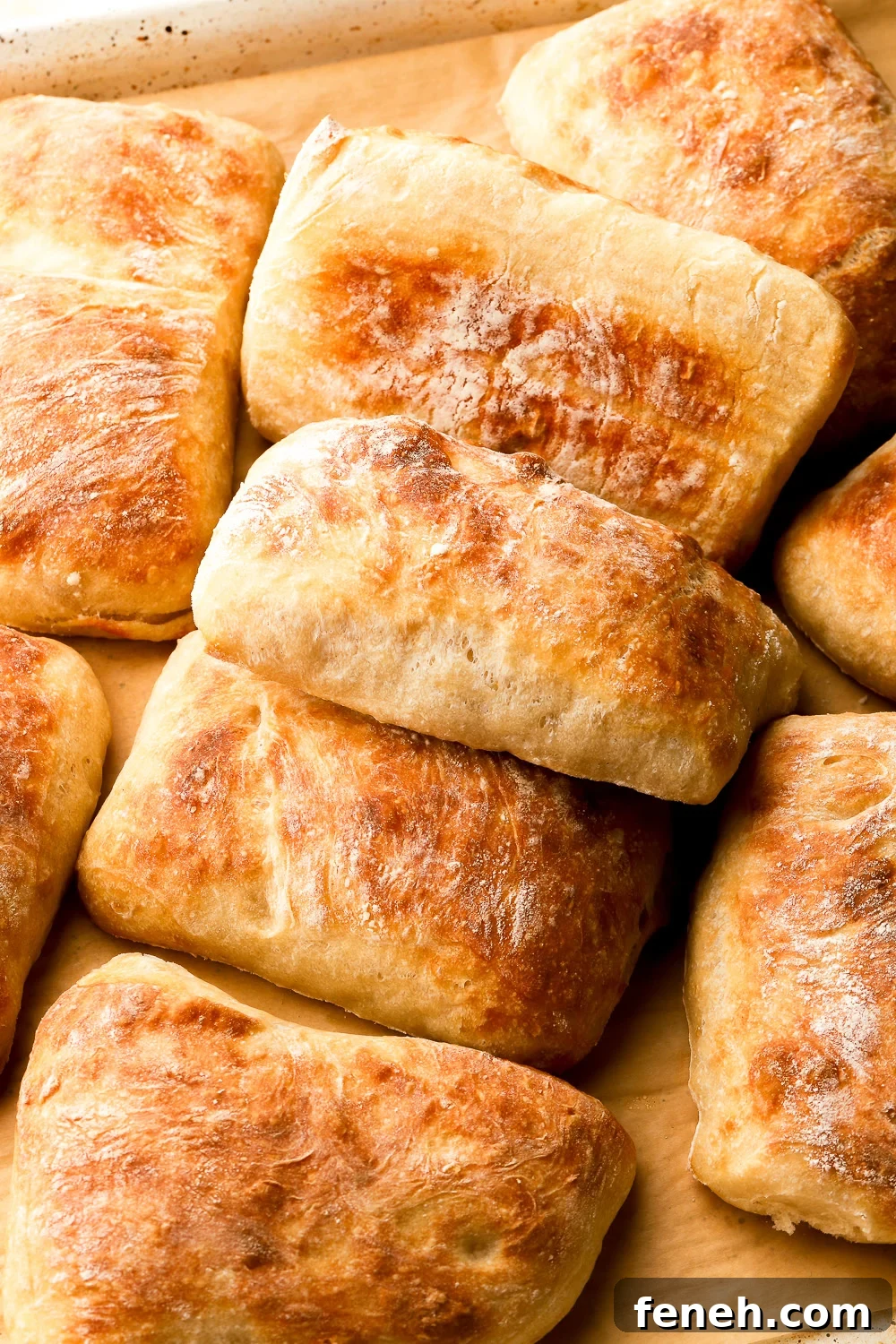
This ciabatta recipe uses just four main ingredients, requires minimal hands‑on time, and yields ten perfectly sized rolls.
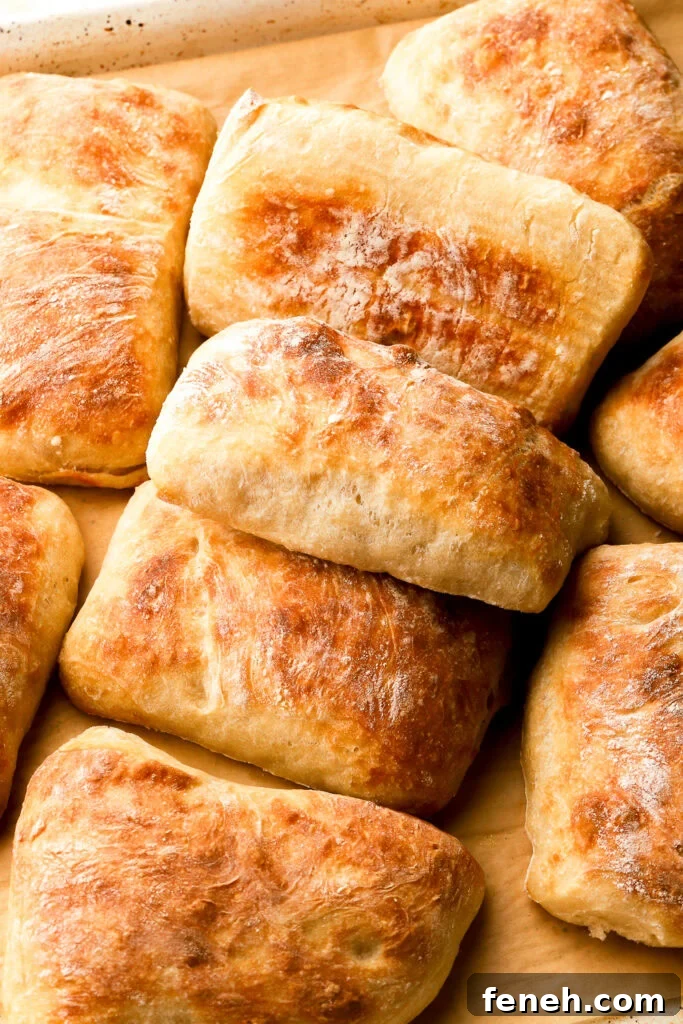
What is Ciabatta?
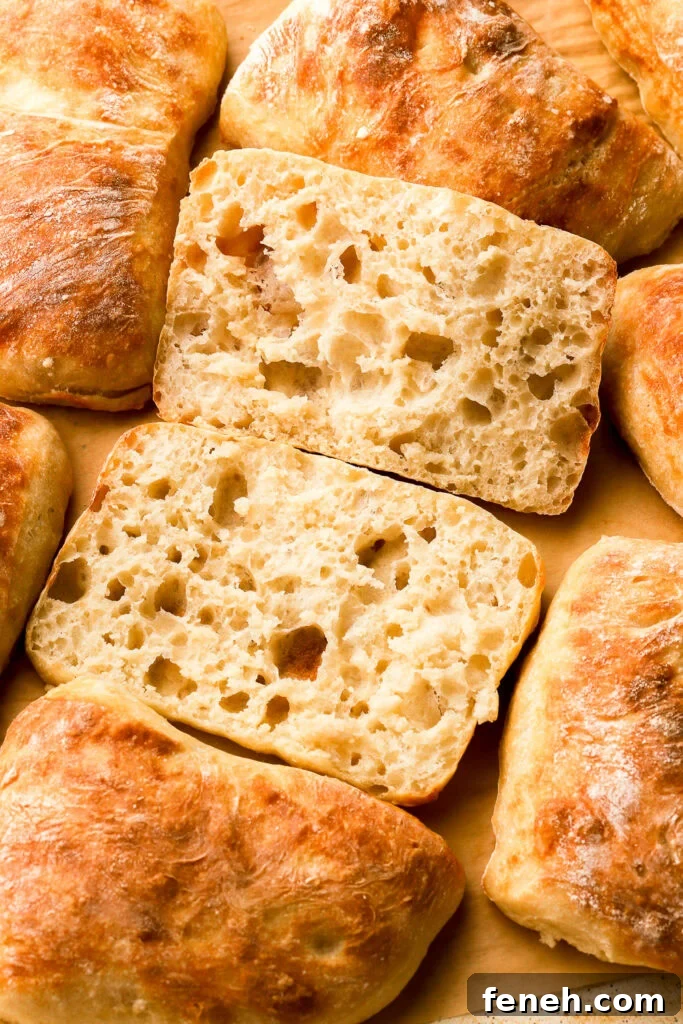
Ciabatta is an Italian artisan loaf characterized by a thin, crisp crust and a tender, open crumb. Artisan breads are typically lean — made from flour, water, yeast and salt — and hydration (water weight divided by flour weight) is a key factor. Traditional ciabatta sits around 80% hydration; my recipe uses 480 g water and 600 g flour, which equals 80%.
This recipe is essentially the same dough I use for Italian bread, but with a higher yeast amount and a different shaping technique to produce small ciabatta rolls. The crumb is airy and soft while the crust is chewy and crisp. It’s a no‑knead method that builds strength with a stretch‑and‑fold sequence instead of intense kneading.
Tip: If you want to prepare the dough overnight, use the lower yeast amount from the longer version of my Italian bread. This version is designed to be quicker.
Ingredients & Substitutions
Below are notes on the ingredients. Exact measurements are in the recipe card.
- Flour – I use bread flour for better structure and chew. All‑purpose flour will work but the rolls may be slightly less structured.
- Water – Room temperature or warm water is fine; you don’t need to activate the yeast separately.
- Yeast – Instant or active dry yeast both work. I usually add it straight to the dough without proofing, as long as the yeast is fresh.
- Salt – Fine sea salt is my preference. If you use a different salt, reduce the amount slightly to taste.
Tip: Use a digital scale for consistent results—measuring by weight is far more accurate than volume for bread baking.
How To Make Ciabatta Bread
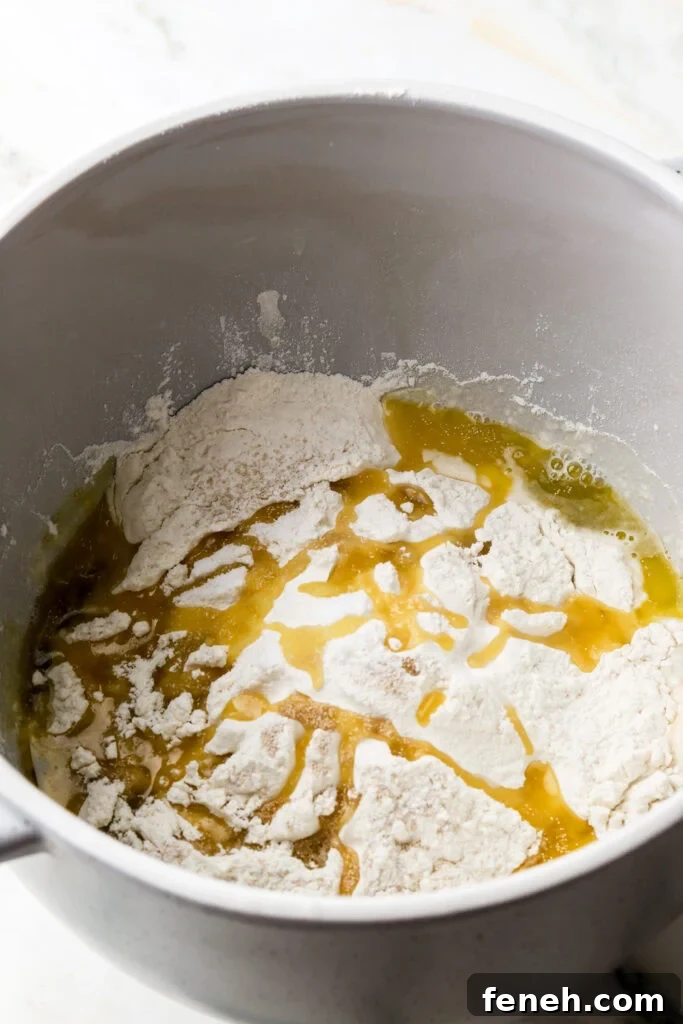
- Add all ingredients to a large bowl or the bowl of a stand mixer.
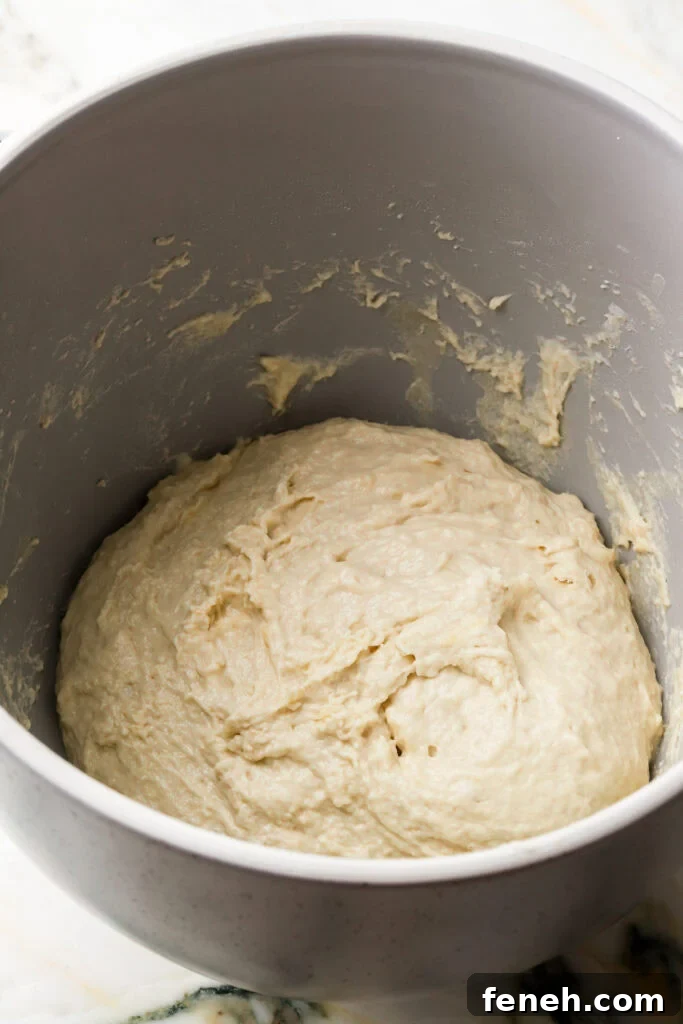
- Mix with a dough hook, wooden spoon, or whisk until all the flour is hydrated and the dough comes together. The dough will be shaggy and sticky.
- Cover and rest for about 30 minutes.
- Perform a series of stretch-and-folds: wet one hand with cold water, pull one side of the dough gently as far as it will go without tearing, fold it over, turn the bowl 90 degrees, and repeat until you’ve stretched each side once. Let rest about 30 minutes and repeat a second series.
- Drizzle a little oil around the bowl edge so the dough doesn’t stick excessively to the bowl.
- Cover and allow the dough to rise until noticeably expanded and slightly jiggly; this typically takes 1–2 hours depending on room temperature.
- Very gently turn the dough out onto a well‑floured surface, trying not to deflate it.
- Gently stretch the dough into a long, thin rectangle — don’t press or roll it out.
- Slice the rectangle in half lengthwise, then cut each half into five roughly equal pieces so you have ten rolls.
- Using a bench scraper, transfer the pieces to a parchment‑lined cookie sheet. Cover and let them rest while you preheat the oven to 425°F (218°C). They’ll rise only slightly in this second proof.
- Bake for about 15 minutes. If you have a convection option, using it for the latter half of baking can help crisp and brown the tops evenly.
- The rolls are done when they feel light and the internal temperature reaches about 195–200°F (90–93°C). Cool completely before slicing.
What Kind of Yeast To Use
The recipe lists instant yeast, but active dry yeast can be substituted. Active dry yeast is often proofed in warm water first, but this recipe works fine when the yeast is added directly to the dough as long as the yeast is fresh.
Kneading The Dough
This is not a kneaded dough. Combine until hydrated, rest, and perform two sets of stretch-and-folds to build gluten and structure.
Stretch and Folds
Stretch-and-folds replace kneading. Stretch one side of the dough without tearing, fold it over, rotate the bowl and repeat for all four sides. Repeat the entire sequence after a 30–60 minute rest. Keep your hands wet to prevent sticking.
Proofing Temperature
Proof at a comfortable, slightly warm temperature for a quicker rise—around 80–90°F (27–32°C) is ideal. You can also retard the dough in the refrigerator for 8–12 hours to develop more flavor.
Rising and Proofing
The first rest (rising) is when the dough expands and becomes jiggly; the second rest (proofing) is shorter and produces only a small puff. This loose, high‑hydration dough won’t always double like a tighter dough; instead look for a soft, wobbly feel before shaping and a modest increase before baking.
How To Shape Ciabatta
Generously flour your work surface and hands. Gently stretch the dough into a rectangle without deflating it. Slice lengthwise, then into equal pieces to create rustic rolls. Avoid overhandling; ciabatta is meant to be rustic.
How To Bake Ciabatta
Bake at 425°F (218°C) for about 15 minutes. If your oven runs hot on the bottom, switch to convection for the second half of baking to encourage even browning. Finished rolls should feel light and register about 195–200°F (90–93°C) internally.
Tip: An oven thermometer helps ensure accurate baking temperature, since oven heat can vary.
How To Serve Ciabatta
Warm with good butter and flaky sea salt is unbeatable, but ciabatta shines as sandwich bread. The crisp crust keeps fillings from making the bread soggy, so it’s perfect for stacked sandwiches.
Some favorite fillings: shredded pot roast with barbecue sauce and Swiss, turkey with mozzarella, tomatoes and pesto, or a classic deli mix of ham, salami and garlic butter with avocado.
Tip: For the best sandwich, toast the bread with meat and cheese briefly in an air fryer or oven before adding cold toppings.
How To Store Bread
Ciabatta is best fresh, but it stores well. Keep on the counter in a ziplock bag for 4–5 days. If not eaten, refrigerate for up to a week or freeze for longer storage.
I hope this guide helps you bake wonderful homemade ciabatta. If you try the recipe, I’d love to hear how it turns out. Happy baking!
Love, B
Ciabatta Bread Recipe
Ingredients
- 480 mL water, room temperature
- 600 g bread flour, spooned and leveled
- 2 1/4 tsp instant yeast (or active dry yeast)
- 15 g fine sea salt
- 28 g avocado oil or olive oil (softened or melted butter works too)
Method
- In a large bowl or stand mixer, combine water, flour, yeast, salt and oil.
- Mix until all the flour is hydrated and a shaggy dough forms.
- Cover and rest 30 minutes.
- Perform a series of stretch-and-folds (four folds, rotating 90° each time). Let rest 30 minutes and repeat once more.
- Coat the bowl lightly with oil to prevent sticking, cover and allow the dough to rise until jiggly and expanded (typically 1–2 hours).
- Turn the dough onto a well‑floured surface without deflating it. Gently stretch into a rectangle.
- Slice lengthwise, then cut each half into five pieces for ten rolls total. Transfer to parchment‑lined baking sheet(s).
- Cover and rest about 30 minutes while preheating the oven to 425°F (218°C).
- Bake about 15 minutes, using convection for the second half if desired, until light and around 195–200°F (90–93°C) internally. Cool completely before slicing.
Notes
- You can halve this recipe. Use the same method with proportionally reduced ingredients (about 1 tsp yeast for a half batch).
Nutrition (per roll)
Calories: 250 kcal • Carbs: 45 g • Protein: 8 g • Fat: 4 g • Sodium: 586 mg