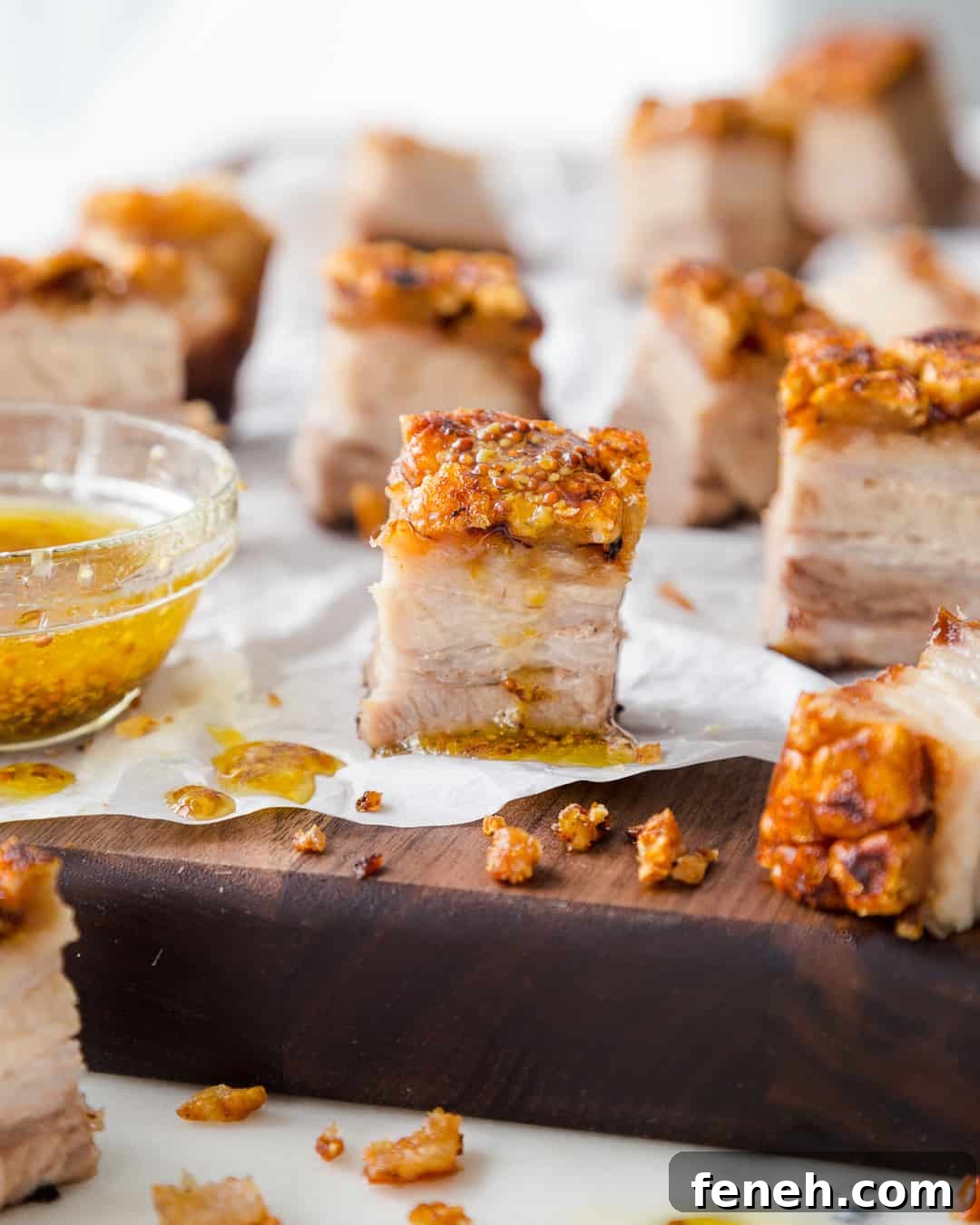
This roast pork belly may be the simplest recipe I’ve shared — and possibly the most satisfying. It’s Whole30/Paleo-friendly but still incredibly indulgent. With just a few ingredients and a little patience, you’ll end up with crackling that’s crisp, meat that’s juicy, and a dish that’s versatile for weeknight dinners or entertaining.
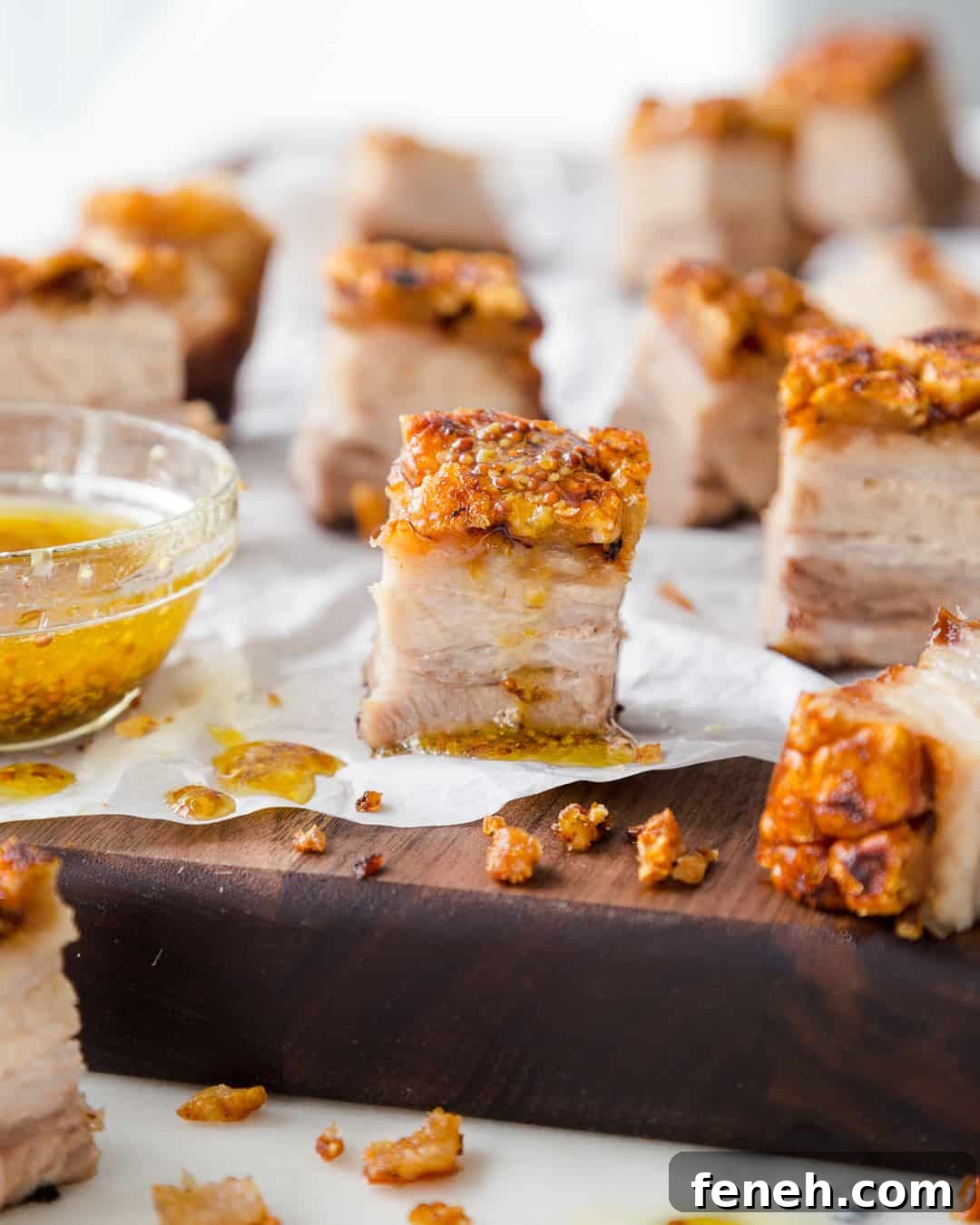
The method couldn’t be easier: roast a whole slab of pork belly low and slow until the meat is tender and the skin transforms into crisp crackling. All you need is a high-quality piece of belly, kosher salt, freshly cracked black pepper, and a few hours while the oven does its work. The result is rich, savory pork with a pleasing contrast of textures.
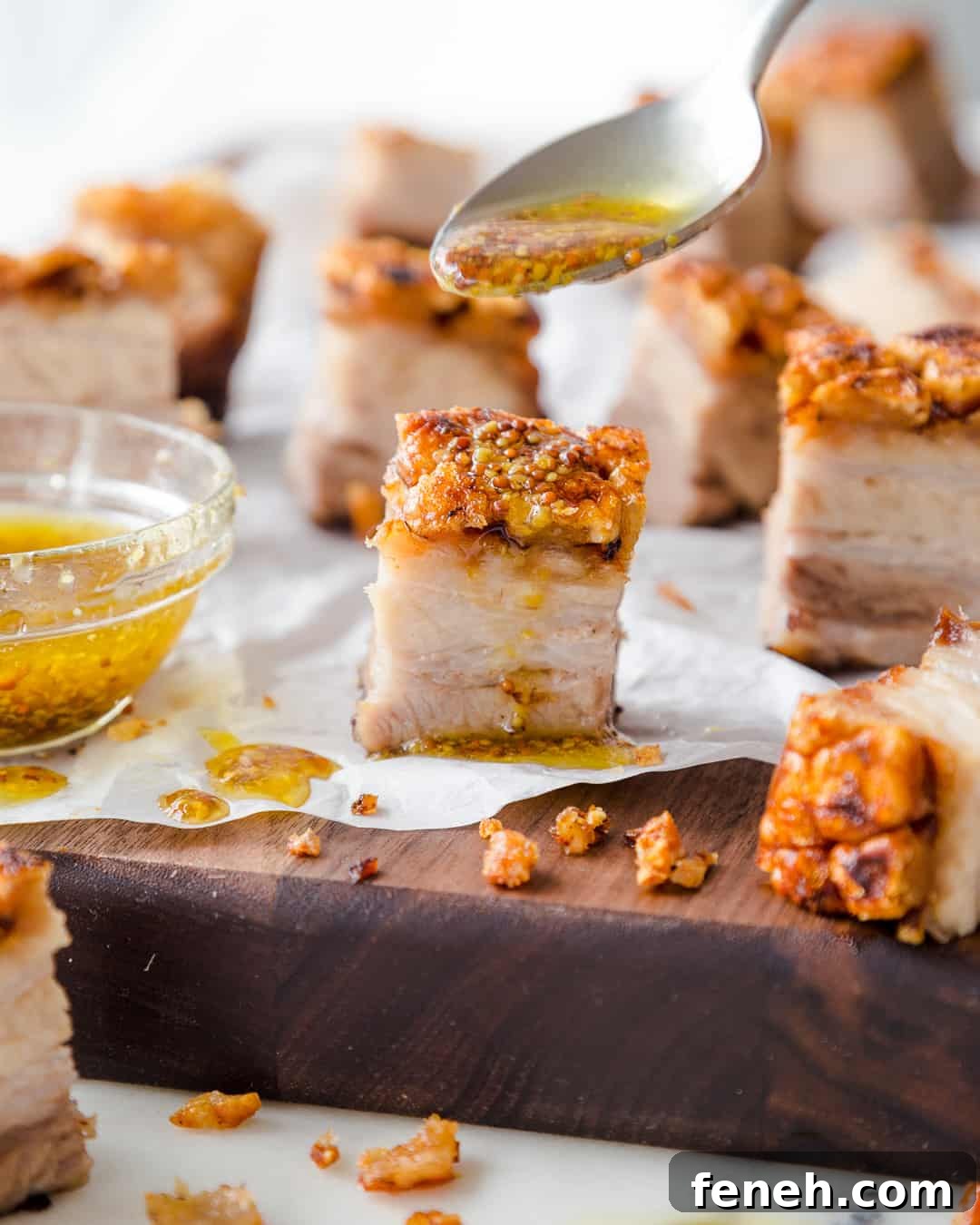
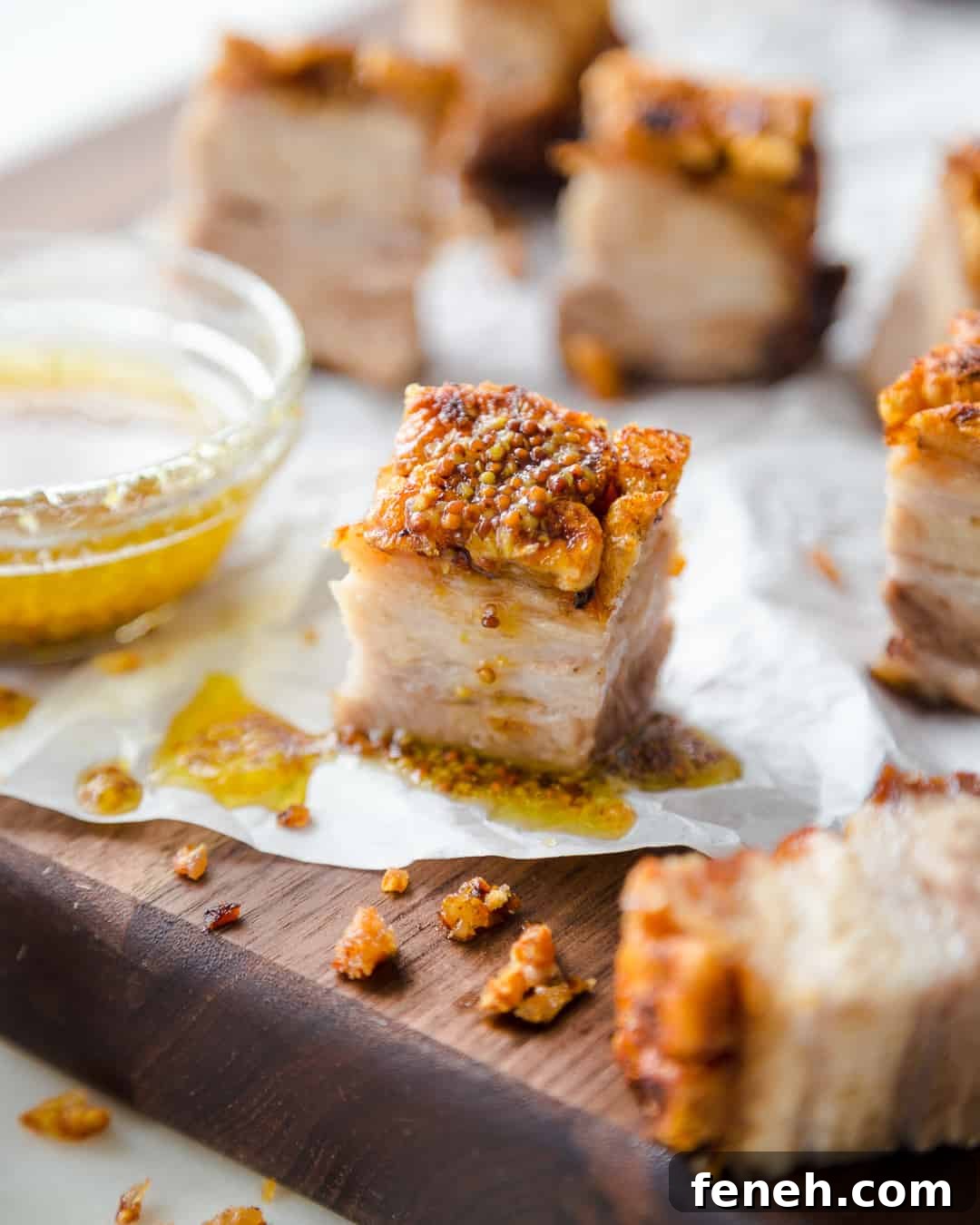
You can serve the pork belly whole over cauliflower rice, an Asian-style slaw, or alongside simply steamed vegetables for a balanced plate. For a more festive presentation, slice the pork into bite-sized pieces and pair them with a maple-mustard vinaigrette to add sweet, tangy brightness to the rich meat. Prepared ahead, the vinaigrette keeps at room temperature in a jar and the pork can be held in a warm oven until guests arrive.
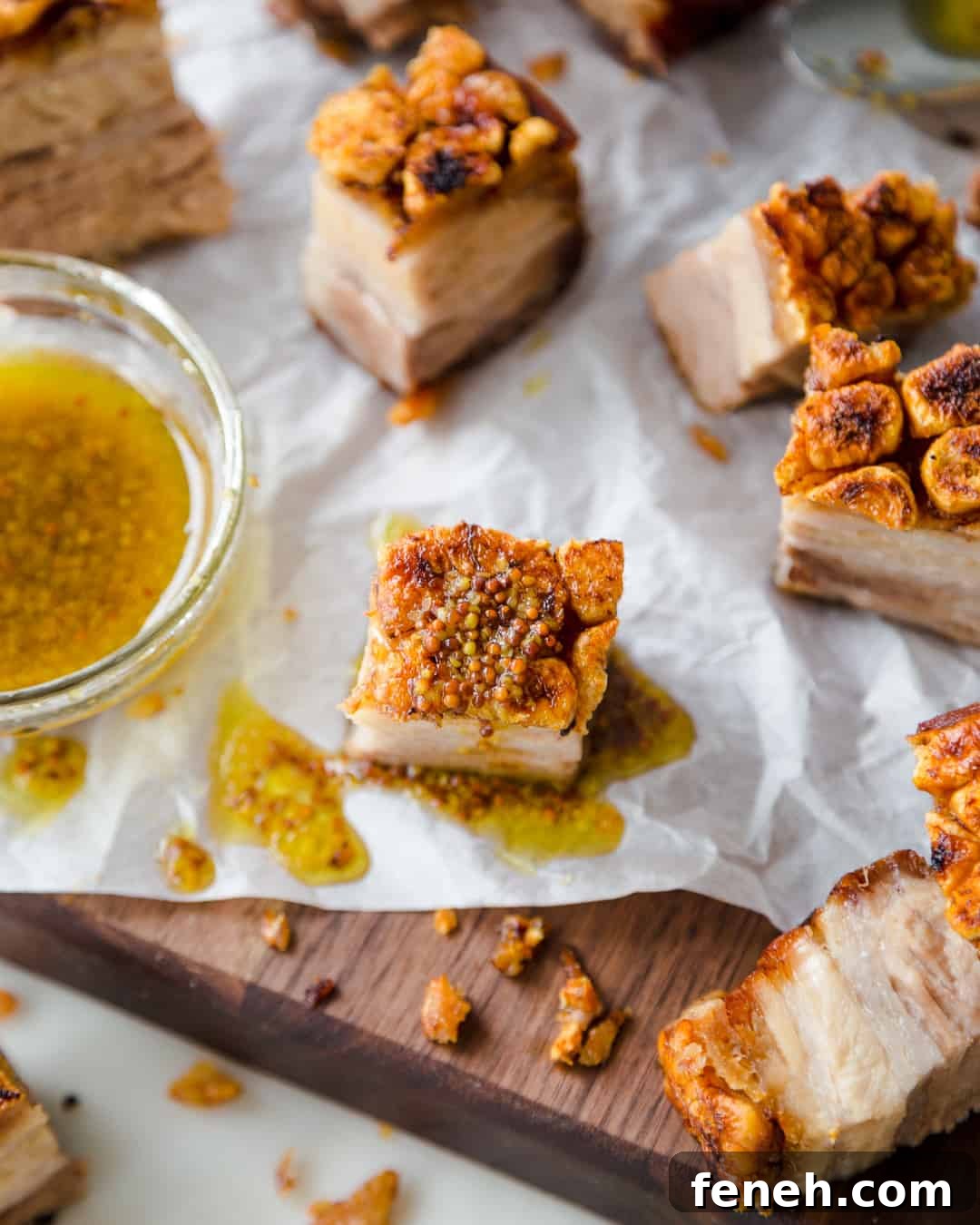
The Secrets to Crispy Pork Belly Crackling
Even though this recipe is straightforward, a few key techniques will help ensure perfect crackling while keeping the interior tender and succulent. Follow these tips to avoid common pitfalls and get reliable results every time.
1. Quality is Key
This recipe relies on only three primary ingredients for the pork: pork belly, kosher salt, and freshly cracked black pepper. Because there’s little to mask the meat, buy the best cut you can find and choose a slab with a balanced fat-to-meat ratio. If the piece is mostly fat, the flavour will be rich but the texture may be overly heavy when served alone. Look for a slab with a generous amount of meat so it functions as the protein for a meal.
Pork belly remains an affordable cut, and selecting a well-raised or heritage animal when possible will improve flavor and texture. Ask your trusted butcher for a good cut and examine the fat-to-meat proportion before buying.
2. Score the Skin
Scoring the skin is essential. Gentle cross-hatching allows fat to render and stops the belly from curling as it cooks. The goal is to just cut the skin, not deeply into the fat or meat. Avoid scoring the edges so the slab retains its shape while roasting.
A very sharp chef’s knife works best; if the skin is softer, pop the belly in the freezer for 10–15 minutes first to firm it up and make scoring easier. Take care not to pierce too deeply — shallow, even cuts will produce the best results.
3. Add Some Steam
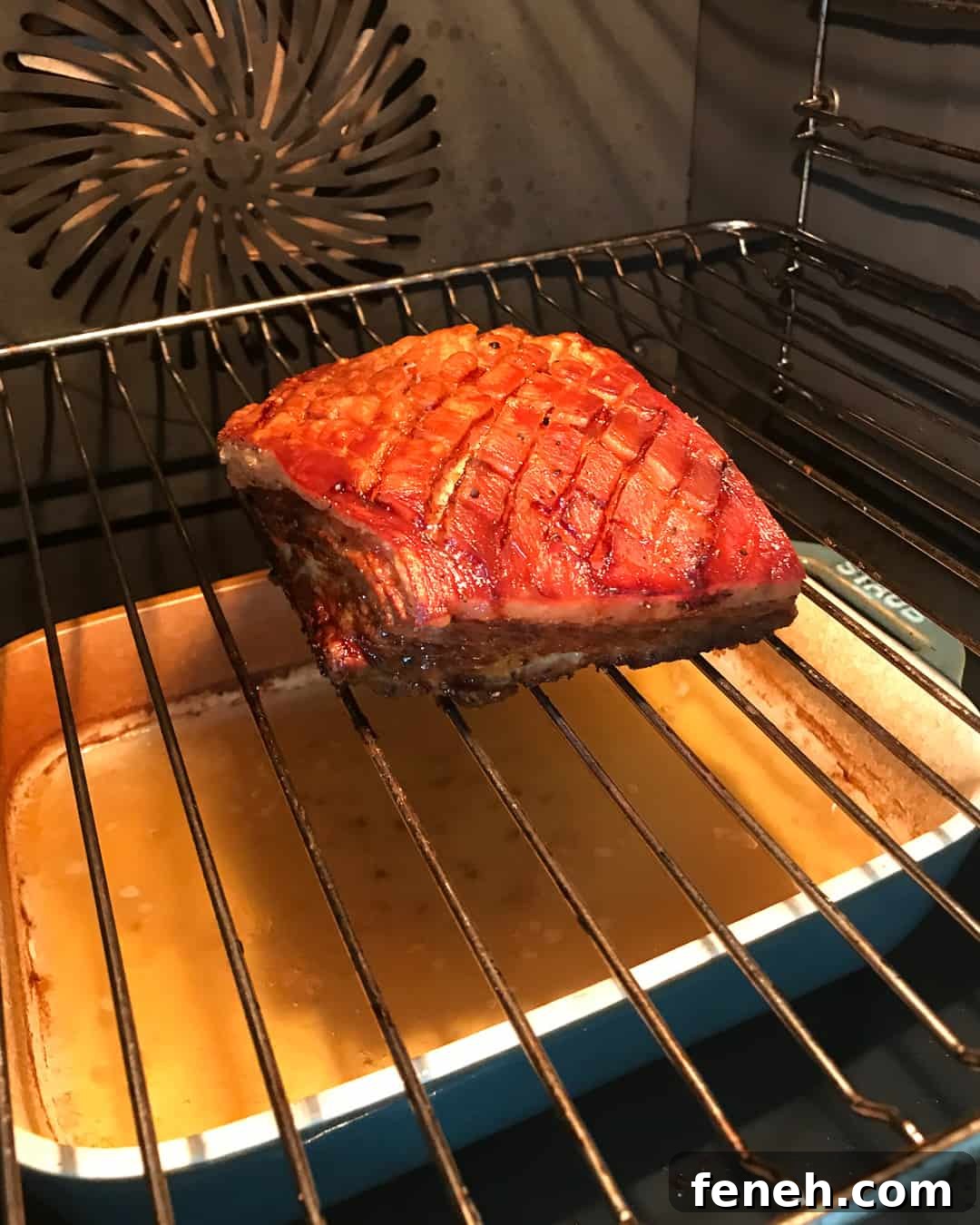
Roasting with a tray of water beneath the pork serves two useful purposes. First, it creates a moist environment that helps prevent the meat from drying out during the long roast. Second, the water catches rendered fat so it won’t scorch in a dry roasting pan, which can produce off smells.
Place a deep roasting tray filled with a few inches of water on the oven floor and set an oven-safe wire rack above it. Put the belly skin-side up on the rack so the steam can circulate and the fat can drip away from the meat. If you don’t have a wire rack, cook the belly directly on a middle oven rack with the water tray underneath; the hot rack will slightly sear the underside of the meat as the oven preheats.
4. Broil to Finish
After the belly roasts low and slow and becomes tender, a brief blast under the broiler puffs and lightens the skin into airy crackling. Without this final step, the skin can be crisp but slightly tough. Watch carefully while broiling — the crackling can go from perfect to burnt in moments. Leaving the oven door slightly ajar can help you monitor progress and prevent overcooking.
5. Slice Skin-Side Down
When it’s time to carve, flip the belly skin-side down and slice into the meat first. That approach helps the pork hold its shape and ensures each piece keeps its crackling attached. While slicing skin-side up may look more attractive for photos, cutting through the meat first gives much neater portions and preserves the crisp skin.

Roast Pork Belly – Paleo
5 minutes
3 hours
3 hours 5 minutes
Ingredients
For the pork belly
- 1.5–2 lbs pork belly, uncut slab
- kosher salt
- freshly cracked black pepper
For the maple-mustard vinaigrette
- 1 clove garlic, finely grated or minced
- 2 tbsp whole-grain mustard
- 1 tbsp 100% maple syrup
- 1 tbsp fresh lemon juice
- 3 tbsp extra virgin olive oil
- kosher salt and freshly cracked black pepper, to taste
Instructions
Maple-Mustard Vinaigrette
-
Combine garlic, whole-grain mustard, maple syrup, lemon juice and extra virgin olive oil in a mason jar. Season with a pinch of kosher salt and freshly cracked black pepper. Shake vigorously until emulsified. Taste and adjust seasoning. Keep at room temperature or chill and bring to room temperature 10–15 minutes before serving.
For the pork belly
-
Preheat the oven to 325°F (160°C).
-
Rinse the pork belly under cold water and pat very dry with paper towels. Using a very sharp knife, score the skin in diagonal lines in both directions to create a crosshatch pattern. Avoid cutting the edges so the slab holds its shape while cooking.
-
Season all sides generously with kosher salt. Flip the belly skin-side down and season the meat side with freshly cracked black pepper. If any pepper lands on the skin, wipe it off with a paper towel so the skin remains unseasoned.
-
Place a deep roasting tray with 4–5 cups of water on the oven floor. Set an oven-safe wire rack above the water and place the pork belly on the rack skin-side up.
-
Roast for about 2 to 2½ hours, or until the meat is very tender and the skin is beginning to crisp. For extra puffed crackling, switch to the broiler for 6–8 minutes and watch carefully to avoid burning.
-
Remove the belly from the oven and let it rest for 10 minutes. Flip skin-side down and carve into slices. Serve over cauliflower rice, an Asian-inspired slaw, or steamed vegetables. Alternatively, cut into bite-sized pieces and serve with the maple-mustard vinaigrette.