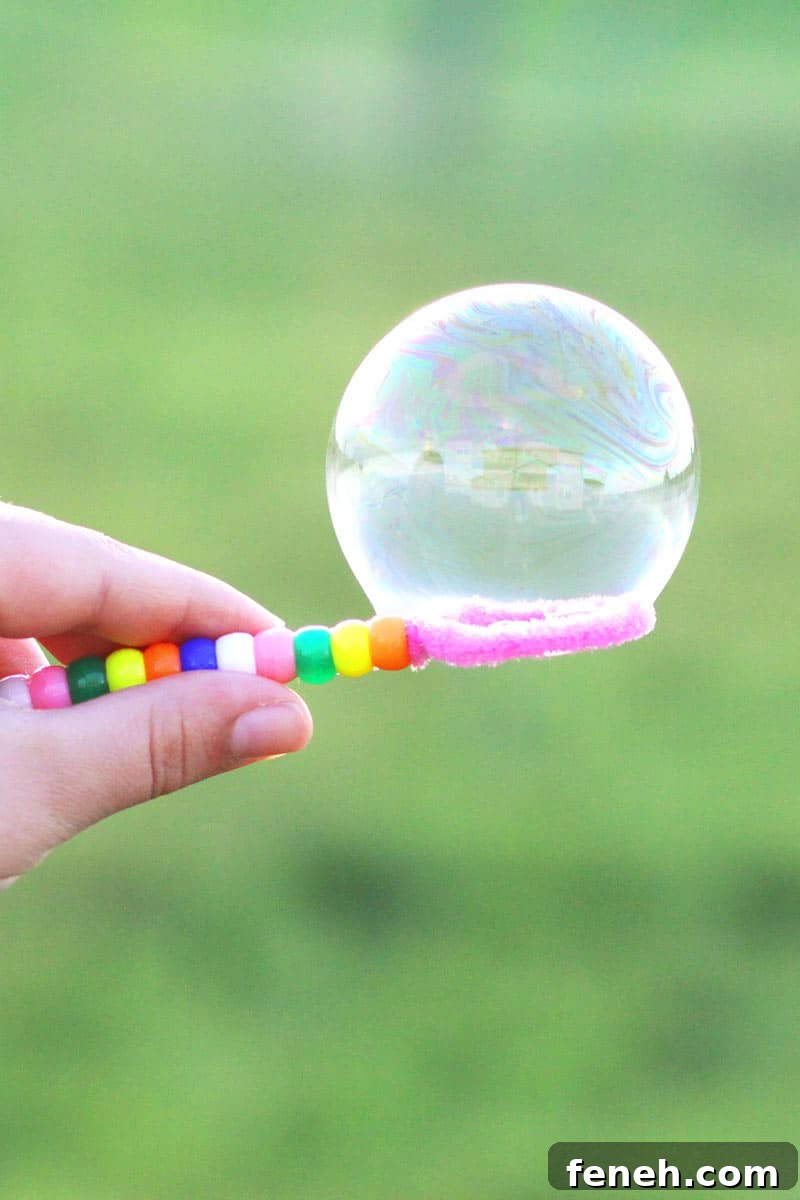
The best homemade recipe for bubbles with glycerin for loads of affordable, wholesome Summer fun! This easy bubble solution uses glycerin to create strong, long‑lasting bubbles that resist popping.
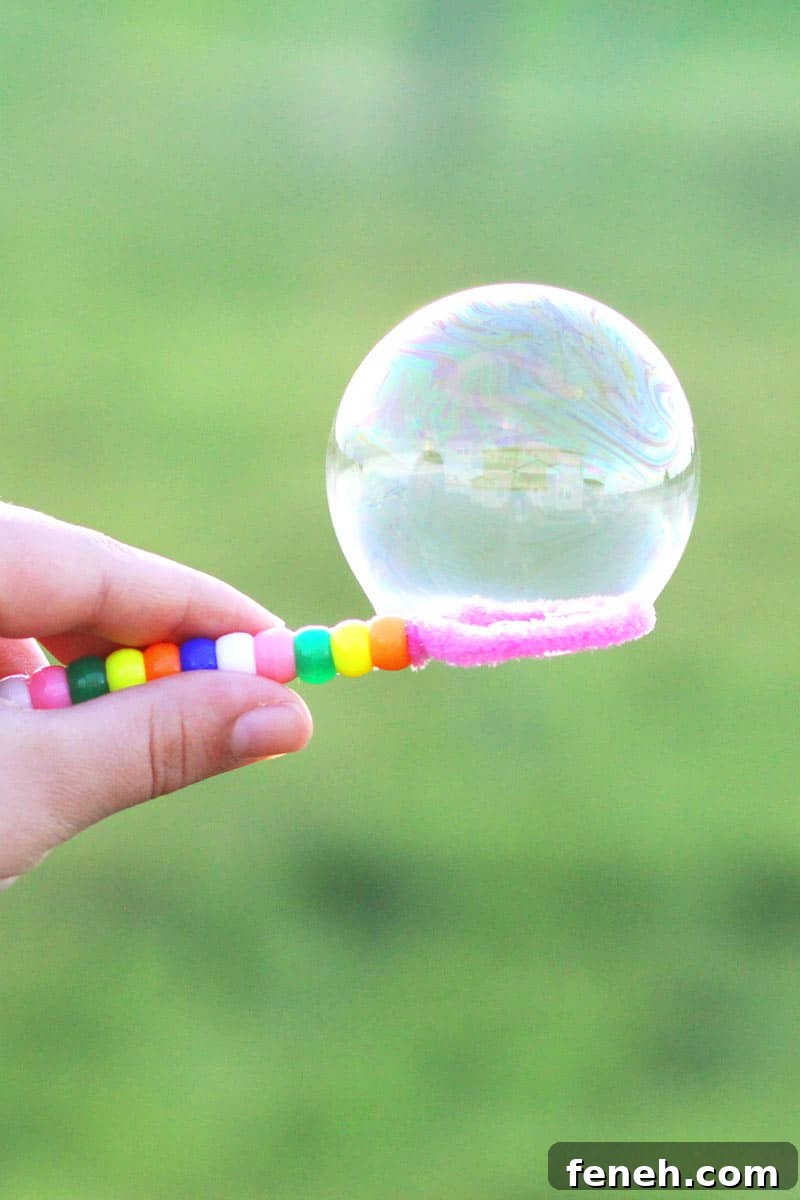
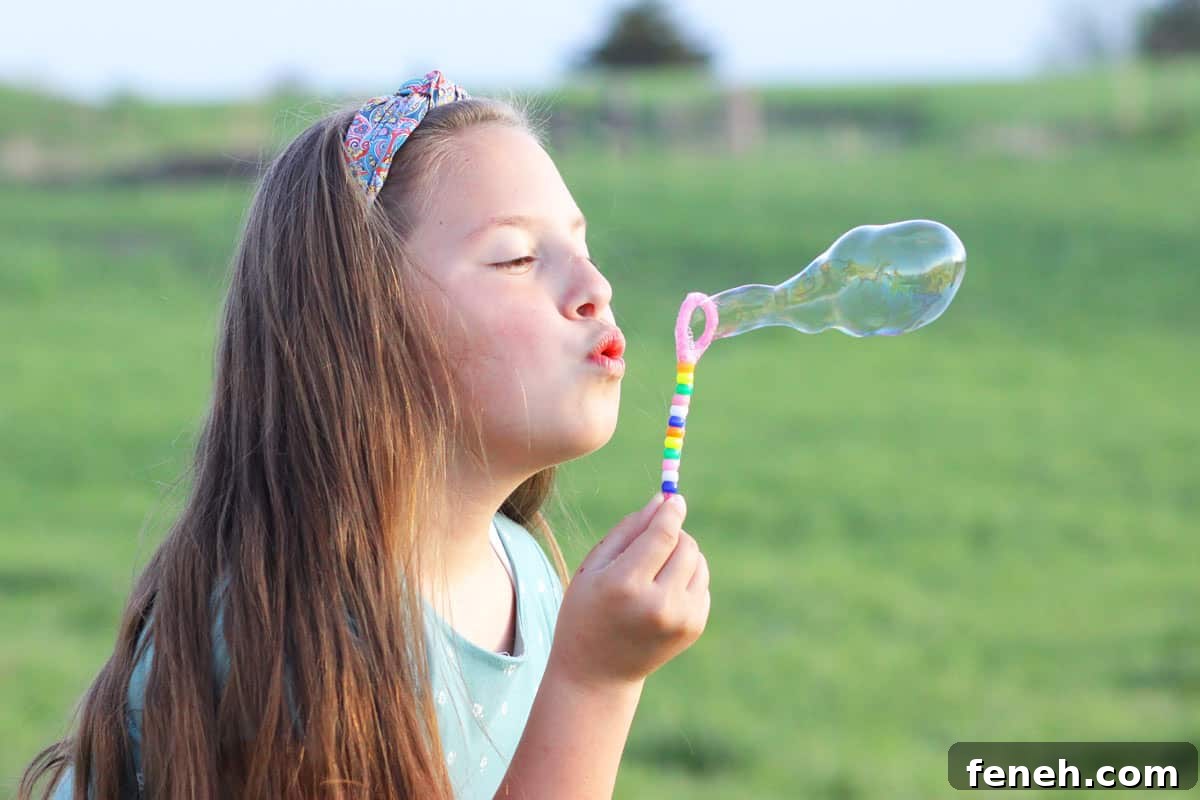
Blowing bubbles is a favorite Summer activity for kids — simple, shared, and inexpensive. With a few wands and a big batch of solution you can keep the fun going all afternoon.
If you run out of commercial solution or a homemade batch you tried before didn’t work, this recipe is a reliable fix. There are many variations online — sugar, corn syrup, cornstarch, baking powder, or different brands of soap — but glycerin is the key to sturdier bubbles that last longer.
Glycerin helps keep the bubble film moist so bubbles don’t dry out and pop quickly.
Glycerin is easy to find and useful for many DIY projects. This simple formula uses three ingredients: dish soap, glycerin, and water. It’s fast to mix, inexpensive to make, and great for both small and giant bubbles. Below you’ll also find instructions for a quick homemade wand and a larger DIY giant wand.
What you need to make bubbles with glycerin
Ingredients
- Distilled water – Best if you plan to store the solution, since distilled water reduces the chance of bacterial growth.
- Dawn or similar dish soap – A clear or blue dish soap works well as the surfactant to form bubbles.
- Vegetable glycerin – A common cosmetic ingredient that attracts and holds water, slowing evaporation and making bubbles stronger and longer lasting.
Supplies
- Half‑gallon jar or container with a lid – This recipe makes about 1/2 gallon; store in a sealed container or divide into smaller bottles.
- Bubble wand – Buy one or make simple wands from household items; see DIY options below.
- Bubble machine (optional) – A bubble machine works well with this solution for hands‑free fun and less dripping.
How to make this bubble solution with glycerin
Mix: Combine the water, dish soap and glycerin. Stir gently — avoid vigorous whisking so you don’t create foam. A slow swirl with a spoon or by hand is ideal.
Tips for success
To store: Keep the solution in a sealed container up to six months. Give it a quick stir before each use.
To use: Pour into a wide, shallow dish for giant bubbles or a narrow jar for regular wands. Dip the wand and blow or gently wave the wand through the air.
Substitutions: If you don’t have glycerin, light corn syrup can be used as an alternative, though glycerin typically performs better.
Why you’ll like this recipe
- Very economical — a half gallon batch costs only a few dollars to make.
- Only three ingredients: water, dish soap, and glycerin.
- Quick to prepare — ready in minutes with no overnight resting required.
- Produces big, durable bubbles that stand up to Summer play.
FAQ about this glycerin bubble recipe
How do you make homemade bubbles that last longer?
Adding glycerin slows evaporation of the bubble film, keeping bubbles moist and less likely to pop quickly.
What is glycerin?
Glycerin (glycerol) is a colorless, odorless liquid derived from plant or animal fats and used in cosmetics, food, and pharmaceuticals for its moisturizing properties.
Why does glycerin make bubbles stronger?
Glycerin attracts and holds water in the bubble film, slowing drying and evaporation — the main reasons bubbles burst — so they last longer and remain more resilient.
Can I substitute glycerin with other ingredients?
Corn syrup is a common substitute and can work reasonably well, though glycerin is often superior for longevity.
How should I store the bubble solution?
Store in a sealed container in a cool, dry place away from direct sunlight. If separation occurs, gently stir before use.
Can I add food coloring?
Yes — a few drops (up to about 10) of food coloring can tint the solution for colorful bubbles, though color may be subtle when bubbles reflect light.
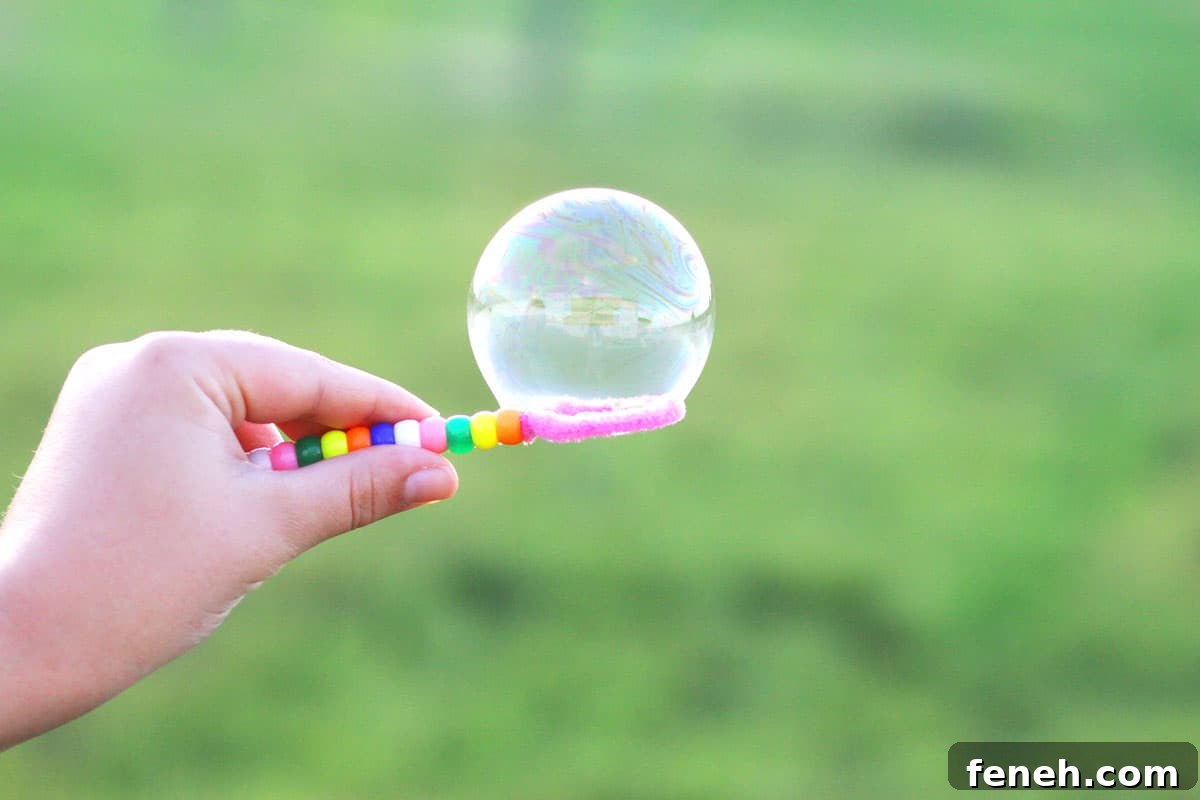
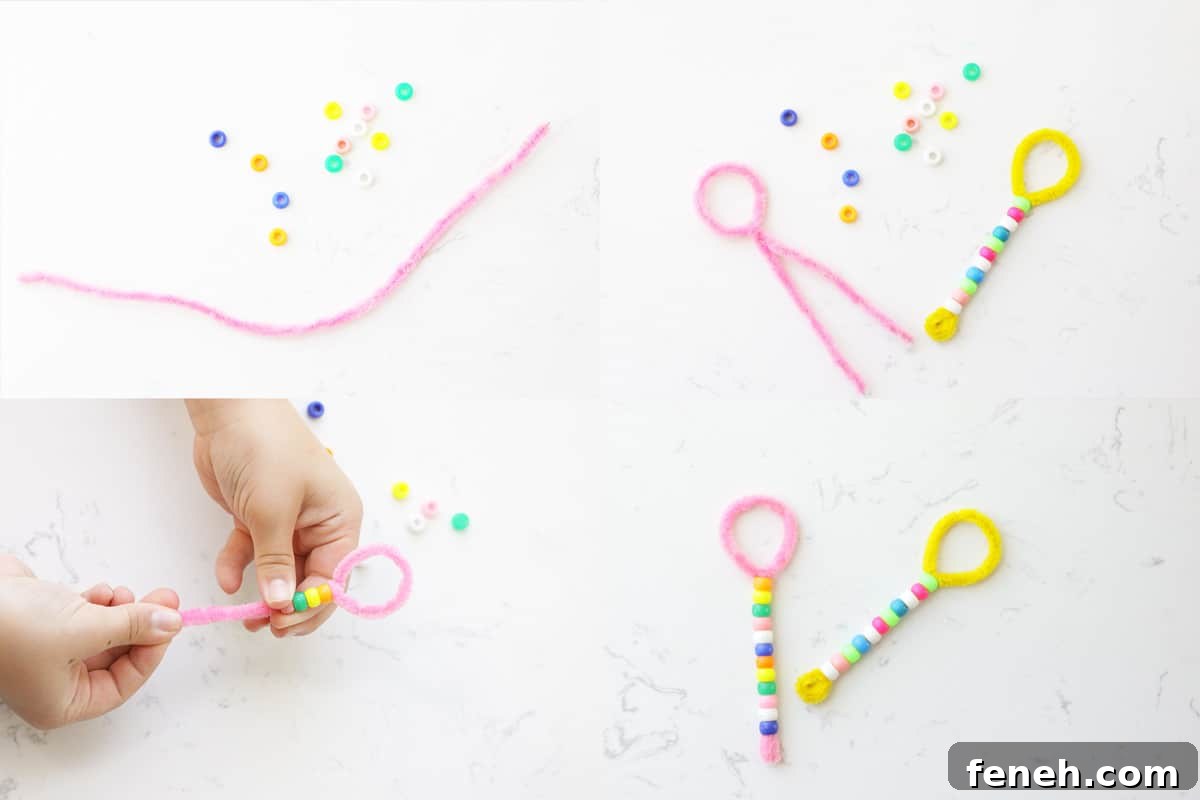
How to make an easy bubble wand
Supplies
- 1 pipe cleaner
- 10–12 pony beads
Instructions
- Bend a pipe cleaner in half and shape the middle 3 inches into a circle.
- Twist the pipe cleaner a couple times below the circle to secure it.
- String 10–12 pony beads onto each end below the twist for a handle and added weight.
- Bend the ends back around the beads to finish the wand.
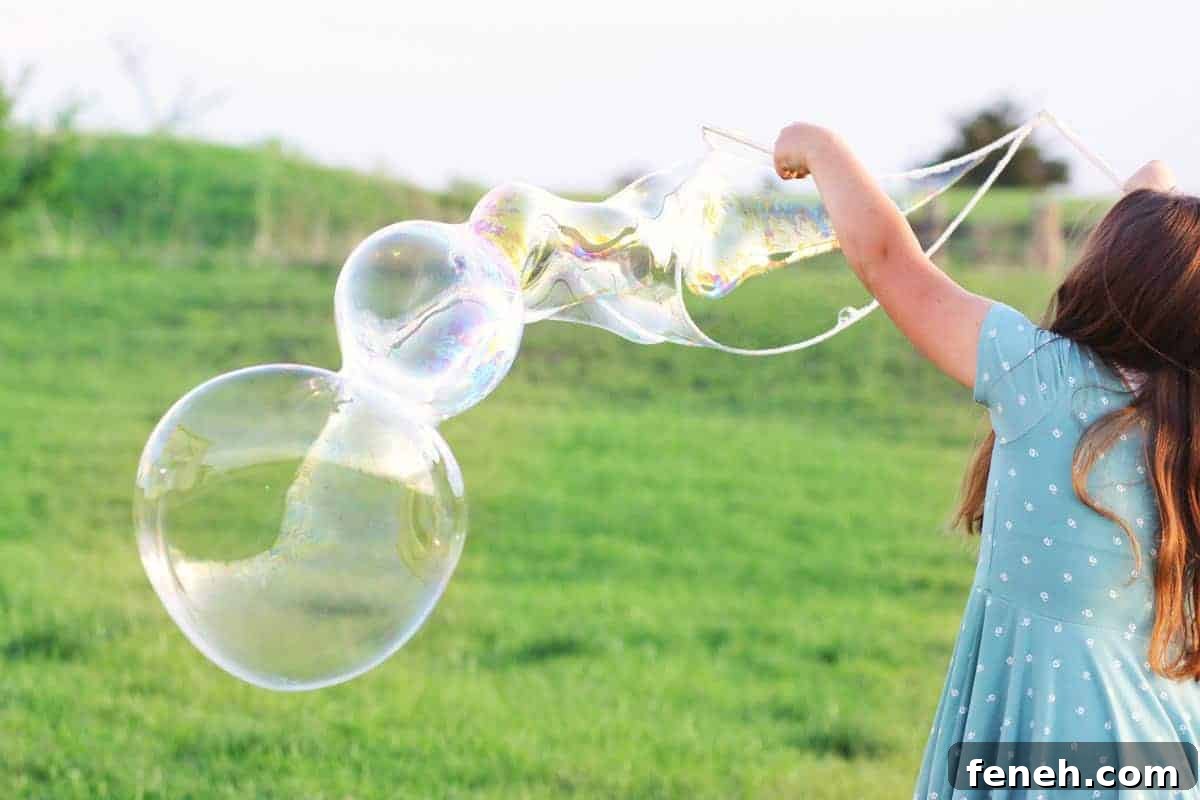
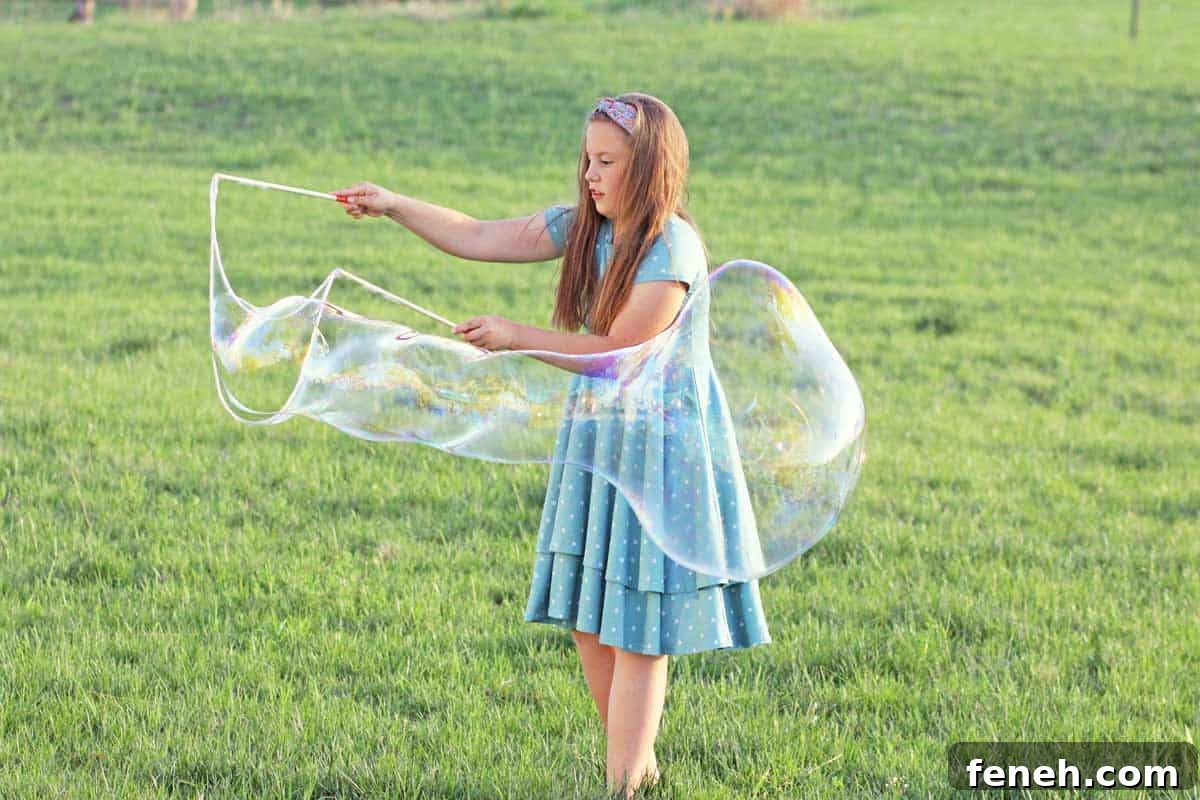
How to make a DIY giant bubble wand
Supplies
- Two wooden dowels (3/8″ thick, about 18″ long)
- Cotton rope, cut into one 5‑foot piece and one 3‑foot piece
- Two screw eyes
Instructions
- Screw one screw eye into the end of each dowel.
- Tie the ends of the 5‑foot rope to each screw eye to form the long loop.
- Tie the 3‑foot rope between the screw eyes to create a handle and stabilize the loop.
- Dip the rope loop into a wide shallow tray of solution and slowly lift and open the dowels to form giant bubbles.
More DIY ideas for summertime
- Healthy Fudgesicles
- All‑Natural DIY Sunscreen
- Homemade Anti‑Itch Cream
- DIY Essential Oil Insect Repellent
- Fruit and Yogurt Swirl Popsicles
Pin these steps to try later and enjoy hours of Summer fun with bubbles made at home!
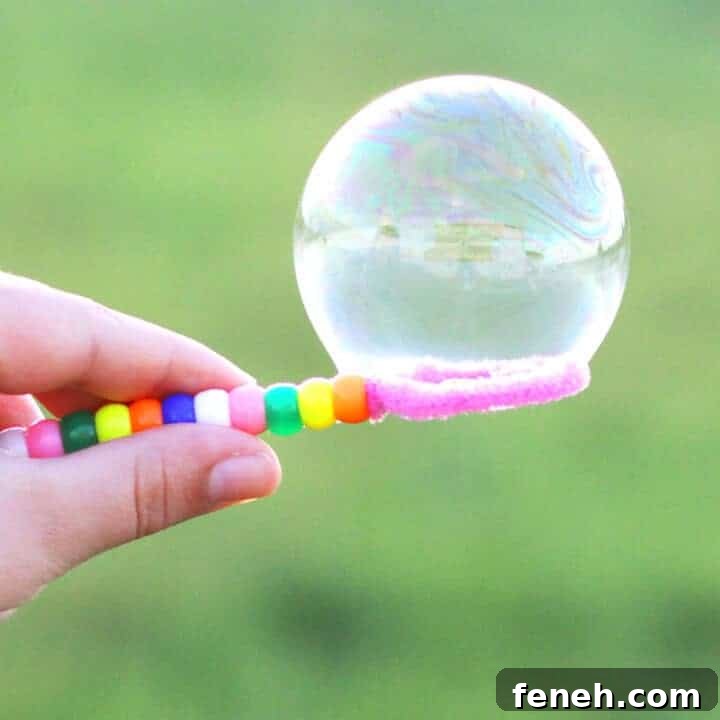
Recipe For Bubbles With Glycerin
1/2 gallon
5 minutes
5 minutes
Make an inexpensive, long‑lasting bubble solution using glycerin for stronger, harder‑to‑pop bubbles.
Ingredients
- 6 cups distilled water
- 1 1/2 cups Dawn or similar dish soap
- 1/3 cup vegetable glycerin
Instructions
- Mix the water, dish soap and glycerin together, stirring slowly and carefully to avoid foam. Do not whisk.
Notes
To store – Keep in a sealed container for up to 6 months. Stir gently before using.
To use – Pour into a shallow dish for giant bubbles or a jar for small ones. Dip the wand and blow or wave it through the air.
Substitutions – If needed, white corn syrup can replace glycerin with decent results.