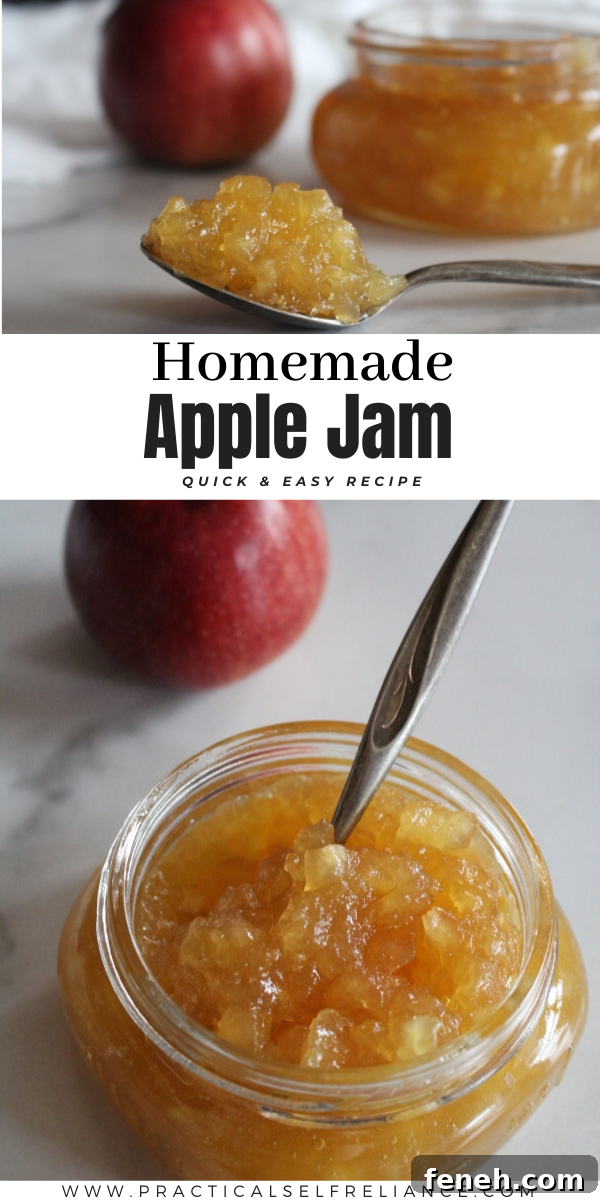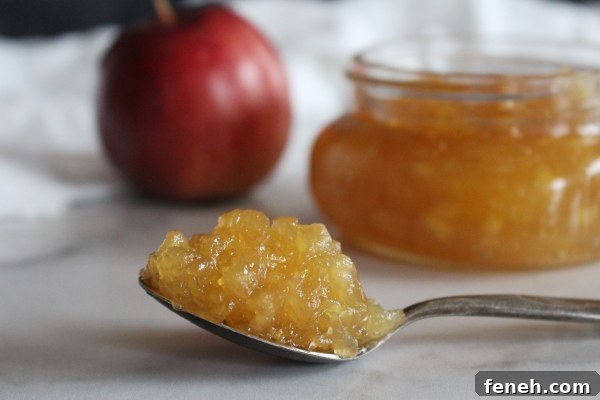
Apple jam is a classic way to preserve apples and brings delicious, bright flavor to toast, biscuits, and baked goods.
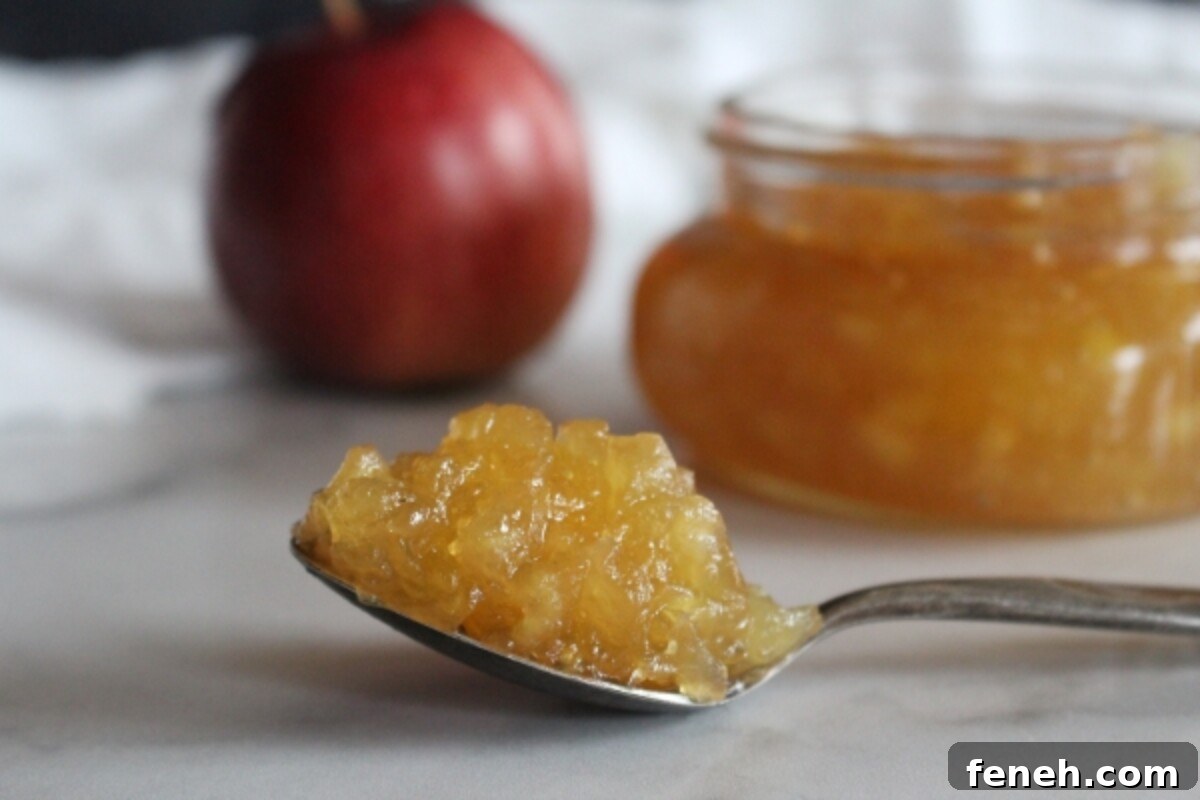
Most people are familiar with applesauce, but if you want something with more body and a true apple flavor, try making apple jam. This preserve highlights the fruit’s natural pectin and creates a chunky, golden spread that’s perfect for breakfast or gifting.
I keep this recipe simple: diced apples, sugar, and a splash of lemon juice. The apples contain enough natural pectin to gel without added pectin, while the lemon juice balances sweetness and prevents browning.
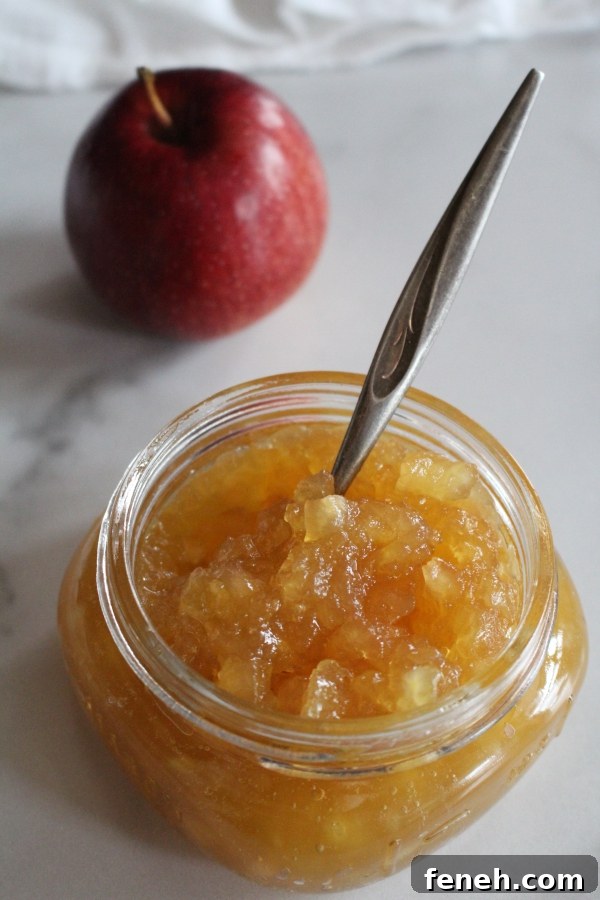
How to Make Apple Jam
The key to keeping the jam chunky instead of turning it into applesauce is macerating the apples in sugar overnight. The sugar draws liquid out of the fruit and firms the pieces so they hold their shape during cooking.
Begin by peeling, coring, and dicing a firm apple variety. Apples that hold up in pies — such as Granny Smith, Empire, or Honeycrisp — work well because they stay relatively firm when heated. Tart, acidic apples give the best flavor; if your apples are very sweet, add a bit more lemon juice to balance the jam.
Cut the apples into small cubes, roughly 1/4 to 1/2 inch. They won’t break down much during cooking, so size them slightly larger than you want them to be in the finished jam.
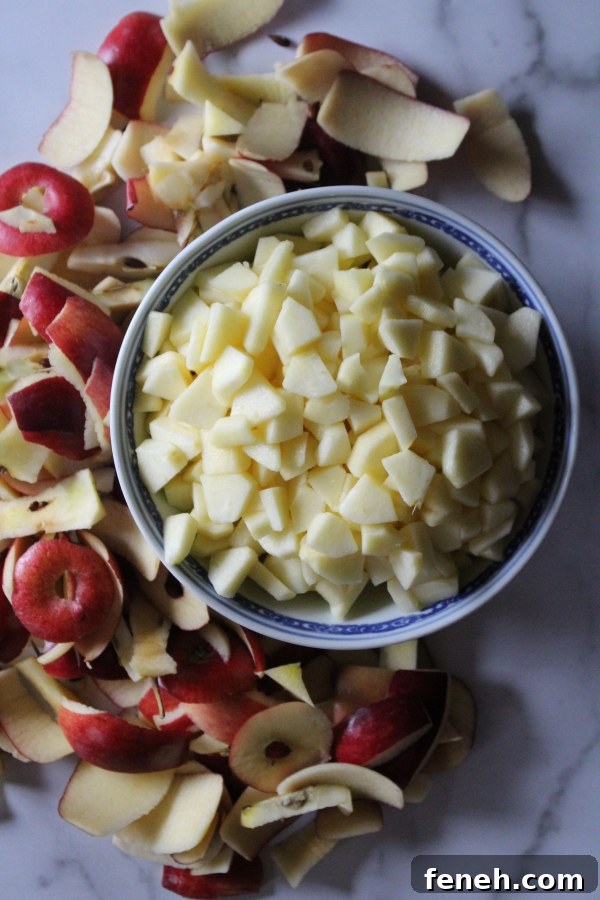
Toss the diced apples with lemon juice — about 2 tablespoons per pound (4 cups) — to prevent browning and add brightness. Weigh the apples; for every pound of chopped apples add 1/2 pound (about 1 cup) of granulated sugar.
If you don’t have a scale, use volume: 4 cups diced apples ≈ 1 pound, and 1 cup sugar ≈ 1/2 pound. In short, the ratio is:
- 1 lb chopped apples (≈4 cups)
- 1/2 lb granulated sugar (≈1 cup)
- 2 Tbsp lemon juice
This batch size cooks down considerably. For example, starting with four times the ratio (16 cups apples) yields roughly 4–5 half-pint (8 oz) jars.
After tossing apples, sugar, and lemon juice, cover and refrigerate overnight (12–24 hours). If you’re short on time, allow at least 4 hours. Maceration keeps the fruit chunky instead of turning to sauce.
When the fruit has macerated, strain the liquid into your jam pot and set the apple pieces aside. Bring the strained juice and sugar to a hard boil, then add the apple chunks to the boiling syrup.
Cook over medium-high heat, stirring occasionally to prevent scorching, for about 20–30 minutes. The mixture will thicken as it cooks and will continue to set as it cools.
To test for gel, chill a plate in the freezer before cooking. Spoon a small amount of jam onto the cold plate — it cools quickly and shows the finished texture. When you’re happy with the consistency, remove from heat and jar.
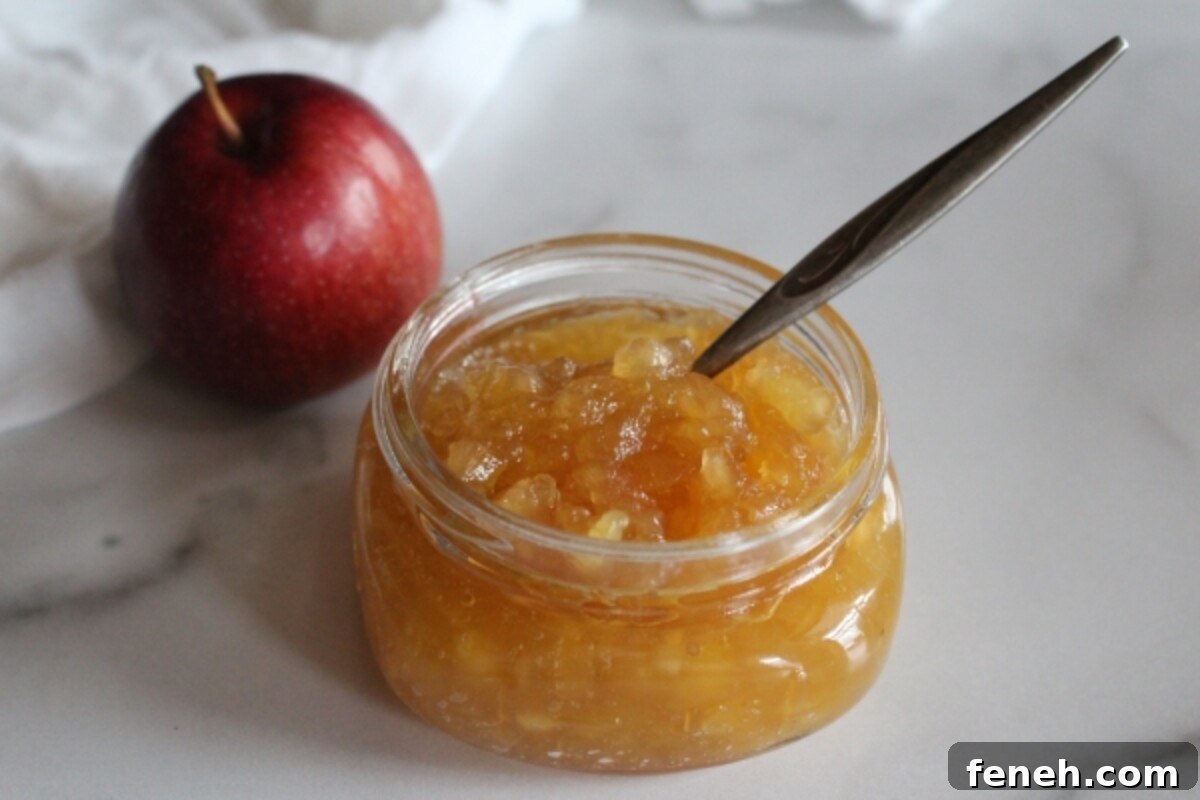
Apple Jam Variations
This recipe is intentionally simple so the apple flavor shines. You can, however, add gentle aromatics or spirits for variation. Ideas that work well:
- Scrape in 1 vanilla bean toward the end of cooking.
- Add 3–4 bruised cardamom pods or 1 cinnamon stick at the start of cooking.
- Add a splash of rum or brandy during cooking for depth.
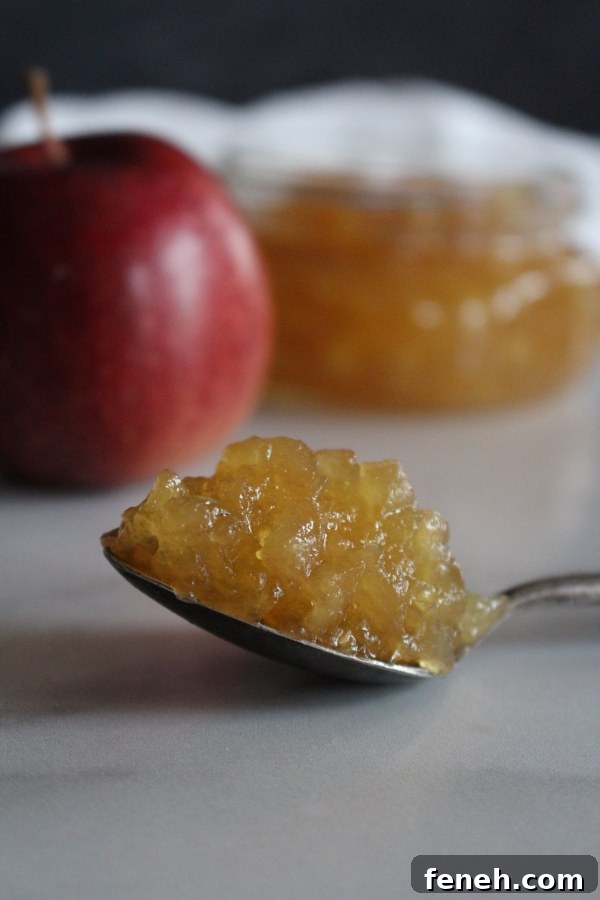
Canning Apple Jam
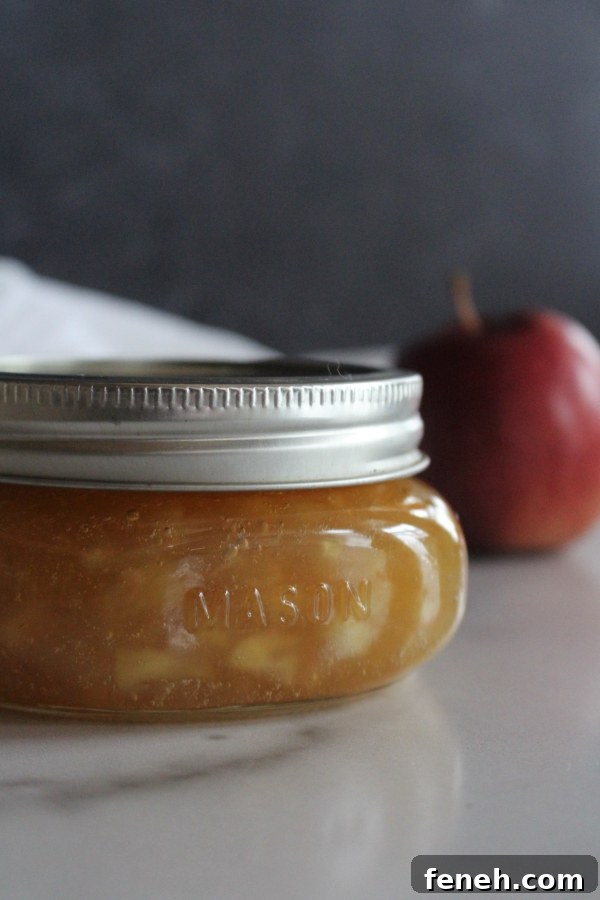
You can store this jam in the refrigerator for several weeks or freeze it for up to six months, but water-bath canning makes it shelf-stable and available year-round. Properly canned apple jam maintains peak quality for 12–18 months.
To can, prepare a water bath canner and clean jars before cooking. When the jam is finished, ladle it into jars leaving 1/4 inch headspace. Use a spatula to remove air bubbles as best you can — thick jams can trap air, so take care to de-bubble thoroughly.
Seal jars with two-piece lids and process in a boiling water bath for 10 minutes. After processing, turn off the heat and leave the jars in the canner for an additional 5 minutes before removing them to a towel. This extra rest reduces siphoning and helps prevent messes while transferring jars.
Once jars are cool, check seals. Any jars that didn’t seal should be refrigerated and used within a few weeks. Properly sealed jars will keep at least 12–18 months without losing quality.
Ways to Preserve Apples
If you enjoy preserving apples, there are many other options to explore beyond jam, including applesauce, apple butter, canned pie filling, cider, and more. Each method emphasizes different qualities of the fruit and suits different uses.
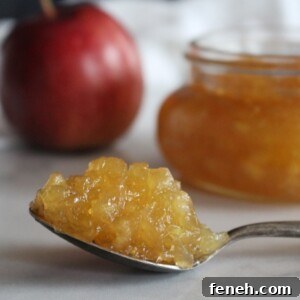
Apple Jam
Equipment
-
Canning jars (8 oz/half-pint)
-
Water bath canner (optional)
-
Heavy-bottomed saucepan
Ingredients
- 16 cups apple pieces, peeled, cored & diced (≈4 lbs prepared, from about 6 lbs whole apples)
- 4 cups sugar, (≈2 lbs)
- 1/2 cup lemon juice, fresh or bottled
Instructions
-
1. Peel, core, and dice apples into 1/4–1/2 inch cubes.
-
2. Toss the chopped apples with lemon juice and sugar, cover, and refrigerate for 12–24 hours (minimum 4 hours). Maceration helps the fruit stay chunky during cooking.
-
3. If canning, prepare a water bath canner and wash jars; skip for freezer jam.
-
4. Pour the strained liquid and sugar into a heavy saucepan and bring to a boil. Add the apple pieces to the boiling syrup. Use a pan large enough to accommodate foaming.
-
5. Cook, stirring occasionally, for 20–30 minutes until the mixture thickens. If pieces are large, gently crush a few with a potato masher.
-
6. Test for gel by chilling a plate in the freezer and placing a small spoonful on it. Jam reaches gel stage at about 220°F (adjust for elevation).
-
7. When jam is ready, remove from heat and pack into jars, leaving 1/4 inch headspace. Seal with two-piece lids.
-
8. Store refrigerated for immediate use or process jars in a water bath for 10 minutes. After processing, turn off heat and let jars sit in the canner for 5 minutes before removing to cool. Check seals and refrigerate any unsealed jars.
Notes
Fall Canning Recipes
Making more preserves this season? Try other fruit preserves, ciders, and purees to vary your pantry.
- Pear preserves and pear cider
- Pumpkin puree and pumpkin powder
- Apple butter and canned pie filling