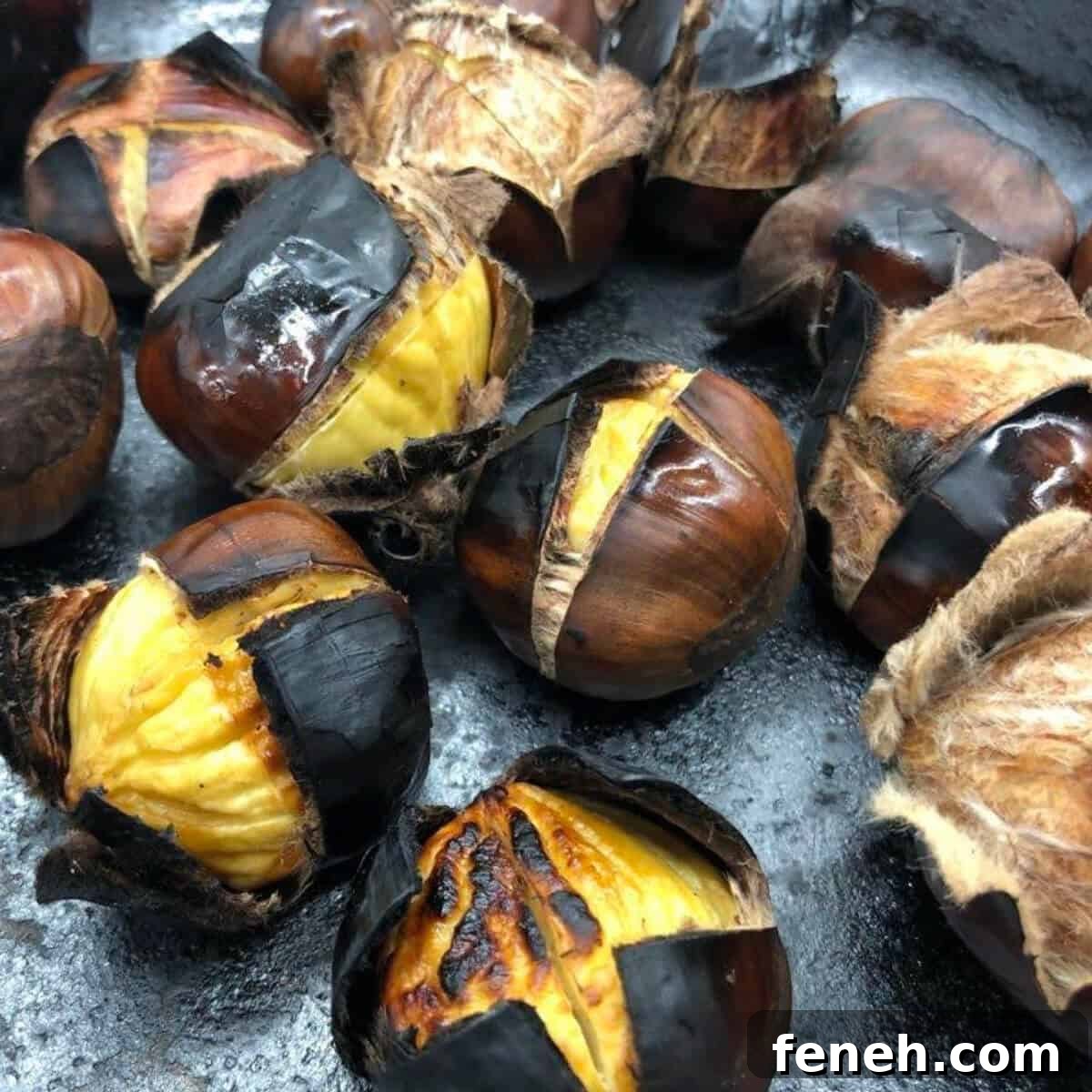
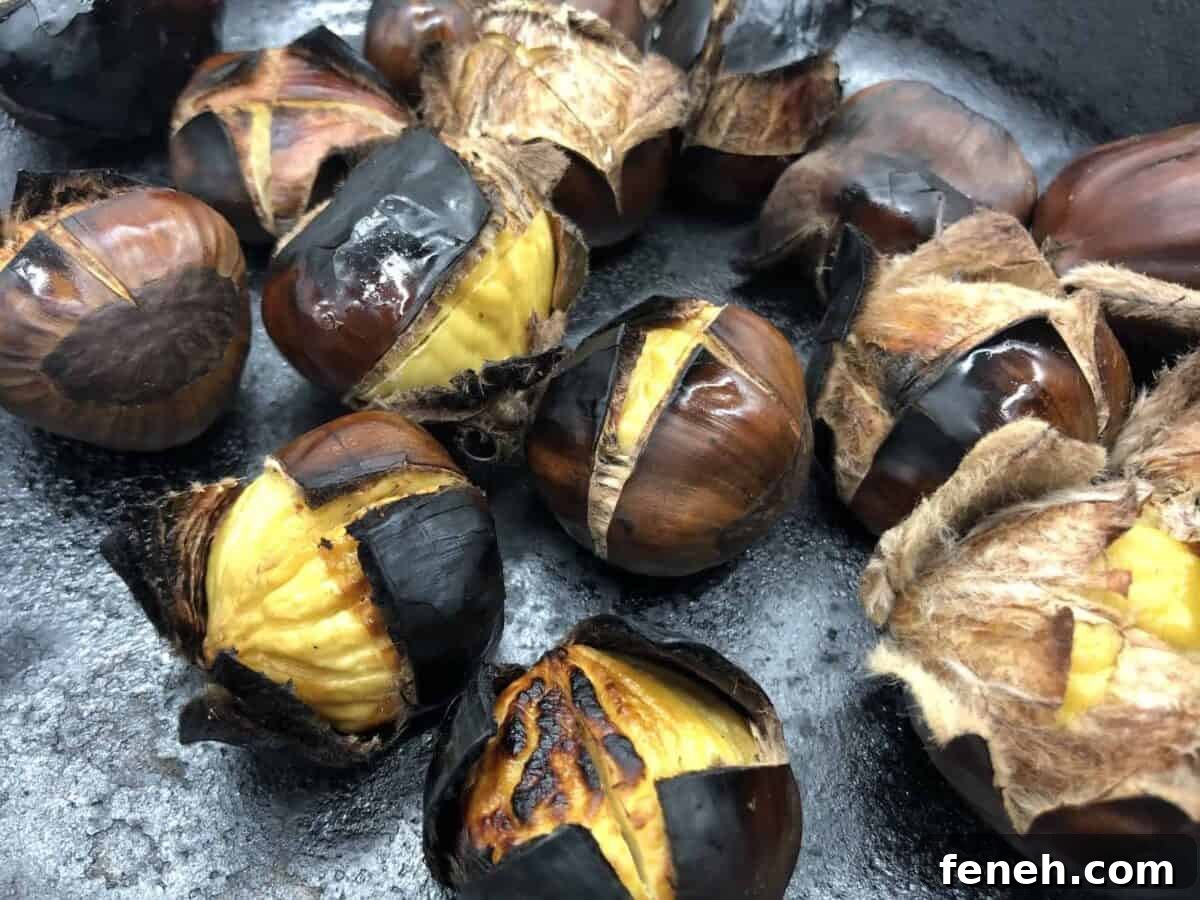
Roasted chestnuts were a cherished winter tradition during my childhood in Switzerland.
Join 500+ cozy folks for weekly recipes, crafts & good vibes – from my home to yours.
Sign up and receive the Cozy Weekend Starter Pack, a free PDF with three recipes, three crafts, and ideas to make your weekend cozier.

👶 My childhood memories
Every December as a child, my parents would drop my sister and me off at our grandparents’ in Bern for a few days. My grandfather loved taking us into town by tram. Before we were allowed into the three-story toy store—with its slide down to the basement—we always stopped by the Kindlifresserbrunnen and bought a half-pound of roasted chestnuts.

Street vendors roasted chestnuts in huge pans, scooping them into paper cones for customers. As children we wore warm mittens, but peeling chestnuts required bare fingers. We would brave the cold and then quickly pull our hands away from the still-hot shells. After bouncing a chestnut in your hand to loosen the shell and scraping away the inner skin, you could finally bite into the warm, creamy flesh. The first bite would scorch your tongue, then the chestnut’s sweet, smoky, nutty flavor would settle in—pure winter comfort.
🌳 Chestnuts in the US
After moving to the United States I learned the sad history of the American chestnut: chestnut blight devastated the species across much of the country in the early 20th century. Restoration programs are working to reintroduce disease-resistant trees, but commercial harvesting will take time.
For now, most sweet chestnuts in U.S. markets are imported from Europe. I treat myself to them each December to recreate those childhood flavors and memories.
🌰 How to buy and prepare chestnuts
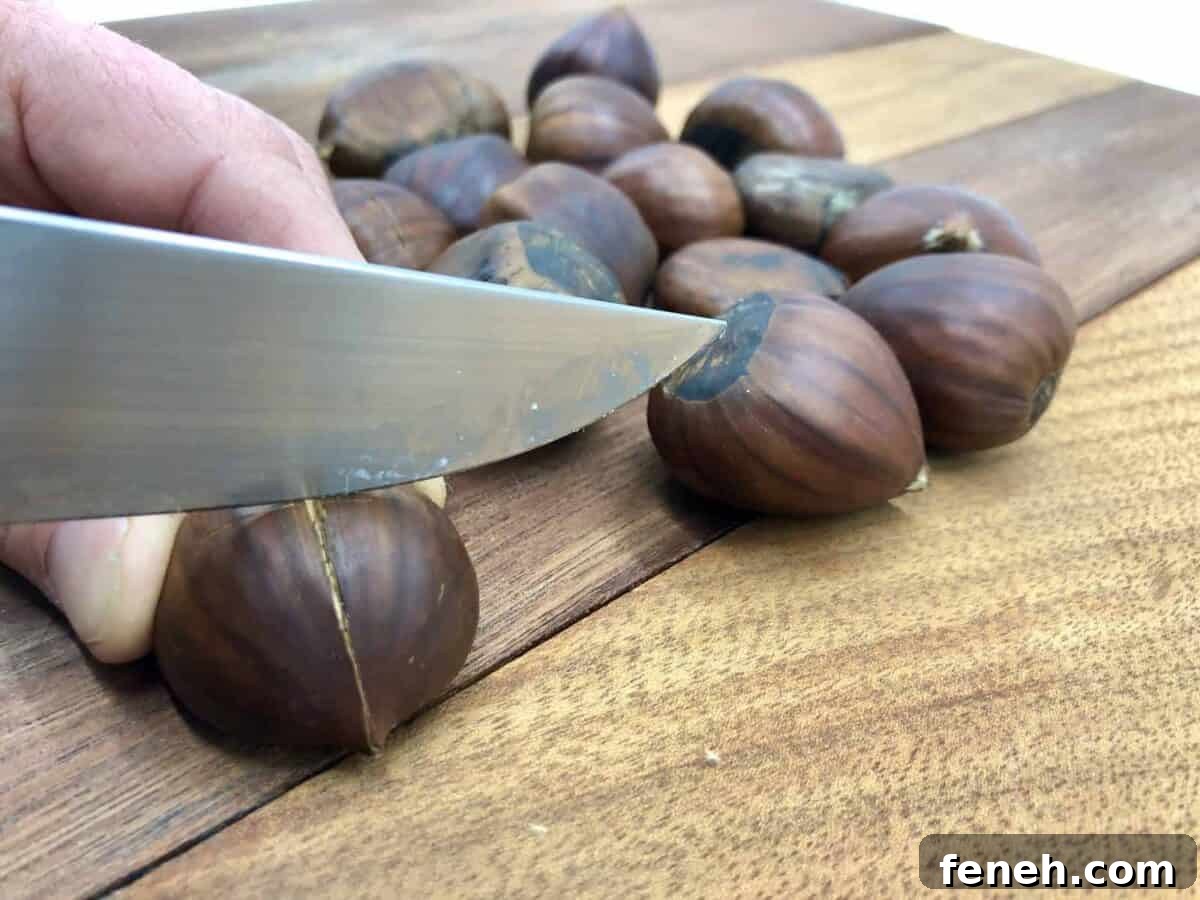
Pick large, uniform chestnuts when possible. A sharp knife is essential: cut a cross on the rounded side of each chestnut. It’s fine to cut slightly into the flesh. This vent prevents the nuts from exploding while roasting and makes the shell easier to peel afterward.
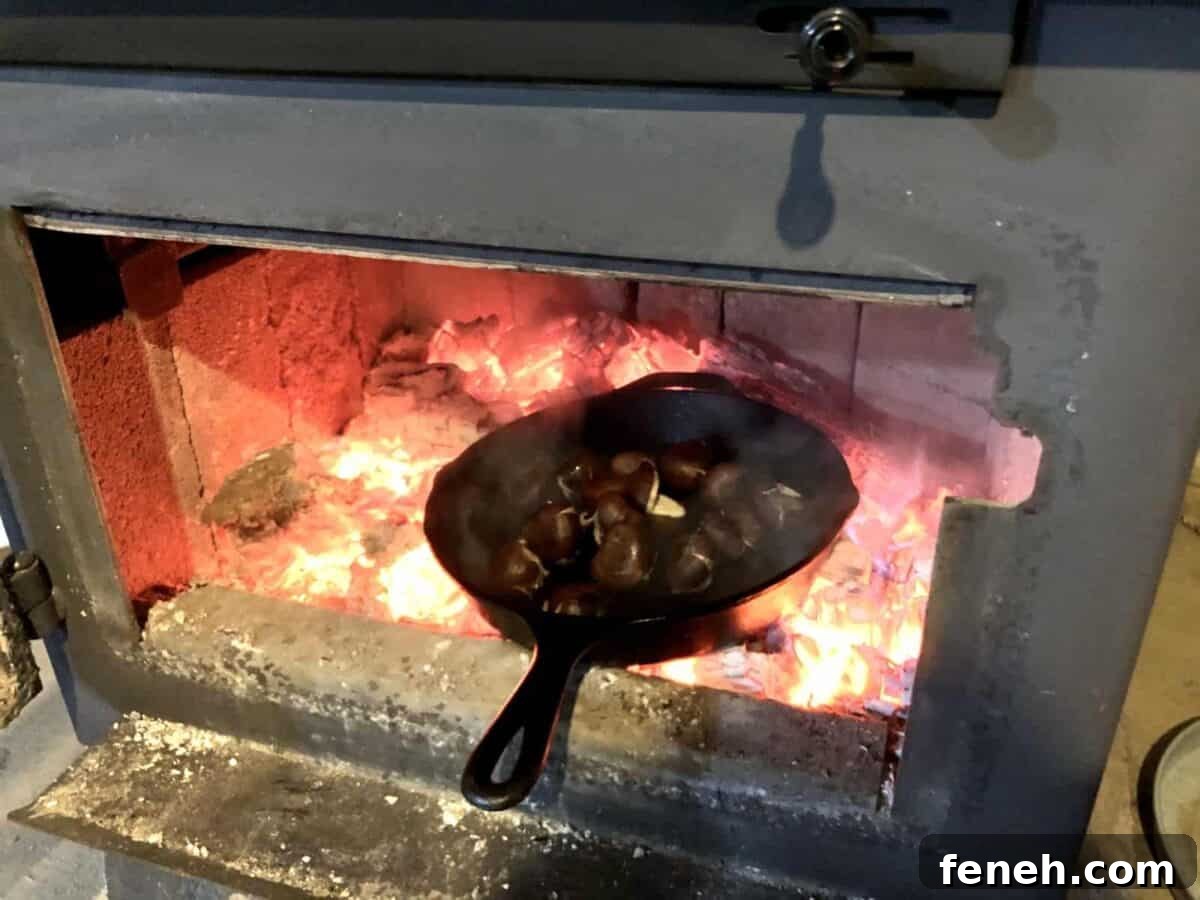
Roasting can be done in an oven, over an open fire, or on a wood-burning stove. I use a cast-iron pan directly in the fire briefly, then finish on top of the stove for an even roast. For the last few minutes, cover the pan with a damp kitchen towel to create steam; this softens the chestnut flesh and makes peeling easier.
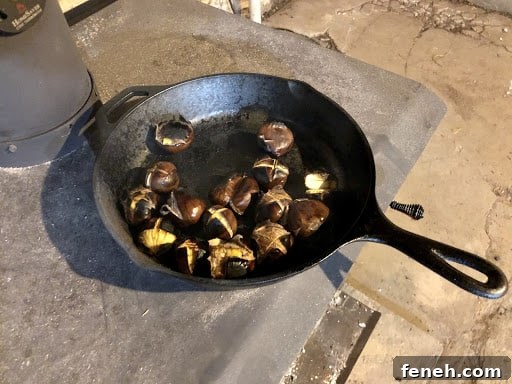
Here’s a simple oven method for those without a wood stove:
- Preheat the oven to 425°F (220°C).
- Arrange scored chestnuts in a single layer on a baking sheet.
- Roast 15–20 minutes, until the flesh is tender. Time varies with size.
- Cover with a clean, damp towel for a few minutes, then peel while warm.
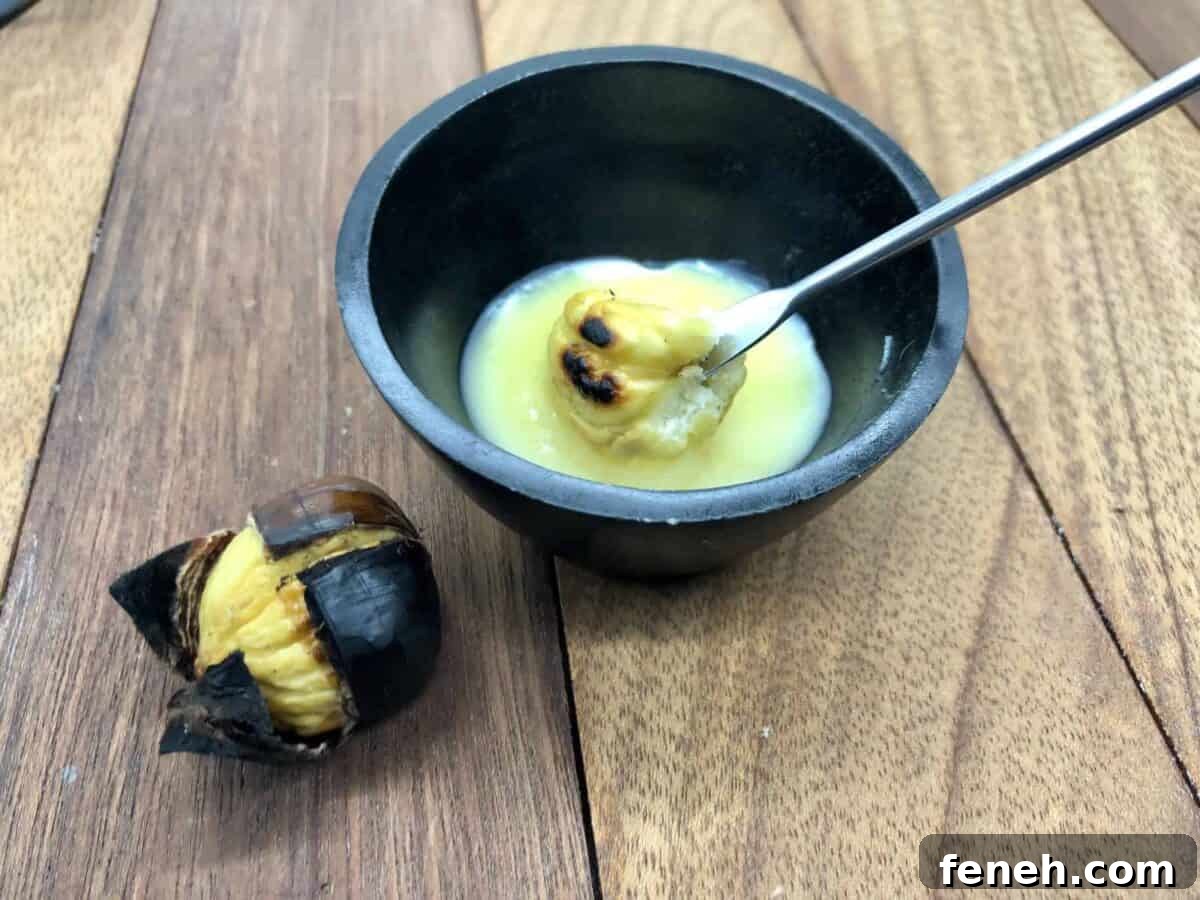
- Enjoy plain or dipped in melted butter for extra richness.
😃 Fun facts about chestnuts
- Chestnuts are unique among common nuts for containing vitamin C.
- They belong to the beech and oak family; chestnut wood is rich in tannins, making it durable and naturally weather-resistant.
- Roasted chestnuts have been sold on European streets since at least the sixteenth century and remain a winter staple in many towns.
- Roman soldiers sometimes ate chestnut porridge before battle.
- In Japan, the chestnut (kuri) is an ancient cultivated food that predates rice in some regions.
- The phrase “that old chestnut” reflects how chestnuts appear in literature and cultural references, including works like George Orwell’s 1984.
- In Hungarian cuisine, chestnuts are often sweetened, mixed with rum, riced, and topped with whipped cream to make gesztenyepüré (chestnut purée).
- Chestnuts can be eaten raw, boiled, baked, roasted, or dried and milled into flour for breads, cakes, pastas, polenta, or used as a thickener in stews and sauces.
Did you make these roasted chestnuts? Tell us about it in the comments below!
Content and photographs are copyright protected. Sharing this recipe is encouraged, but copying full recipes to social media is prohibited.