
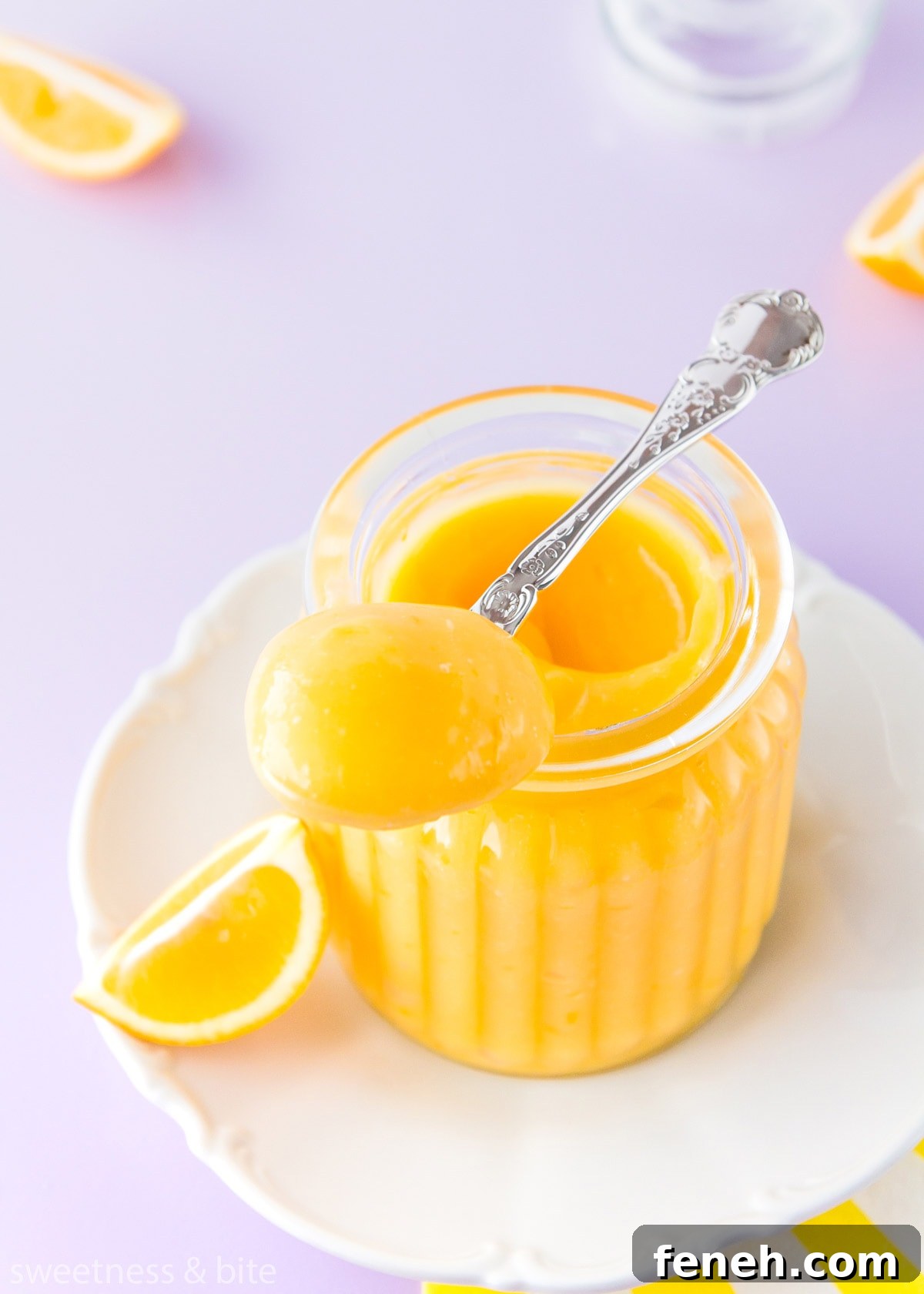
Microwave lemon curd is the simplest homemade lemon curd you can make. With just a few ingredients you’ll get a smooth, thick curd that’s perfect for filling, spreading or topping desserts, breakfasts and more.

Some recipes you try once and immediately know they’re the best — this microwave lemon curd is one of those. It’s quick, reliable and delicious every time.
This version was shared with me by a family friend, so at home we call it Barb’s Lemon Curd. Call it whatever you like — Microwave Lemon Curd, Easy Lemon Curd, or simply The Best Lemon Curd — it’s versatile and always tasty.
What You’ll Love About This Recipe
- Simple to make using only four core ingredients.
- Made in the microwave — no saucepan or double boiler needed.
- Sweet, tangy and incredibly versatile — it elevates yoghurt, cakes and pastries.
- Easy to scale down — halve the recipe for smaller batches.
- Uses whole eggs, so you won’t have leftover egg whites to use up.
What is Lemon Curd?
Lemon curd is a thick, glossy sauce made from lemon juice, sugar, butter and eggs — essentially a lemon-flavoured custard. It balances tartness and sweetness and can be adjusted to taste.
It’s sometimes called lemon honey or lemon butter, but whatever you call it, it’s a wonderful pantry staple when you want to brighten desserts or breakfasts.
Traditionally lemon curd is cooked on the stovetop or over a water bath, but the microwave method is faster and especially beginner-friendly.
Scroll to the recipe card for the full ingredient list and printable recipe, or read on for tips and step photos.
Ingredients
You only need four basic ingredients:
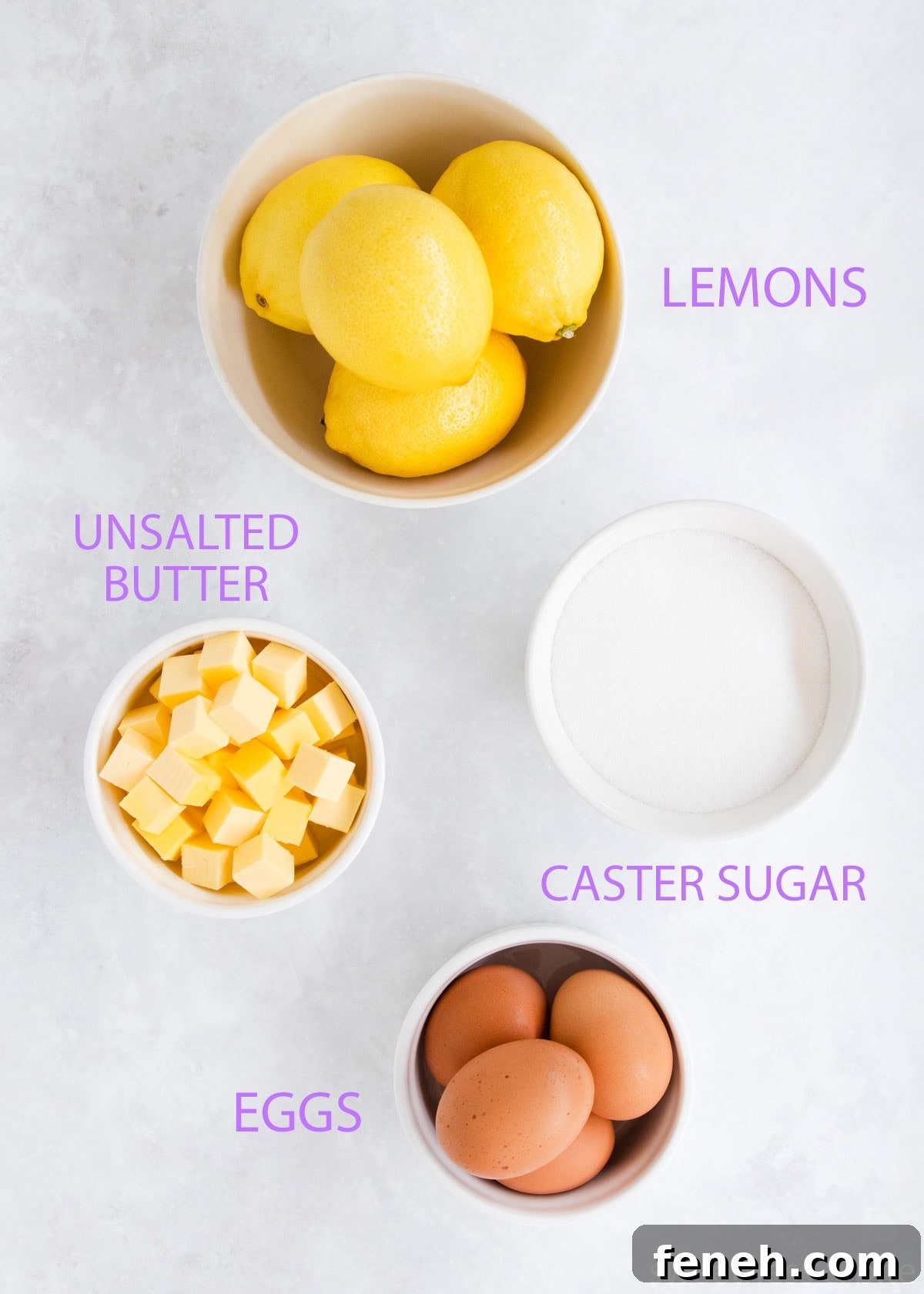
🍋 Lemons – Use fresh lemons for the best flavor and zest. About four medium lemons usually yields enough juice, though larger fruit may reduce the number needed. Meyer lemons are sweeter and less acidic, so the curd will be milder if you use them. Bottled lemon juice works in a pinch but fresh is best.
🍋 Eggs – Whole large eggs are used here. If your eggs are smaller, add an extra egg to reach the same thickness.
🍋 Sugar – Caster (superfine) sugar dissolves quickly, but regular granulated sugar is fine.
🍋 Butter – Unsalted butter is preferred so you can control the salt level.
Microwave Tips
Microwaves vary, so adjust timings and power to suit yours. The key is gentle, gradual heating after the eggs are added to avoid scrambling. Use low-medium power and cook in short bursts, stirring well between bursts to even out hot spots.
If you spot small cooked bits of egg, don’t worry — strain the curd through a fine sieve when it’s done.
If your microwave lacks a low-power setting, use shorter (20–30 second) bursts and stir frequently.
How to Make Microwave Lemon Curd
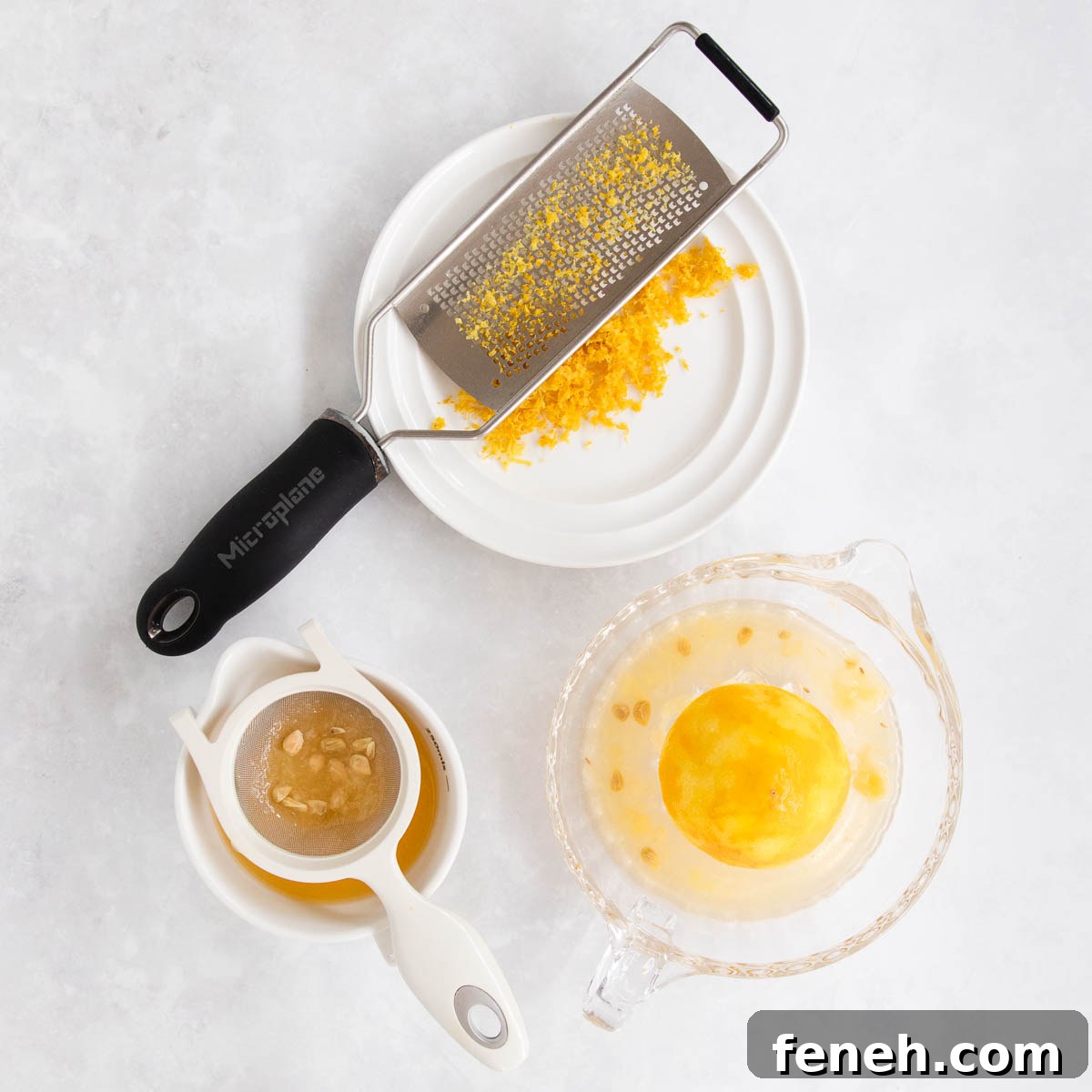
Zest the lemons first using a fine grater so you get fragrant, fine zest without large strips. If you only have a coarse grater, add the zest early and strain it out later for smooth curd.
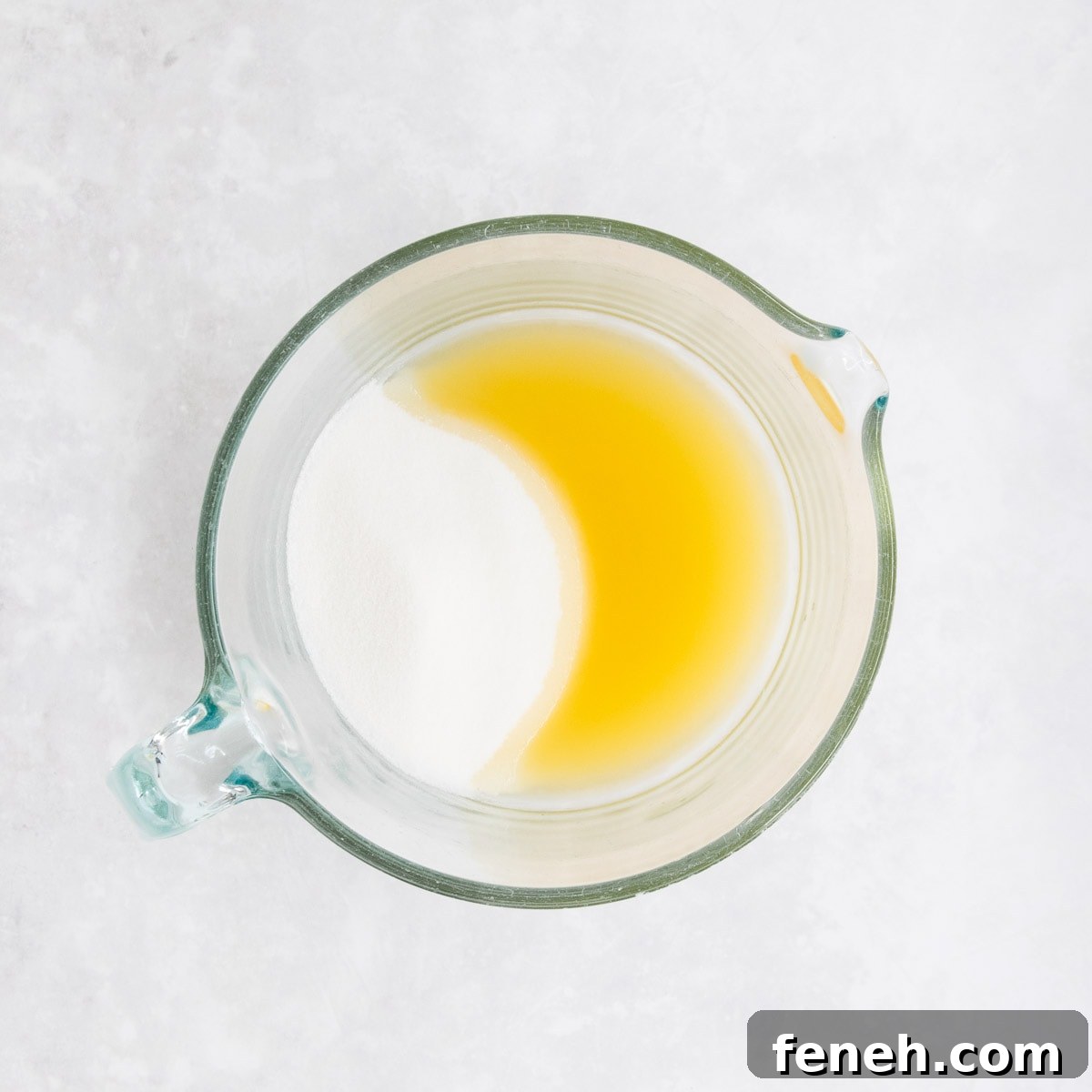
Juice the lemons, strain the juice and measure it into a large microwave-safe jug. Stir in the sugar and microwave at full power for 2–3 minutes, stirring after each minute until the sugar mostly dissolves.
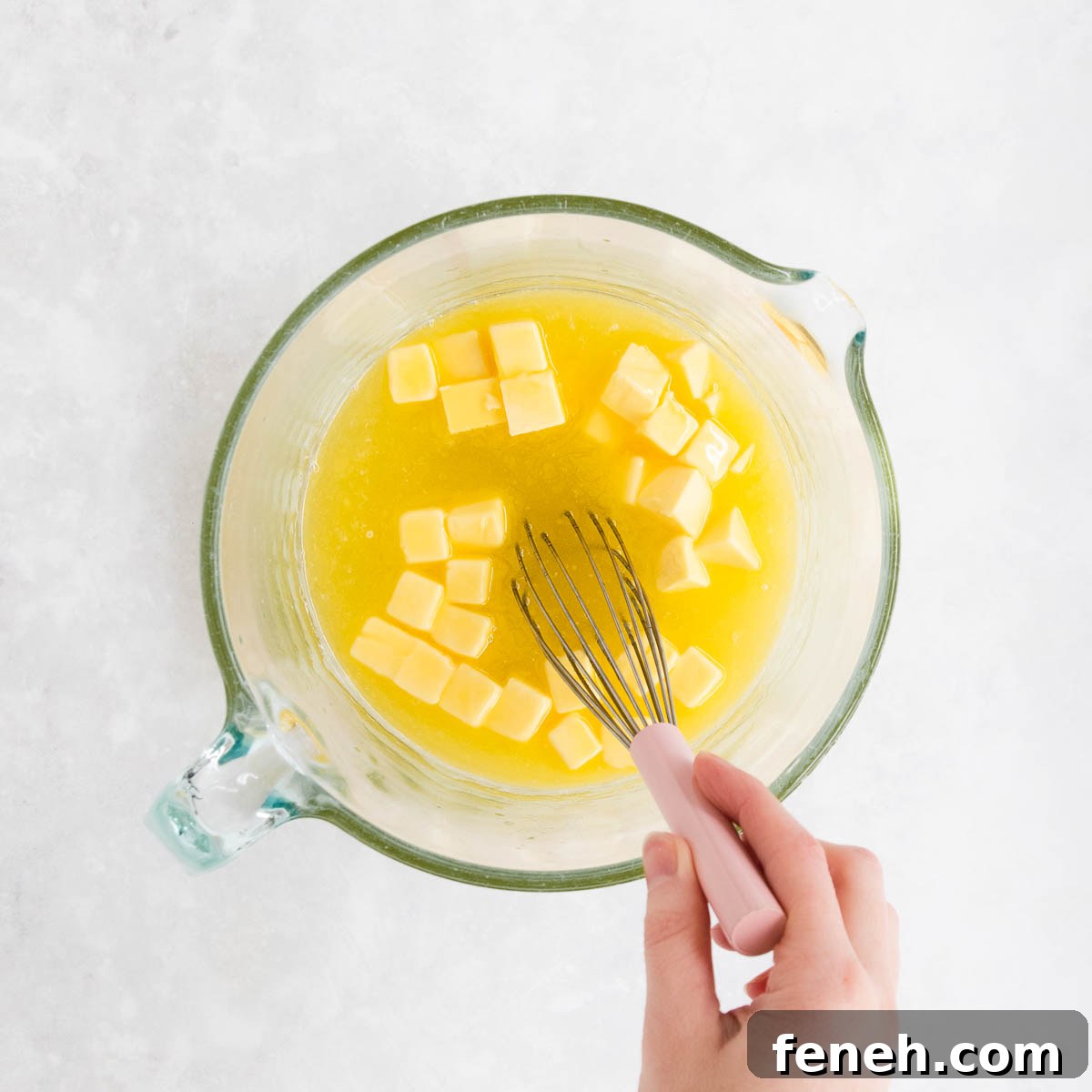
Add the butter and whisk until fully melted and incorporated.

Whisk in the beaten eggs gradually, adding a little at a time and mixing well so the mixture comes together smoothly.
Stir in half the lemon zest, then microwave on 50% power for 2–3 minutes, stirring after each minute, until the curd begins to thicken. Reduce the power to 30% and heat in 30-second bursts, stirring between bursts, until the curd coats the back of a spoon and leaves a clear line when you draw your finger through (be careful — it’s hot).
Remember the curd will continue to thicken as it cools.

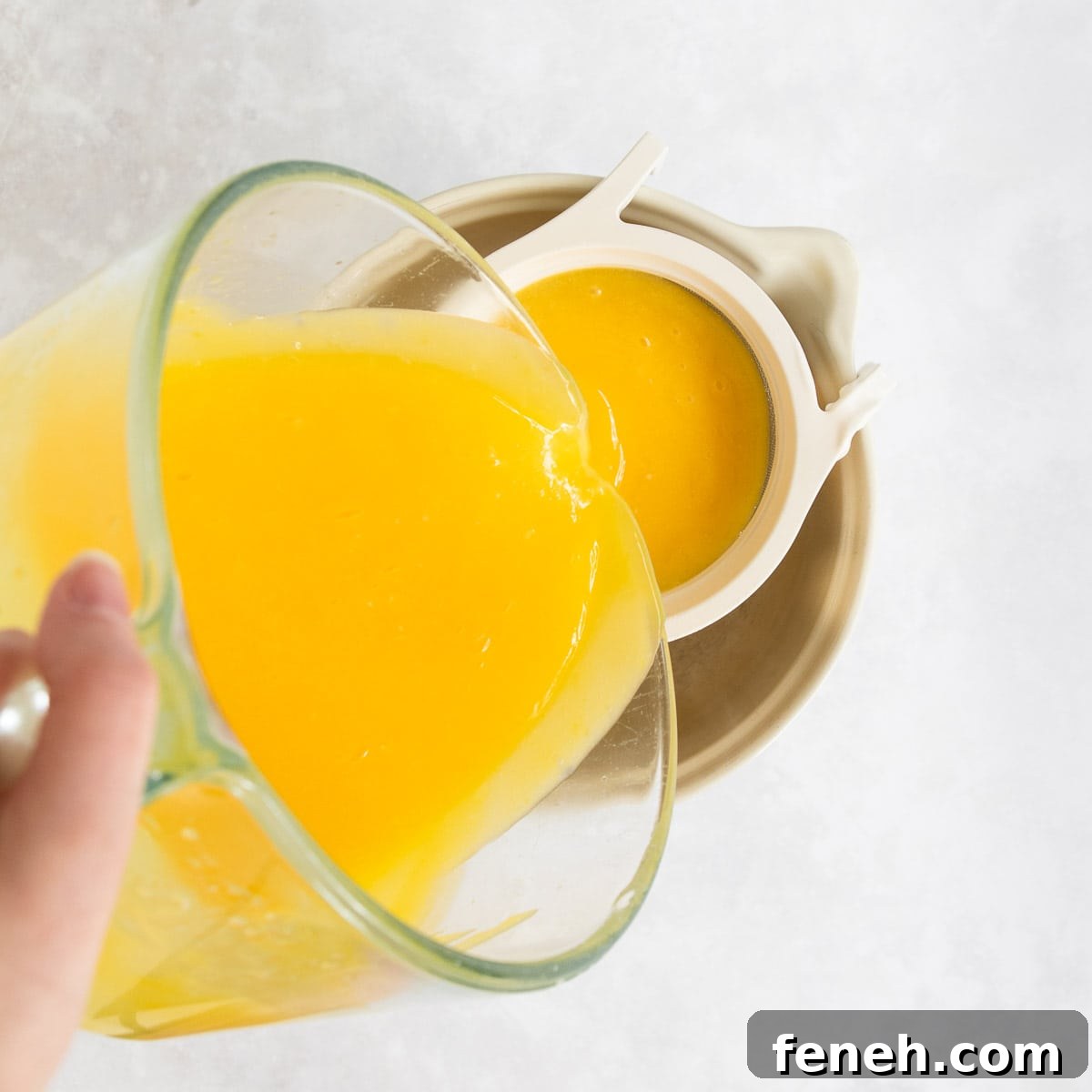
Immediately strain the curd through a fine mesh sieve into a clean jug or bowl to remove any small pieces of cooked egg.
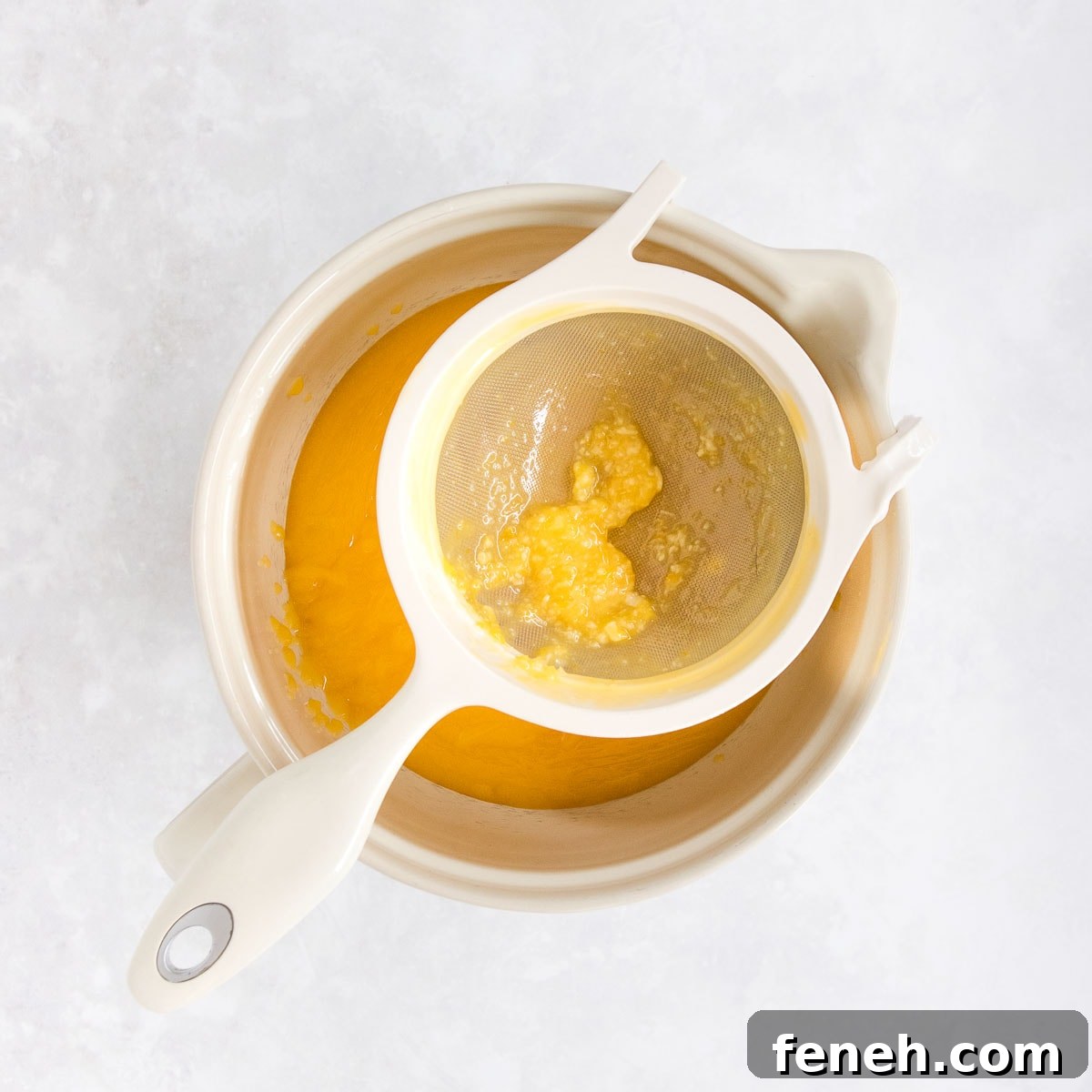
Tap the sieve to encourage the curd through — do not press it through with a spoon, as that can force tiny pieces of cooked egg through the mesh.
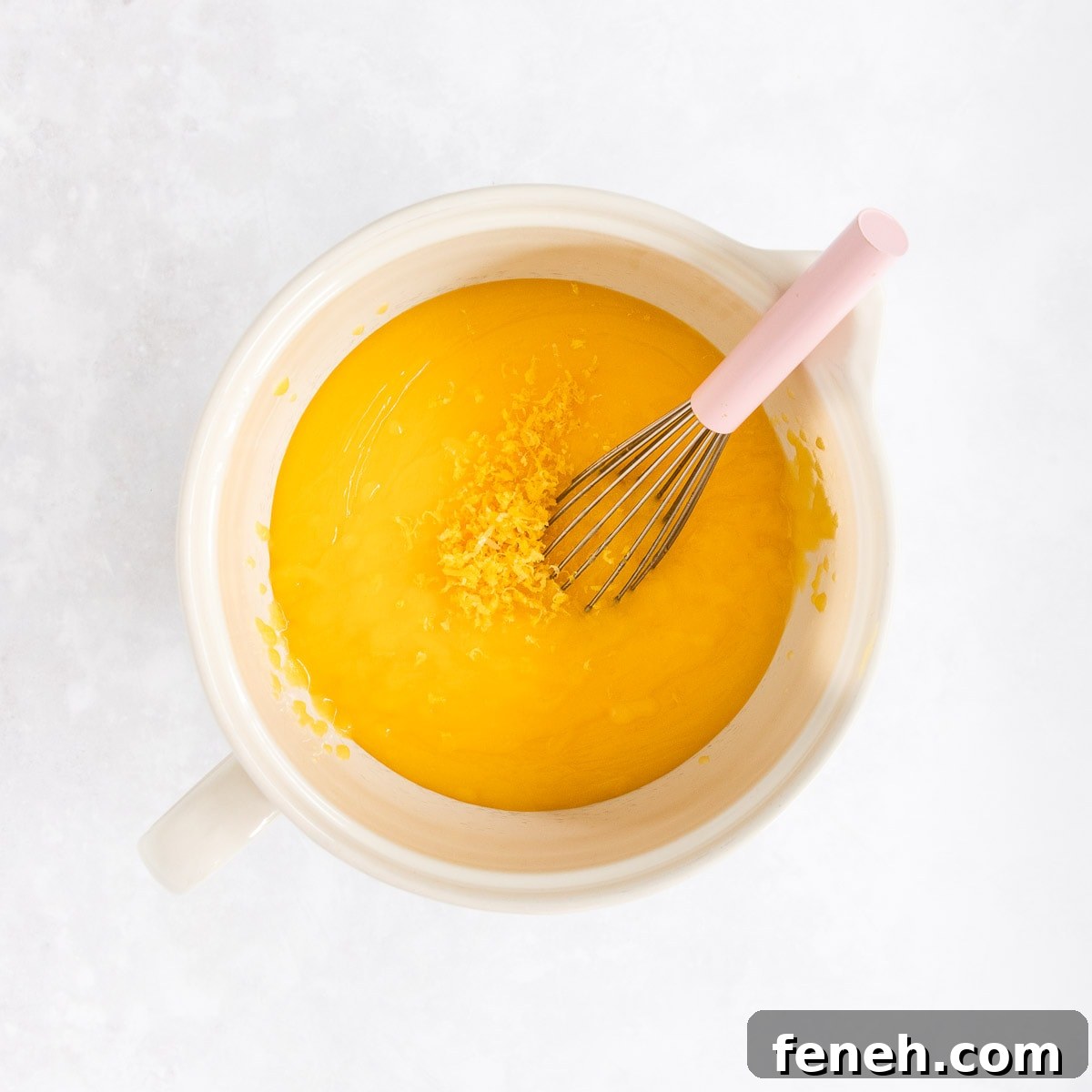
Stir in the remaining zest and taste. If the curd is too sweet, add a little extra lemon juice; if it’s too tart, whisk in a teaspoon of sugar at a time until it suits you. Cover and let the curd cool.
How to Stop Lemon Curd Forming a Skin on Top
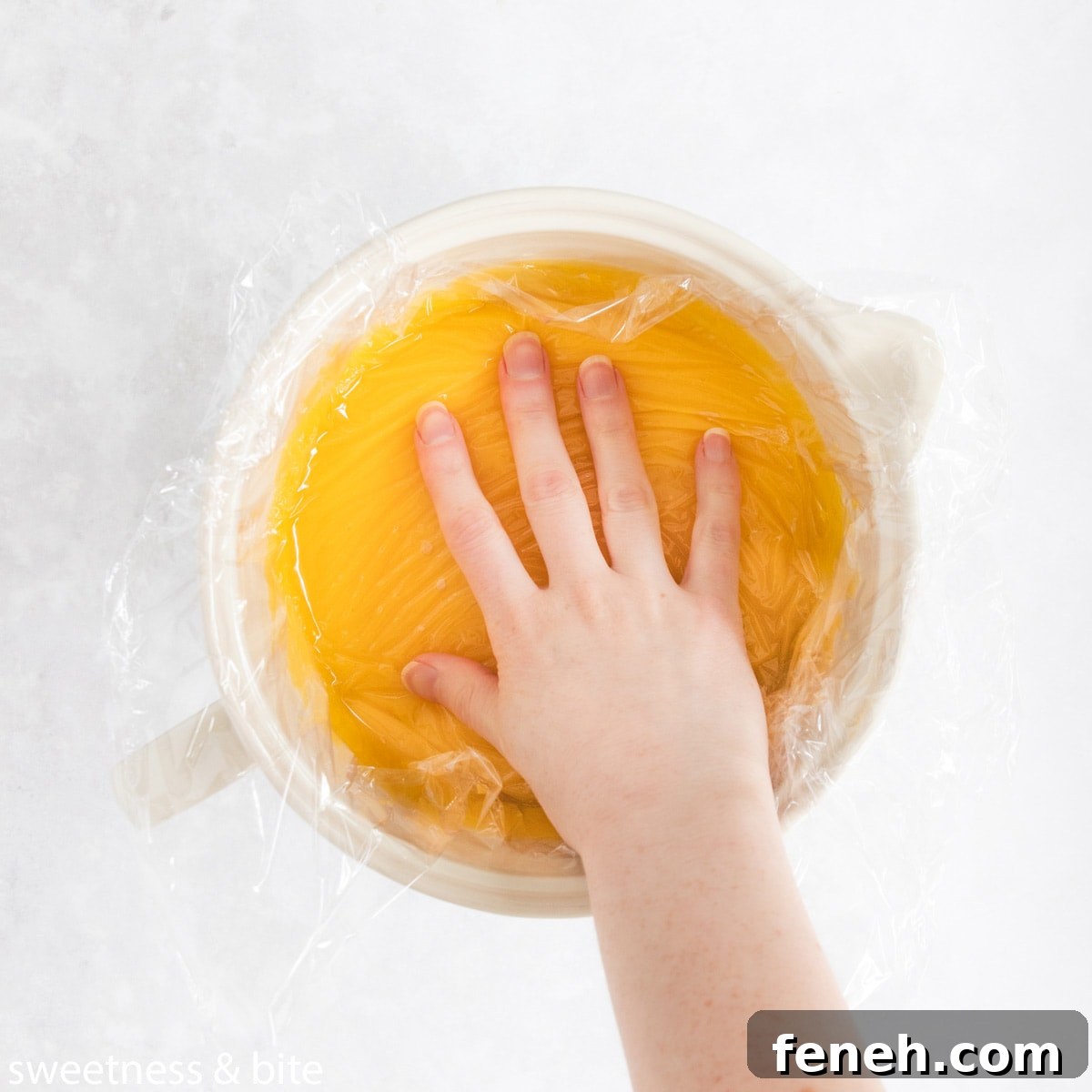
If you’ll use the curd straight away, leave it in the jug or bowl and press plastic wrap directly onto the surface to prevent a skin forming as it cools. When it’s no longer hot to the touch, transfer it to the refrigerator to cool completely.
To store in jars, fill them to the top, screw on the lids and refrigerate once the curd has cooled a little. Properly stored, microwave lemon curd keeps 1–2 weeks in the fridge.
Ways to Use Lemon Curd
- As the filling for a lemon meringue pie
- Swirled into a cheesecake or used as a topping
- Spread on toast, scones, pancakes or waffles
- Swirled through whipped cream over pavlova or meringues
- Mixed into Greek or coconut yoghurt with berries and granola
- Used as a cupcake or cake filling (pipe a dam of buttercream or ganache first to contain the curd)
- As a filling for Swiss roll, sponge, tart shells or cream puffs
Lemon curd also makes a lovely gift — jar it and add a ribbon or twine for presentation.
More lemon recipes…
Lemon Cheesecake Cups
Gluten Free Lemon Slice

Microwave Lemon Curd
Print Recipe
Pin Recipe
Save
Ingredients
- 150 g unsalted butter
- 160 ml lemon juice (⅔ cup)
- 300 g caster sugar (1 & ⅓ cups)
- 4 large eggs lightly beaten
- 4 teaspoons lemon zest finely grated
Instructions
-
Cut the butter into small pieces and set aside.
-
Combine lemon juice and caster sugar in a large microwave-safe jug. Microwave at 100% power for 2–3 minutes, stirring after each minute, until the sugar has mostly dissolved.
-
Add the butter and whisk until completely melted.
-
Whisk in the eggs and half (2 teaspoons) of the lemon zest.
-
Microwave on 50% power for 2–3 minutes, stirring after each minute, until the curd begins to thicken.
-
Reduce power to 30% and cook in 30-second bursts until thick. If your microwave doesn’t reach 30%, continue at 50% with frequent stirring.
-
While cooking, place the remaining 2 teaspoons of zest into a heatproof jug and set a sieve over it.
-
Pour the cooked curd through the sieve into the jug, then stir to combine with the zest.
-
Cool for about 20 minutes, stirring occasionally. Press plastic wrap onto the surface and refrigerate until completely cold. Transfer to jars or use as needed.
-
Keeps for 1–2 weeks in the refrigerator.
Notes
Lemon Zest – Add half the zest during cooking for flavor, strain the curd and then stir the remaining zest in for fresh texture. If you prefer all the zest in the curd, add it at the end.
Amount – Use the serving adjusters to scale the recipe. Smaller batches cook faster; larger batches need more time.
Cake filling – To use as a cake filling, pipe a firm buttercream or ganache dam around the layer edge before adding curd to prevent leakage.
Nutritional Disclaimer: Any nutritional information provided is an estimate and intended as a guide only.