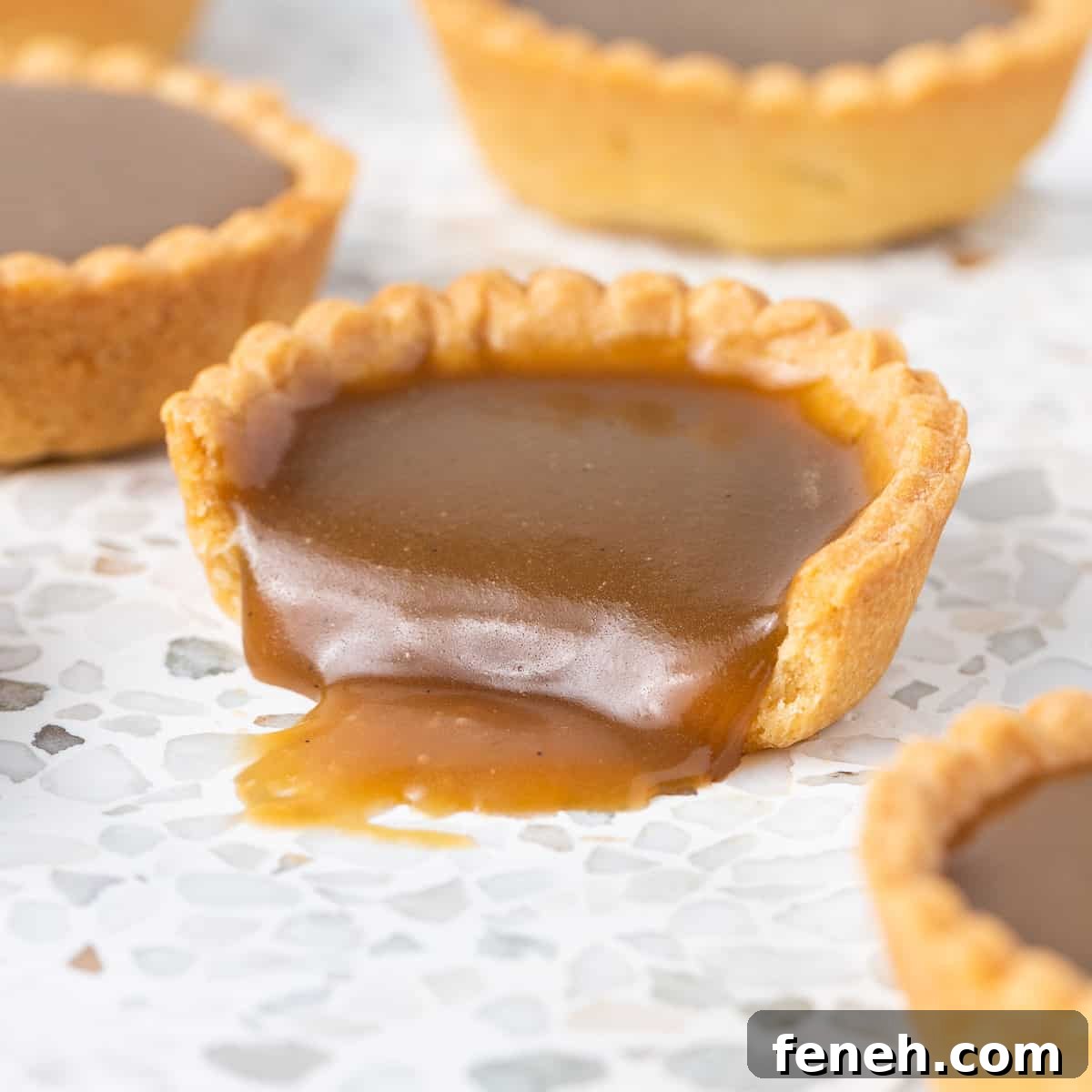
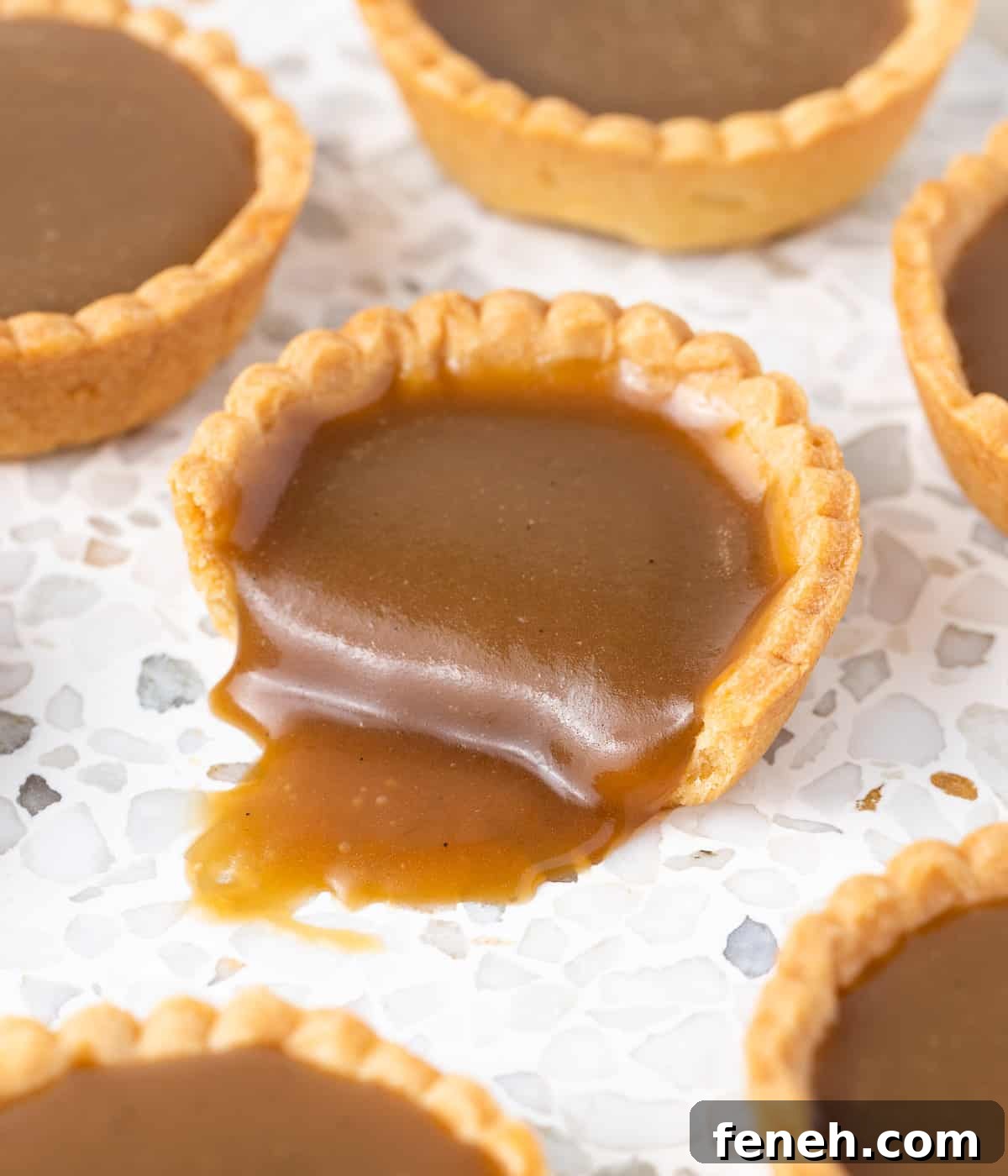
These Mini Butterscotch Tartlets are small, indulgent treats ideal for afternoon tea, holiday gatherings or any special occasion. Crisply baked shortcrust tartlet shells are filled with a homemade salted butterscotch sauce for a rich, gooey center.
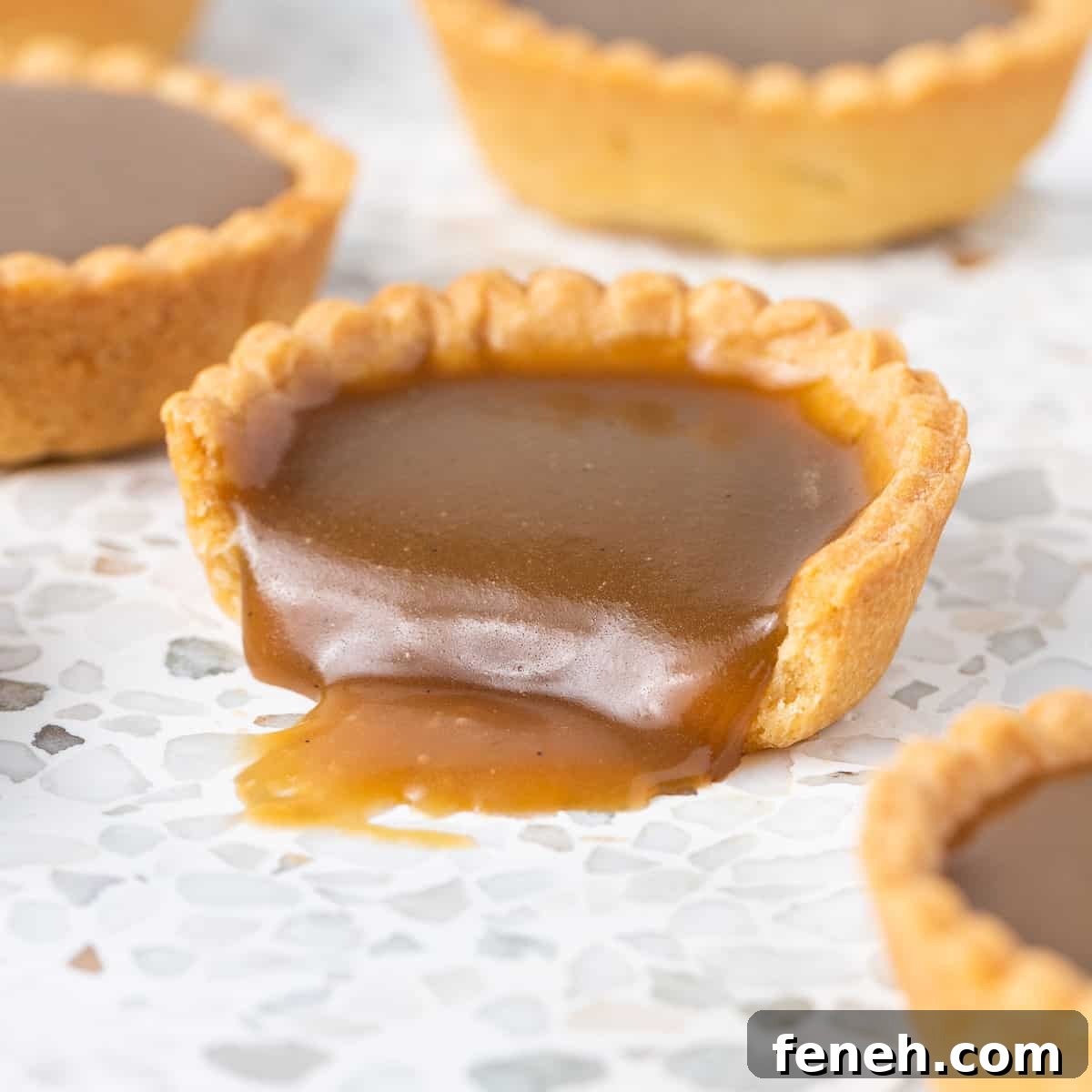
Why we love this recipe
These butterscotch tartlets are truly irresistible. The shortcrust pastry (Pâte Sablée) bakes into a buttery, crisp shell that contrasts beautifully with the sticky, deeply flavored butterscotch filling. The tartlet shells are formed in a standard muffin pan, so no special tartlet tins are required. They’re perfect for a dessert table and keep well in the fridge, so you can prepare them ahead of time for stress-free entertaining.
Ingredients
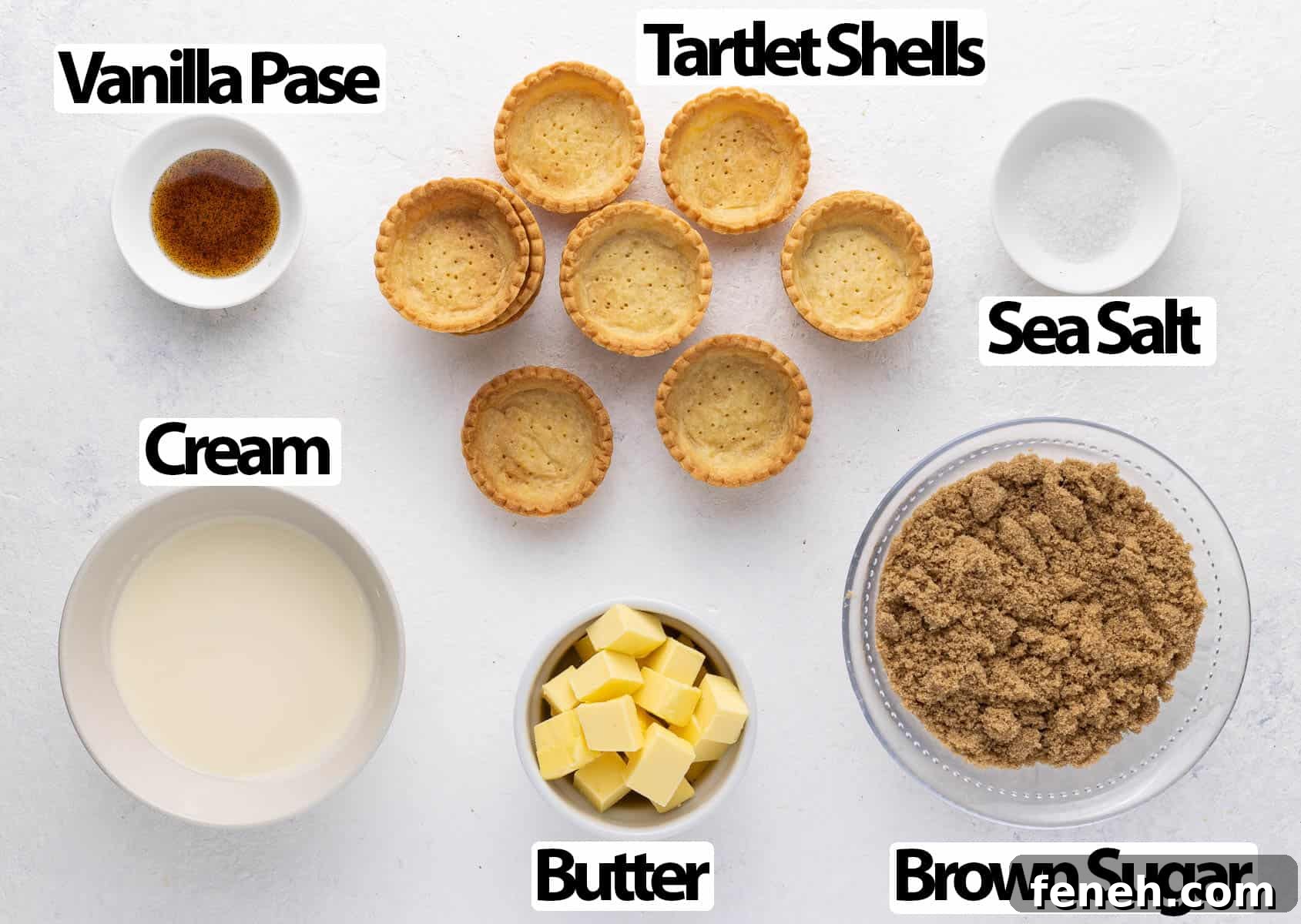
Scroll to the recipe card below for exact quantities
For the Shortcrust Pastry Crusts:
- Dry ingredients: plain/all-purpose flour, icing (powdered) sugar and a pinch of salt.
- Butter: very cold, unsalted butter, cubed.
- Egg: one medium to large egg (whisk separately if preferred).
For the Butterscotch Filling:
- Brown sugar: gives the sauce its deep, molasses-rich flavor. Use light or dark brown sugar depending on how intense you want the flavor.
- Butter: salted or unsalted will work; omit added salt if using salted butter.
- Cream: thickened/heavy (double) cream with at least 30% fat. Warm the cream before adding to the sugar to reduce crystallization and splashing.
- Vanilla and salt: vanilla paste or extract and a pinch of sea salt enhance the butterscotch flavor.
Optional: a little lemon juice or zest to balance sweetness and help prevent crystallization.
How to make Butterscotch Tarts
Making the Shortcrust Pastry
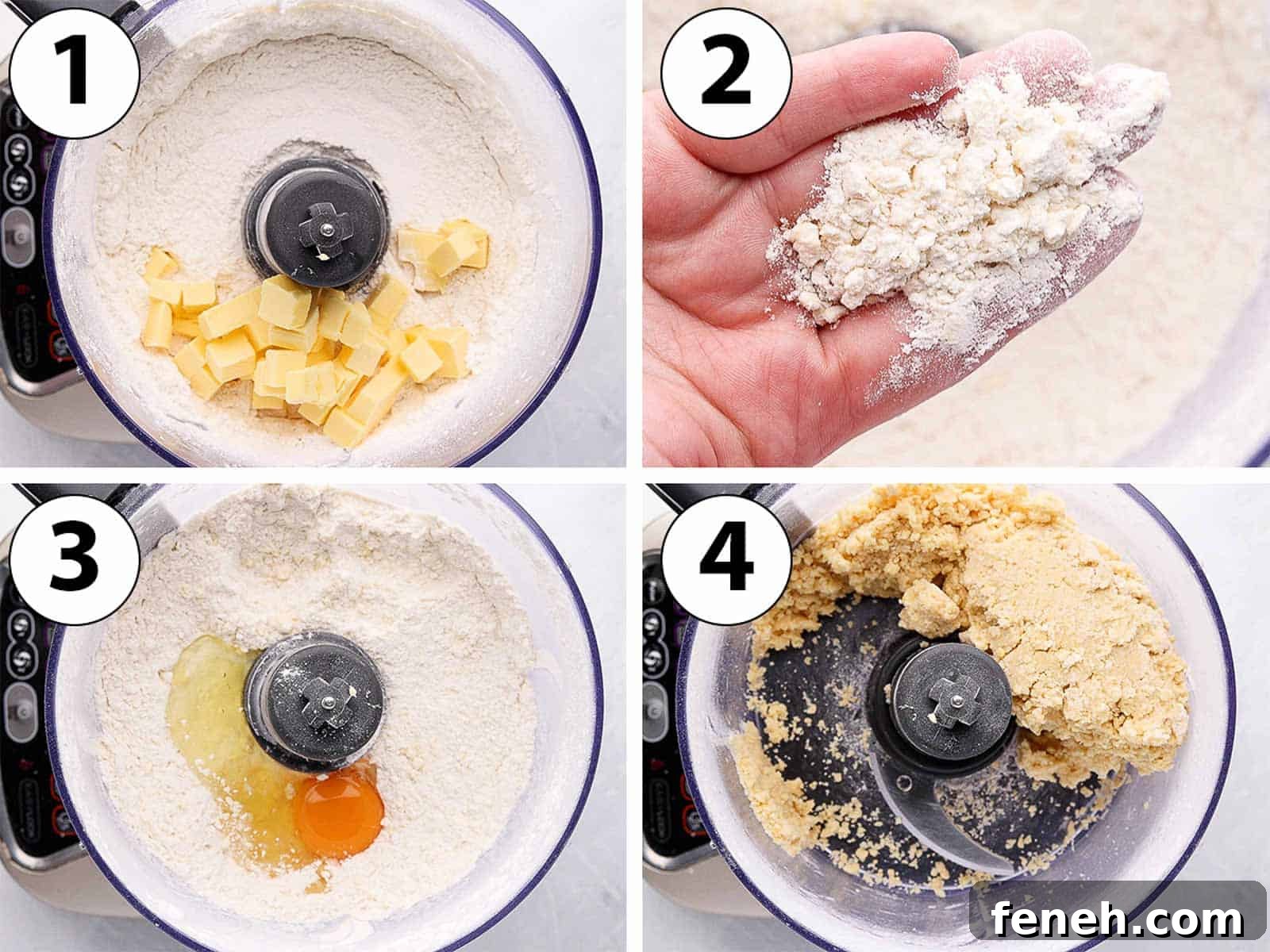
Prepare the pastry using a food processor for speed, or work by hand if you prefer (see recipe notes). Pulse the flour, icing sugar and salt, then add the cold cubed butter and blend until the mixture resembles fine crumbs. The size of the crumbs affects texture: larger crumbs give a flakier pastry, while finer crumbs produce a more even, sturdy shell for tartlets.
Add the egg and mix until a rough dough forms. Test by pressing a small piece between your fingers — it should hold together. If too dry, add a few drops of very cold water. Form into a ball, sandwich between baking paper and roll out to about 4mm (1/8 inch) thickness. Chill on a flat tray for at least one hour or up to 24 hours.
Shaping & blind-baking the tartlet shells
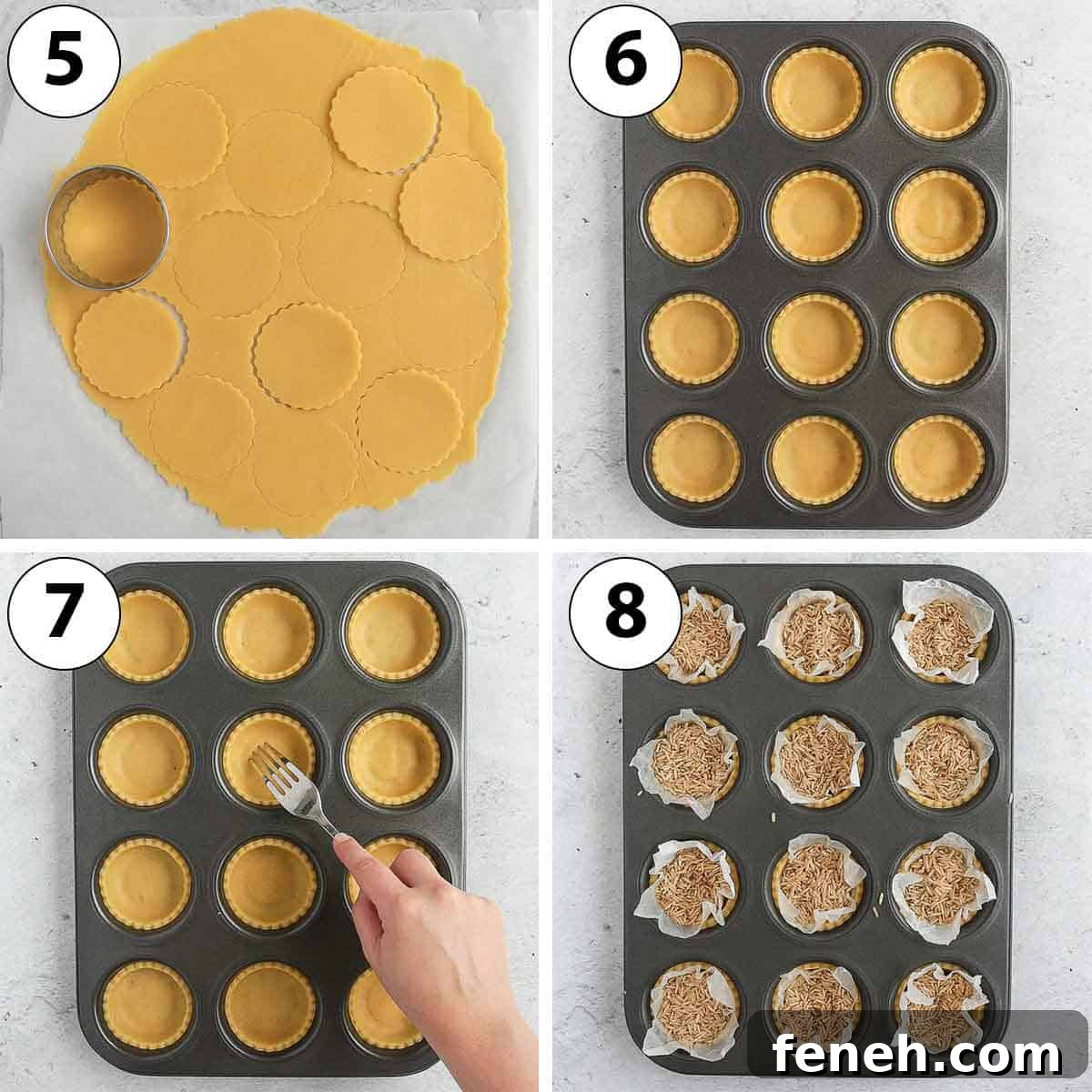
Use a round or fluted cutter at least as wide as the muffin cup opening to cut disks from the chilled dough. Re-roll scraps as needed, chilling before re-cutting. Ease each disk into the muffin pan and press gently to eliminate air pockets and ensure the pastry adheres to the pan sides. Chill the lined pan for at least an hour, preferably overnight.
Dock (prick) the bottoms with a fork, freeze briefly while you preheat the oven to 160°C (325°F). Line each tartlet with crumpled baking paper and fill with pie weights, dried beans or rice. Bake for 15 minutes, remove paper and weights, then bake another 12–15 minutes until the crusts are dry and lightly golden. Cool completely on a wire rack.
Preparing the butterscotch filling
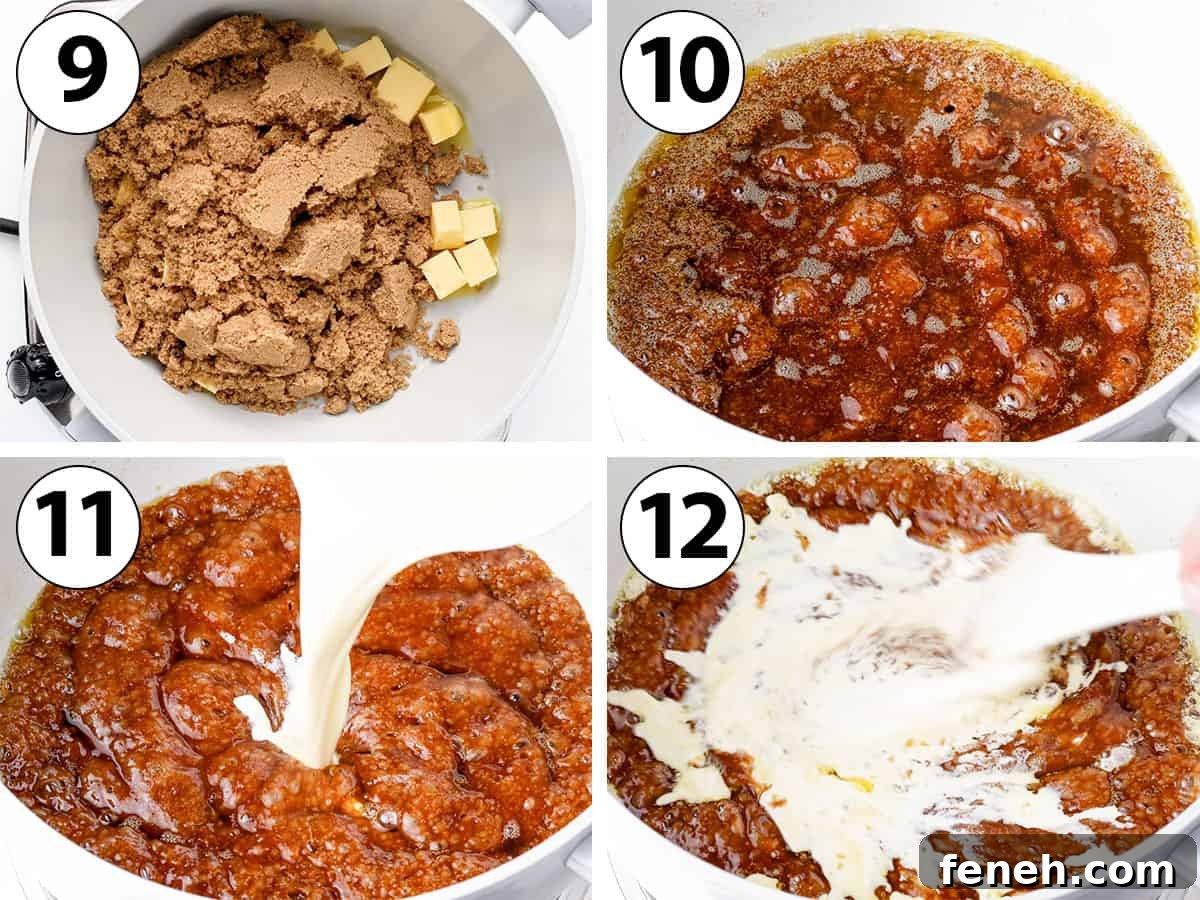
Warm the cream in a small bowl for 30–60 seconds. In a small saucepan, melt the brown sugar and cubed butter over low to medium heat, stirring until fully melted and simmering for a couple of minutes. The mixture may separate briefly—this is normal.
Carefully pour the warm cream into the melted sugar while stirring with a heatproof spatula. Using warm cream helps prevent crystallization and reduces splatter. Stir until smooth, then cook for a minute or two more until the sauce is lump-free. Add vanilla and a teaspoon of sea salt, stir to combine, and simmer for 3–5 minutes until the mixture begins to thicken slightly.
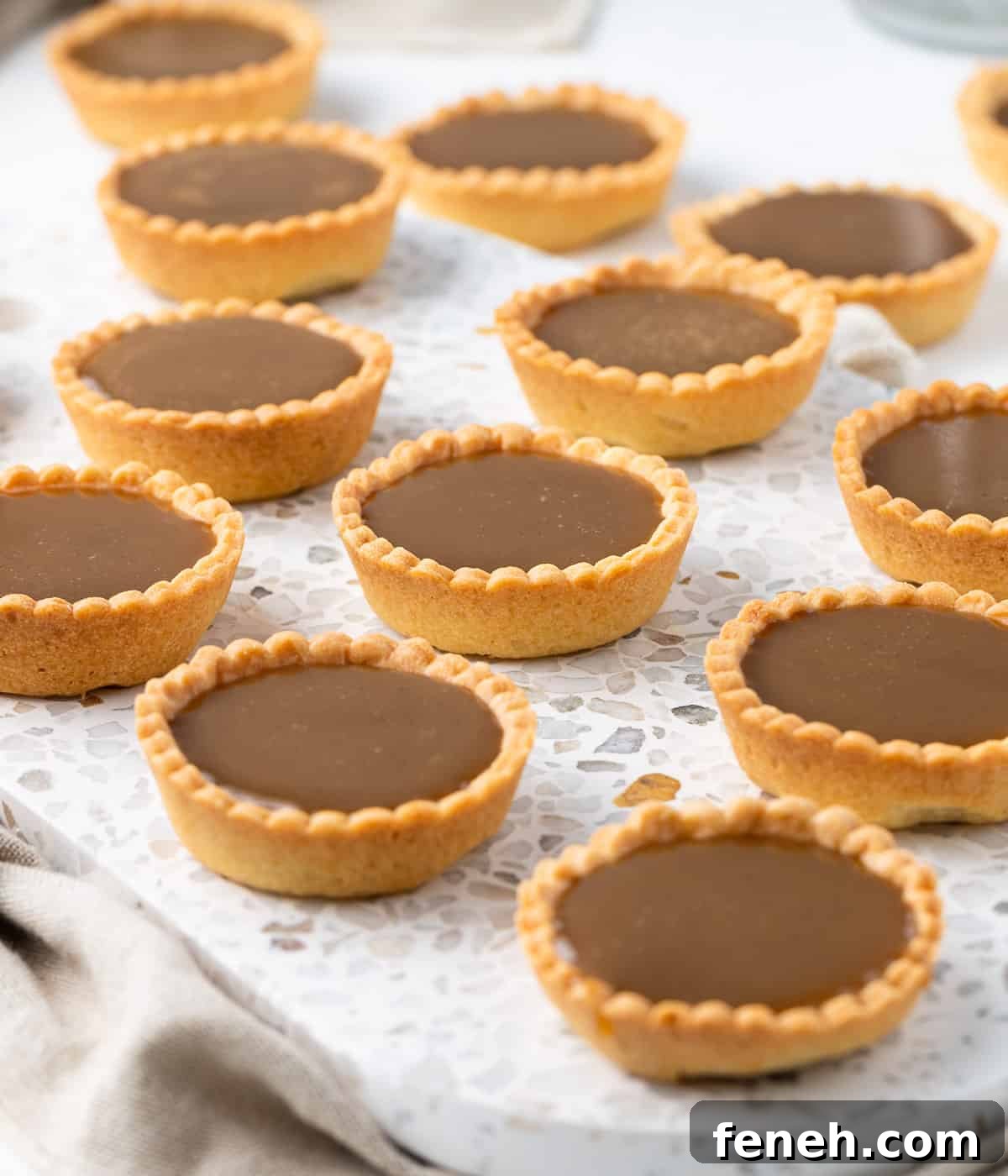
Transfer the hot butterscotch to a pouring jug and fill the cooled tartlet shells while the sauce is still warm. Tap the tart pan gently to remove air bubbles and level the surface. The filling will look loose at first but will thicken as it cools. For a firmer filling, stir in a small amount of cornstarch dissolved in water near the end of cooking.
Refrigerate the filled tartlets for at least 2 hours, longer if you prefer a firmer set.
Recipe FAQs
Butterscotch delivers a deep, buttery caramel flavor thanks to brown sugar and butter. It’s richer and slightly less sweet than typical caramel. Salt and vanilla help lift and balance the flavor.
Caramel is usually made from white granulated sugar, while butterscotch uses brown sugar combined with butter. The brown sugar gives butterscotch a distinct molasses note and deeper flavor profile.
Yes. Mini tartlet pans will work and can produce more uniform shells, but a regular muffin pan is an easy and accessible alternative.
They’re delightful as-is, but you can drizzle melted chocolate, sprinkle flaky sea salt, or add toasted coconut or chopped nuts for extra texture and presentation.
Tips for Success
- For even baking and minimal shrinkage, use a muffin pan with a perforated bottom if you have one.
- Warm the cream before adding it to the melted sugar to reduce the risk of crystallization and to avoid splashing.
Troubleshooting
- Pastry too hard or too soft: If too hard, let it rest at room temperature for a few minutes before shaping. If it becomes too soft or tears, chill briefly until workable.
- Crust shrank: Insufficient chilling is the usual cause. Chill the pastry in the pan twice and for longer periods if needed—overnight chilling works well.
- Grainy butterscotch: This can occur when sugar crystallizes. Add a few drops of water or a small splash of lemon juice and gently re-melt to smooth the sauce.
- Filling too soft: Cook the butterscotch a little longer (3–5 minutes after adding cream) to help it thicken. Butterscotch tolerates longer cooking than caramel without burning.
Storing & Freezing
Unbaked tartlet shells can be prepared and kept in the fridge for up to 24 hours, or frozen. Baked shells can be stored at room temperature in an airtight container for up to 24 hours or frozen for longer storage. Pour the warm butterscotch into the shells and refrigerate the finished tartlets for up to 3 days.
More Tartlet Recipes
- Mini Fruit Tarts
- Lemon Curd Tartlets
- Orange Tartlets
- Chocolate Orange Tartlets
- Easy Cherry Tartlets
- Mini Chocolate Caramel Tarts
- Mini Chocolate Tarts
- Pear Frangipane Tartlets
Made this recipe?
Leave a comment and tag your photo on Instagram @a.baking.journey to show us your creation!
Recipe

Mini Butterscotch Tartlets
Ingredients
Shortcrust Pastry
- 250 gr Plain / All-Purpose Flour
- 50 gr Icing Sugar
- 1 pinch Salt
- 120 gr Unsalted Butter, very cold, cubed
- 1 large Egg
Butterscotch Filling
- 250 gr Brown Sugar
- 90 gr Unsalted Butter
- 120 ml Heavy / Thickened Cream, warm
- 1 tsp Vanilla Paste or extract
- 1 tsp Sea Salt
Instructions
Shortcrust Pastry
- Place flour, icing sugar and salt in a food processor and pulse to combine. Add cold cubed butter and blend until fine crumbs form.
- Add the egg and mix until a rough dough forms. If the dough is dry, add a few drops of very cold water. Press a small piece together to check it holds.
- Form into a disk, place between baking paper and roll to about 4mm (1/8 inch). Chill on a flat tray for at least 1 hour or up to 24 hours.
- Cut disks with a round cutter and line muffin cups. Re-roll scraps and chill before re-cutting. Chill the lined pan for at least one hour.
- Dock the bottoms, freeze briefly while preheating the oven to 160°C (325°F). Line with baking paper and fill with weights. Bake 15 minutes, remove weights and bake another 12–15 minutes until dry and lightly golden. Cool on a wire rack.
Butterscotch Filling
- Warm the cream in a bowl and set aside.
- Melt the brown sugar and cubed butter in a small saucepan over low-medium heat until it simmers.
- Carefully pour warm cream into the melted sugar while stirring. Heat gently until smooth and lump-free, about 1–2 minutes.
- Add salt and vanilla, then simmer for 3–5 minutes until the sauce thickens slightly.
- Pour the hot butterscotch into cooled tartlet shells and tap to remove bubbles. Chill the filled tartlets in the fridge for at least 2 hours before serving.
Notes
- If you don’t have a food processor, make the pastry by hand following a Pâte Sablée method.
- Larger butter crumbs yield a flakier pastry; for tartlet shells aim for finer crumbs so the cases don’t puff excessively.
- Use a rolling pin with thickness rings to ensure even dough thickness.
- Warm cream prevents crystallization and reduces splattering when added to hot sugar.
- The filling will be runny when poured but will set as it cools.