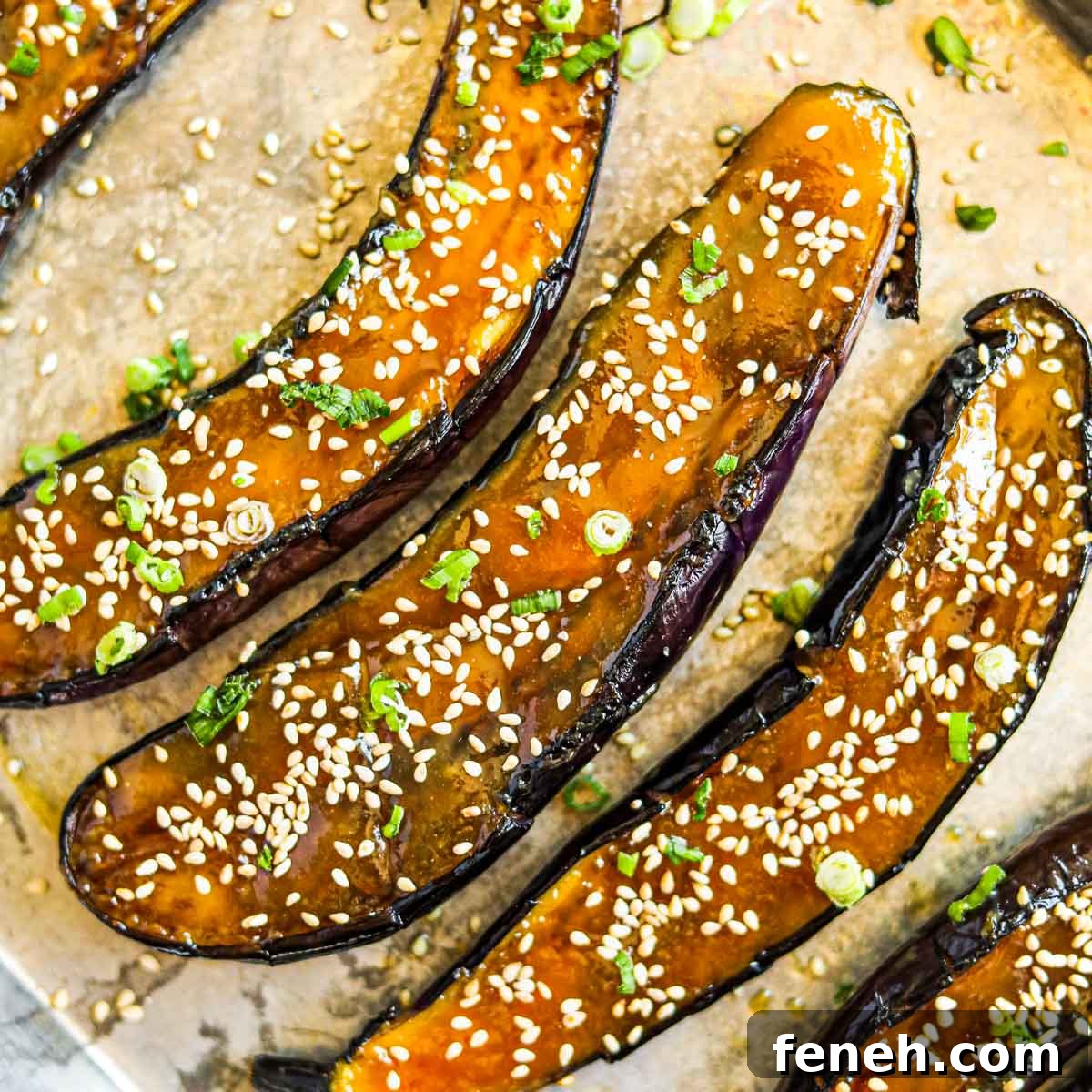
Miso Glazed Japanese Eggplant (Nasu Dengaku) is an umami-rich vegan side that comes together in about 20 minutes using just a few ingredients. Tender Japanese eggplant is finished with a caramelized miso glaze for a savory, slightly sweet bite.
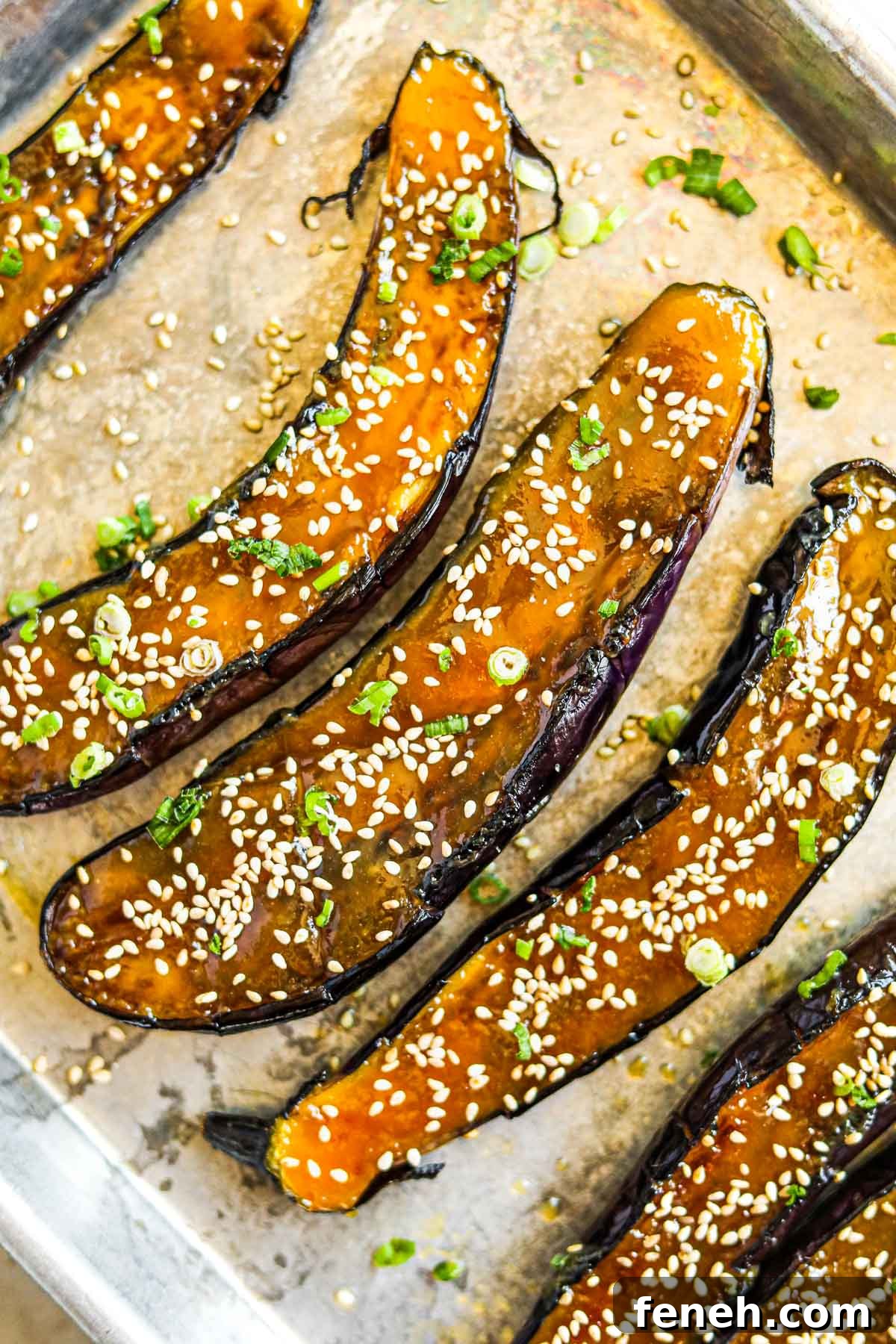
This miso-glazed eggplant makes a simple weeknight side or an impressive addition to a dinner spread. The edges caramelize under high heat while the flesh becomes silky and tender. It pairs beautifully with many mains, and you can easily scale the recipe for a crowd.
About Miso Aubergine
- Taste – A satisfying balance of savory umami from miso and gentle eggplant flavor.
- Texture – A sticky, glossy glaze coats soft, creamy eggplant flesh.
- Effort – Minimal: whisk the glaze, score and cook the eggplant, then broil to caramelize.
- Time – About a few minutes to prep, 10 minutes to make the glaze, and 10 minutes to cook the eggplant.
What is Nasu Dengaku?
Nasu Dengaku is a classic Japanese side made by glazing and broiling eggplant with miso. It’s often served alongside other miso-glazed dishes or as a flavorful complement to grilled fish, teriyaki mains, or rice bowls.
Ingredients
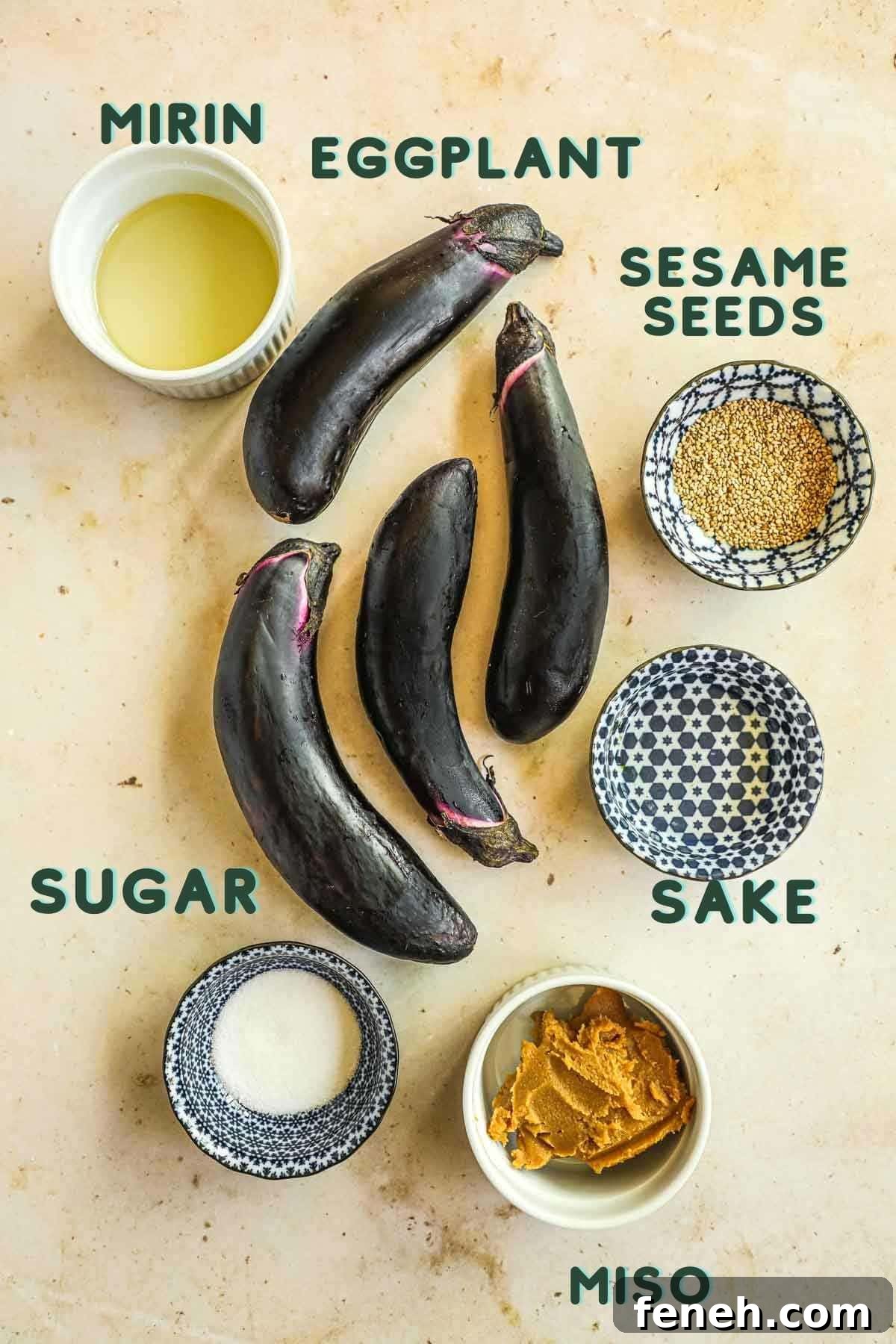
- Japanese eggplant – Slim, tender-skinned, and flavorful; cooks quickly and becomes creamy.
- White miso paste – Adds warm, savory depth to the glaze.
- Sugar – Balances and caramelizes the glaze.
- Sake – Contributes subtle savory notes.
- Mirin – A sweet rice wine that enriches the sauce and helps with glazing.
- Sesame seeds – Toasted, for a nutty finish.
See the recipe card below for exact quantities.
Substitutions
- Teriyaki sauce – Use teriyaki instead of miso for a familiar sweet-savory glaze.
- Unagi sauce – Offers a richer, sweet BBQ-style finish.
- Other vegetables – Try the glaze on zucchini or a mix of roasted vegetables.
- Red miso – Swap white miso for red for a deeper, more pungent flavor.
Variations
- Different eggplants – Regular or Chinese eggplants work; they may need extra cooking time.
- Shiso leaves – Add thinly sliced shiso for a fragrant, herbaceous note.
- Spicy – Stir in red pepper flakes or a touch of chili oil for heat.
- Sesame oil – A small splash boosts the nutty aroma.
Instructions
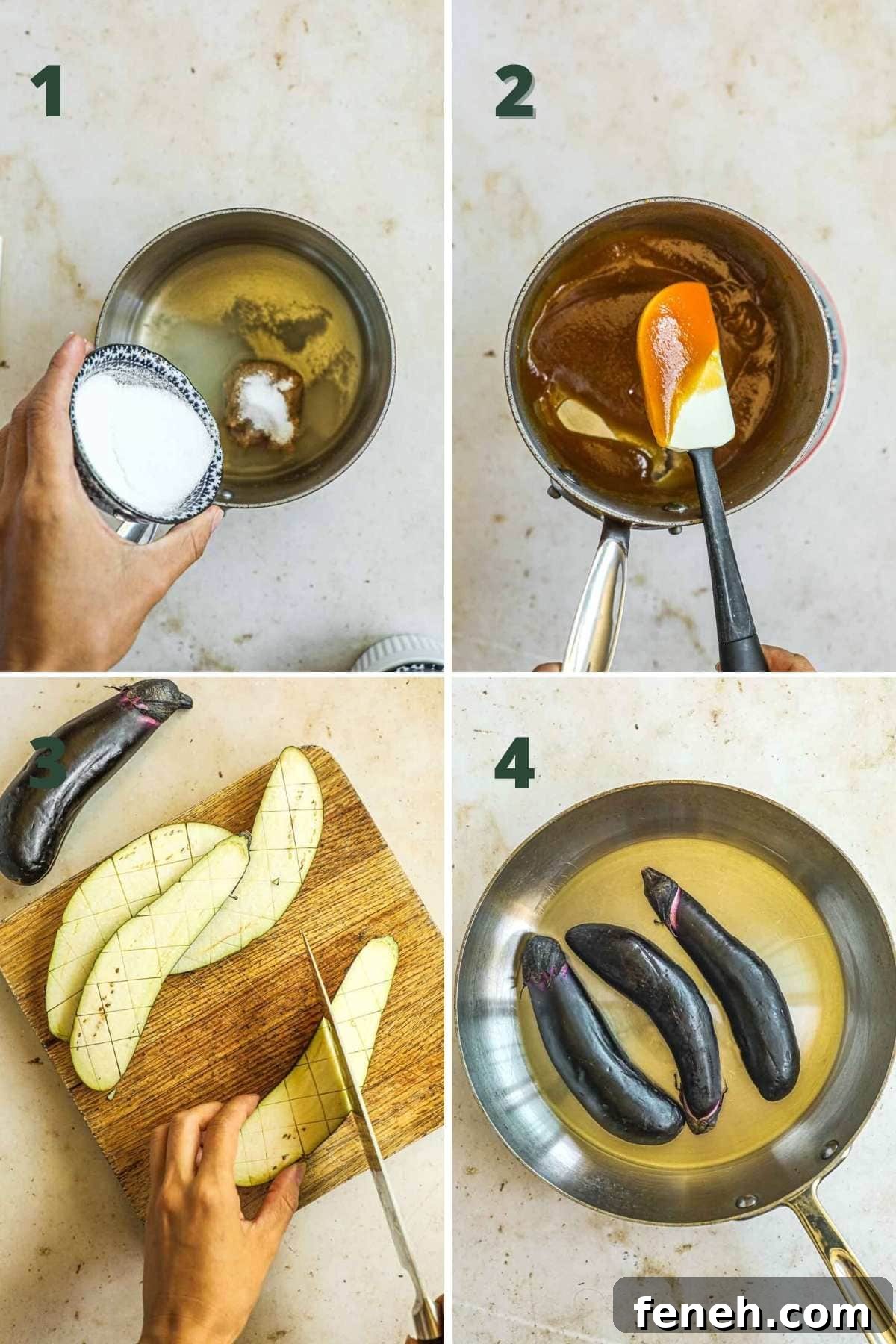
- Make the miso glaze – Combine white miso, sugar, sake, and mirin in a small saucepan over low heat. Whisk or press any miso lumps against the pan with a spatula until smooth. Simmer gently until the mixture is thick, glossy, and pourable, about 7–10 minutes, then remove from heat and set aside.
- Prepare the eggplant – Halve each eggplant lengthwise. Score the flesh in a shallow crosshatch pattern (about 1/4–1/2 inch deep) without cutting through the skin; this helps the glaze penetrate and the eggplant cook evenly.
- Cook the eggplant – Heat neutral oil (grape seed, avocado, or vegetable oil) in a skillet over medium. When shimmering, place eggplant cut-side down and press gently with a spatula to promote even browning. Cover and cook 3–4 minutes, then flip, cover, and cook another 3–4 minutes until tender.
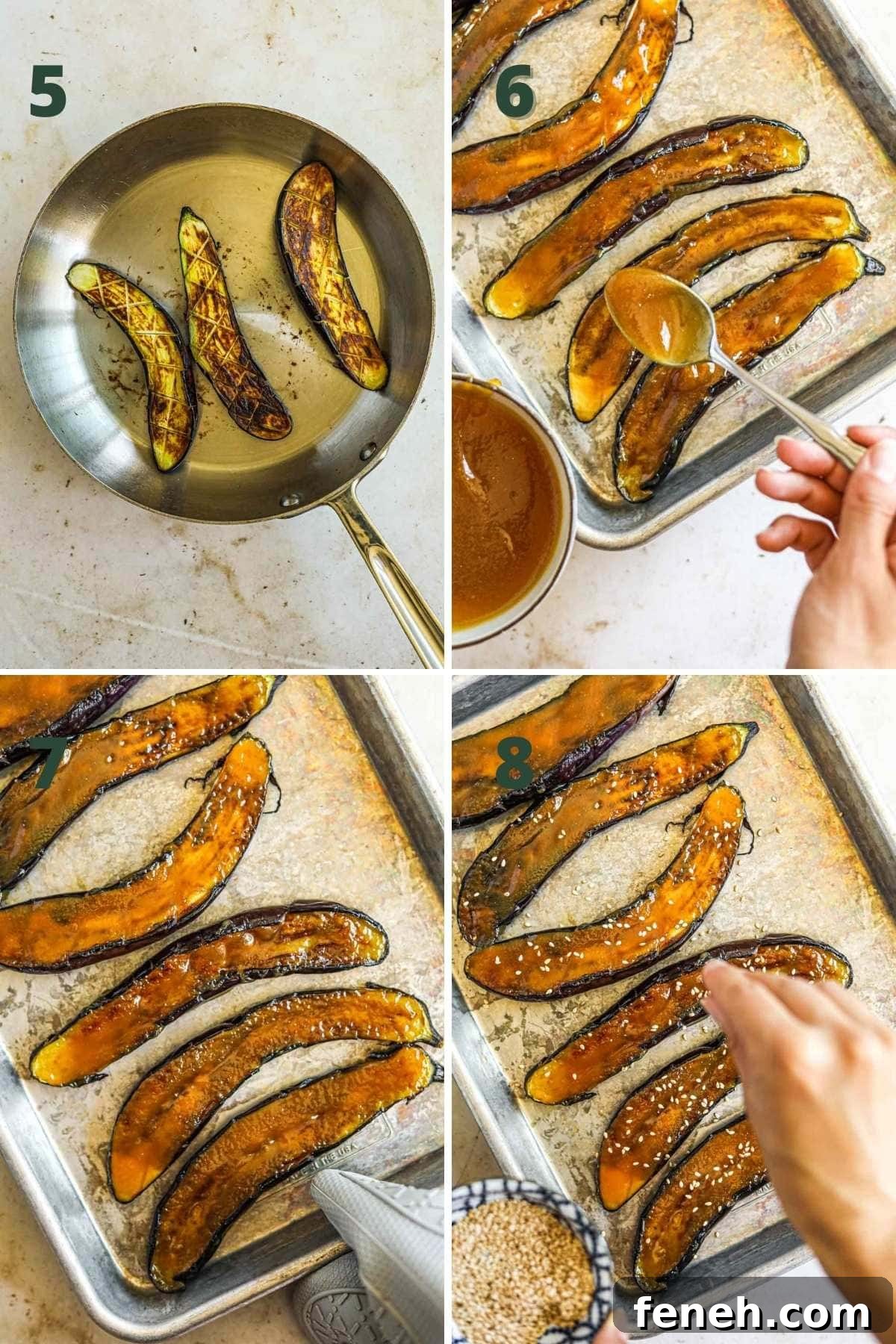
- Transfer and glaze – Place cooked eggplant cut-side up on a baking sheet. Spoon a generous layer of miso glaze over each half, covering the flesh.
- Broil – Broil the glazed eggplant for 1–2 minutes until the glaze bubbles and caramelizes. Watch closely to avoid burning.
- Finish – Remove from the oven and sprinkle with toasted sesame seeds and thinly sliced green onions before serving.
Pro tip: If using a stainless steel pan, preheat it until very hot to reduce sticking. A well-heated pan will help the eggplant release cleanly.
What to Serve with Miso Eggplant
This savory side complements many mains. Serve with grilled or broiled fish, teriyaki salmon or chicken, unagi don, chicken katsu curry, or alongside sushi for a balanced meal. Its sweet-savory notes pair well with both Japanese and non-Japanese dishes.
Recipe FAQs
No—Japanese eggplant has thin, tender skin, so peeling is unnecessary.
Yes—eggplant is a good source of fiber, B vitamins, potassium, and antioxidants.
Most ingredients are gluten free, but some miso pastes contain wheat or barley. Check labels to be sure.
Yes—this recipe uses plant-based ingredients only.
Equipment
Basic kitchen tools are all you need: measuring spoons, a small saucepan, a spatula, a knife and cutting board, a skillet or braiser, and a baking sheet for broiling.
Storage
Enjoy the eggplant immediately for the best texture. Leftovers keep in an airtight container in the refrigerator for up to 3 days. Reheat gently on the stovetop over low heat or in the microwave until warmed through.
Top tips
- Thicker eggplants: Cook a bit longer and reduce heat if the exterior risks burning before the interior is tender.
- Stainless steel pans: Heat thoroughly before adding oil and eggplant to minimize sticking.
- Meal prep: Make the miso sauce and partially cook the eggplant up to two days ahead; finish by glazing and broiling before serving.
Related Recipes
-
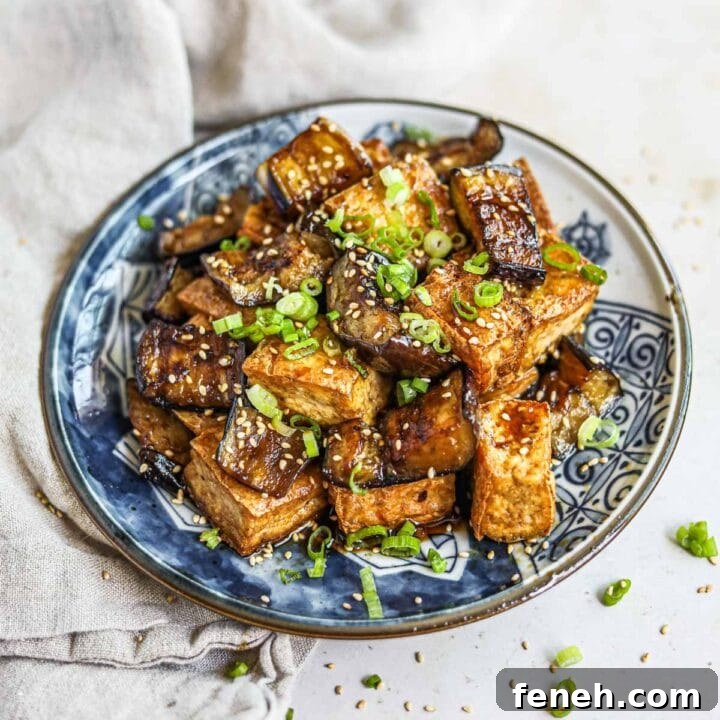
Teriyaki Tofu and Eggplant
-
Elote-Style Corn with Furikake
-
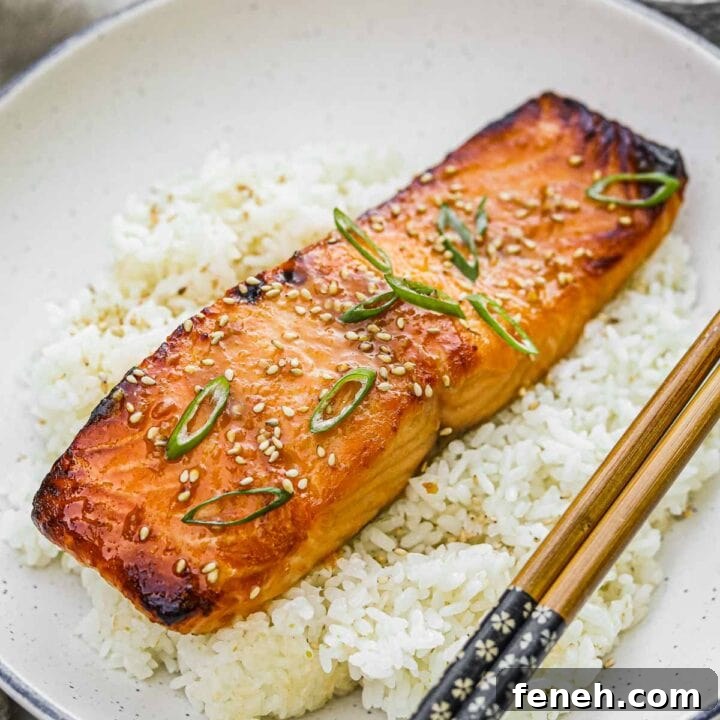
Broiled Miso-Glazed Salmon
-
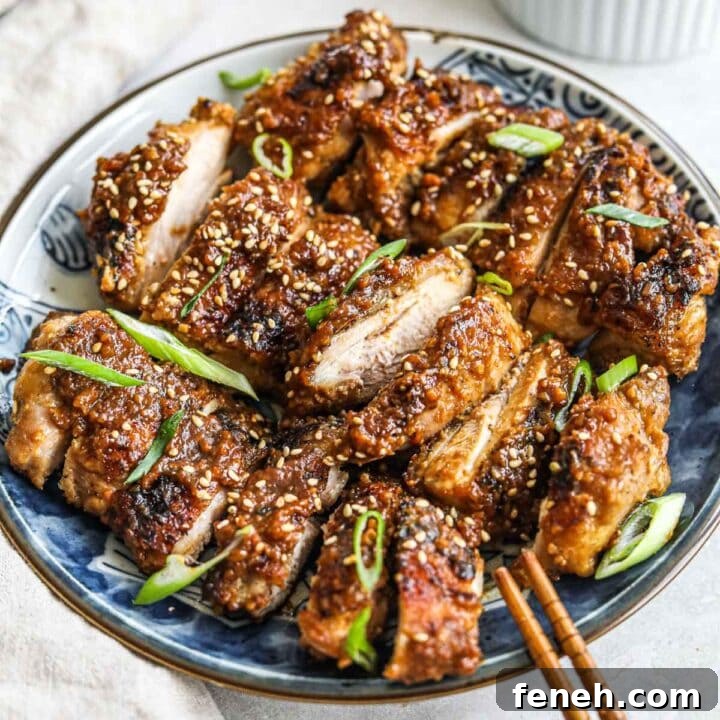
Miso Jidori Chicken Thighs

Did You Like This Recipe?
If you try this miso-glazed eggplant, please rate it and leave a comment. We love seeing your results—tag your photos with the appropriate handle or hashtag so others can find your creations.
📖 Recipe

Miso Glazed Japanese Eggplant (Nasu Dengaku)
Equipment
- Measuring spoons
- Mixing bowl
- Saucepan
- Silicone spatula
- Knife and cutting board
- Skillet or braiser
- Baking sheet
Ingredients
- 2 tablespoon neutral cooking oil (grape seed, avocado, or vegetable)
- 4 Japanese eggplants
- Sesame seeds, a pinch
- 1 green onion, thinly sliced
Miso Sauce
- 8 tablespoon white miso paste
- 4 tablespoon sugar
- 4 tablespoon sake
- 4 tablespoon mirin
Instructions
- Make the miso glaze: Combine miso, sugar, sake, and mirin in a small saucepan over low heat. Whisk until smooth and simmer until thick and glossy, about 7–10 minutes. Remove from heat and set aside.
- Prepare the eggplants: While the sauce cooks, halve the eggplants lengthwise and score the flesh in a crosshatch pattern about 1/4–1/2 inch deep without cutting through the skin.
- Cook the eggplant: Heat oil in a skillet over medium. When shimmering, place eggplant cut-side down and press gently to brown evenly. Cover and cook 3–4 minutes, flip, cover and cook another 3–4 minutes until tender.
- Add sauce and broil: Transfer eggplant to a baking sheet cut-side up. Spread a generous layer of miso glaze over each piece. Broil for 1–2 minutes until the glaze caramelizes. Top with sesame seeds and sliced green onion before serving.
Notes
- If using a stainless steel pan, heat it well before adding oil and eggplant to prevent sticking.
- Thicker eggplants may need longer cooking; lower the heat as needed so the exterior doesn’t burn before the interior is cooked.