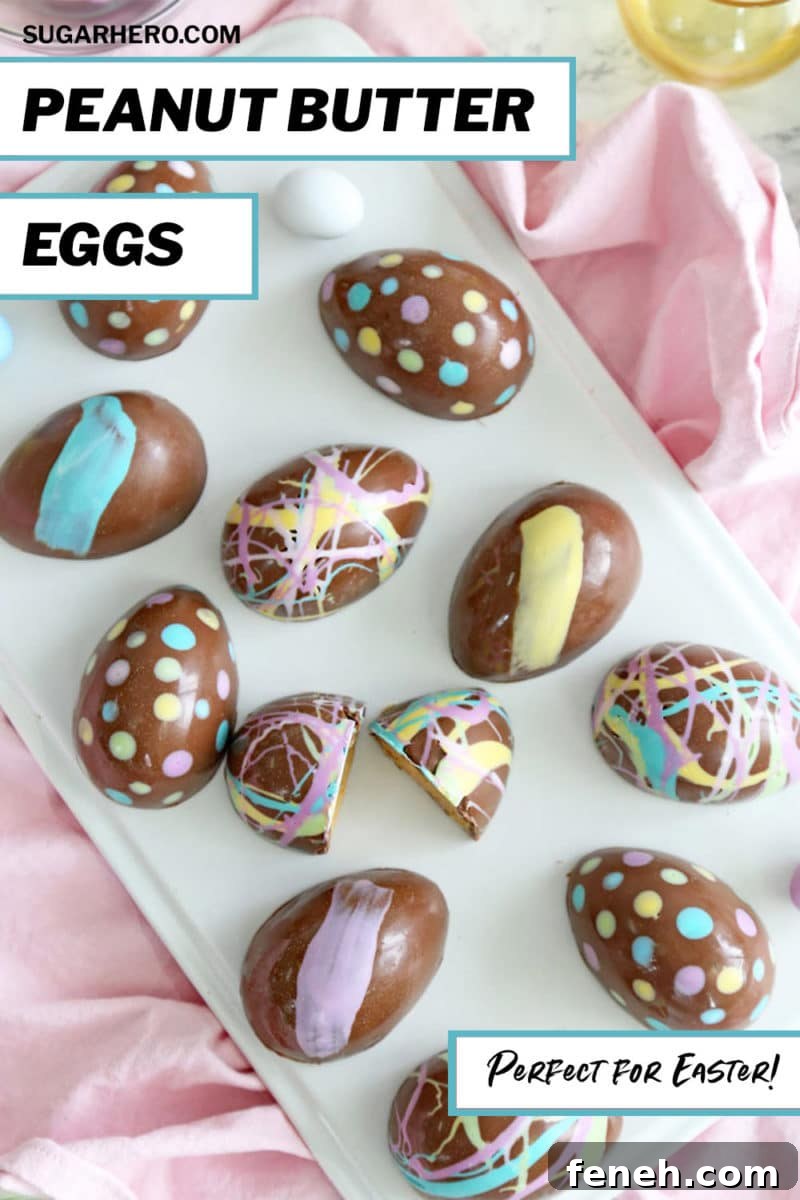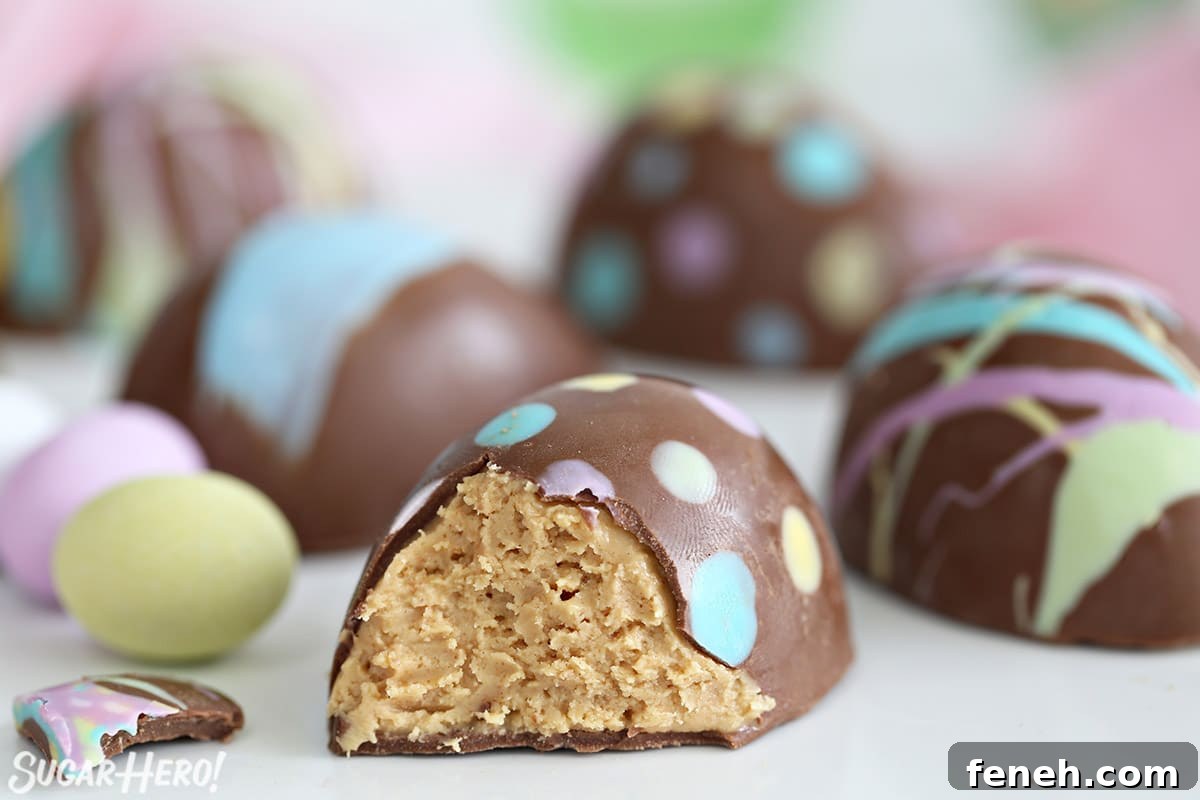
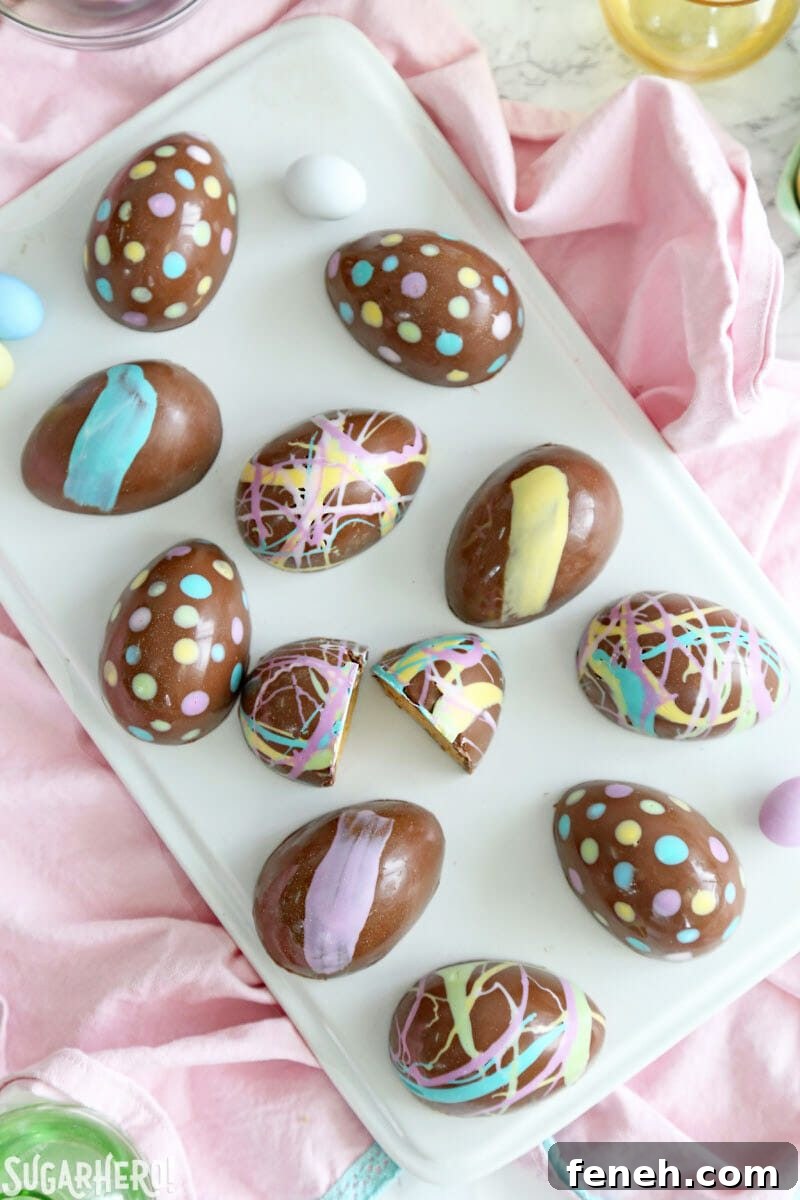
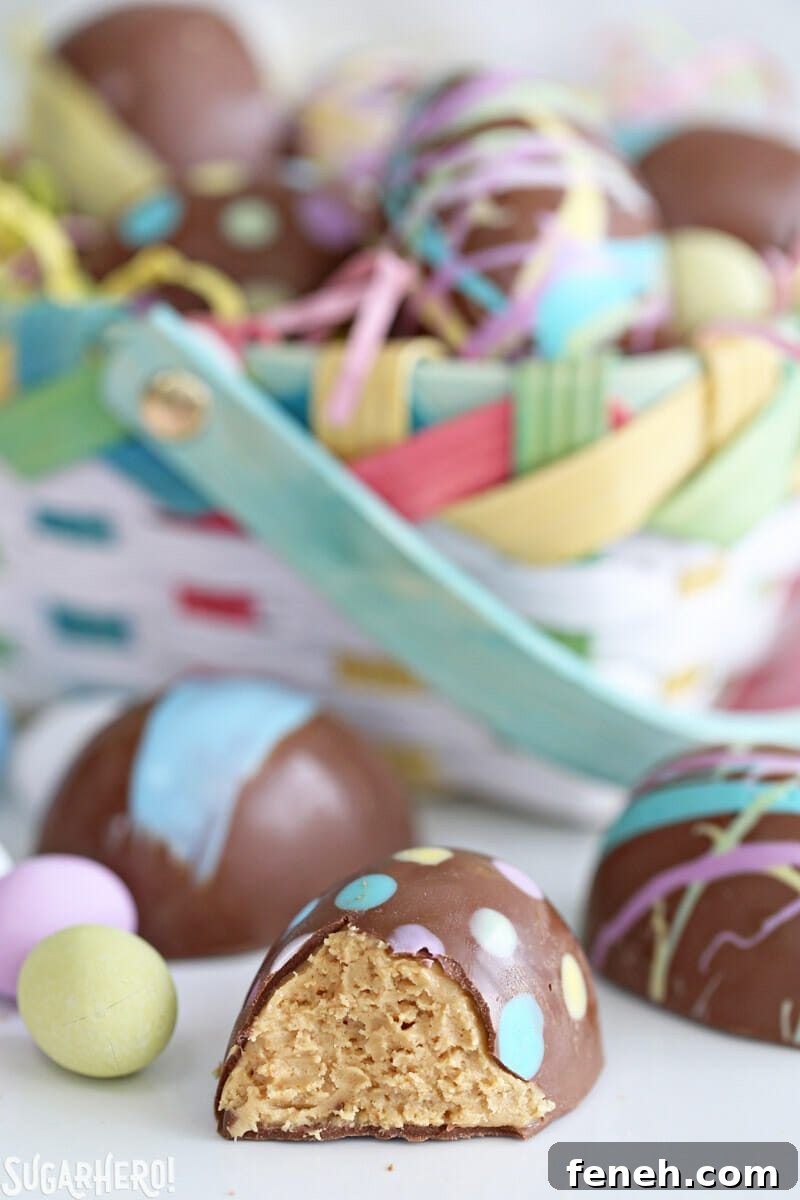
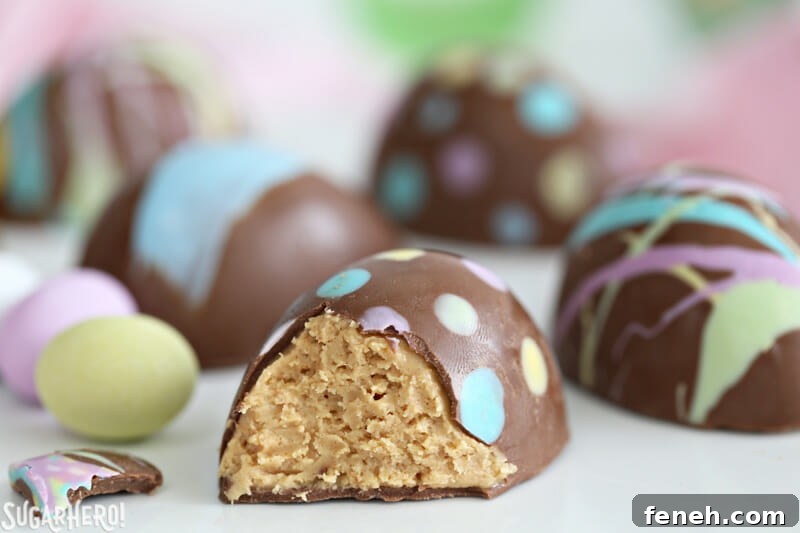
This homemade Peanut Butter Easter Eggs recipe delivers a sweet-and-salty peanut butter filling with a pleasant crumbly texture, encased in a smooth chocolate shell and finished with delicate pastel decorations — the perfect Easter treat. Once you taste these, you’ll never want the store-bought versions again.
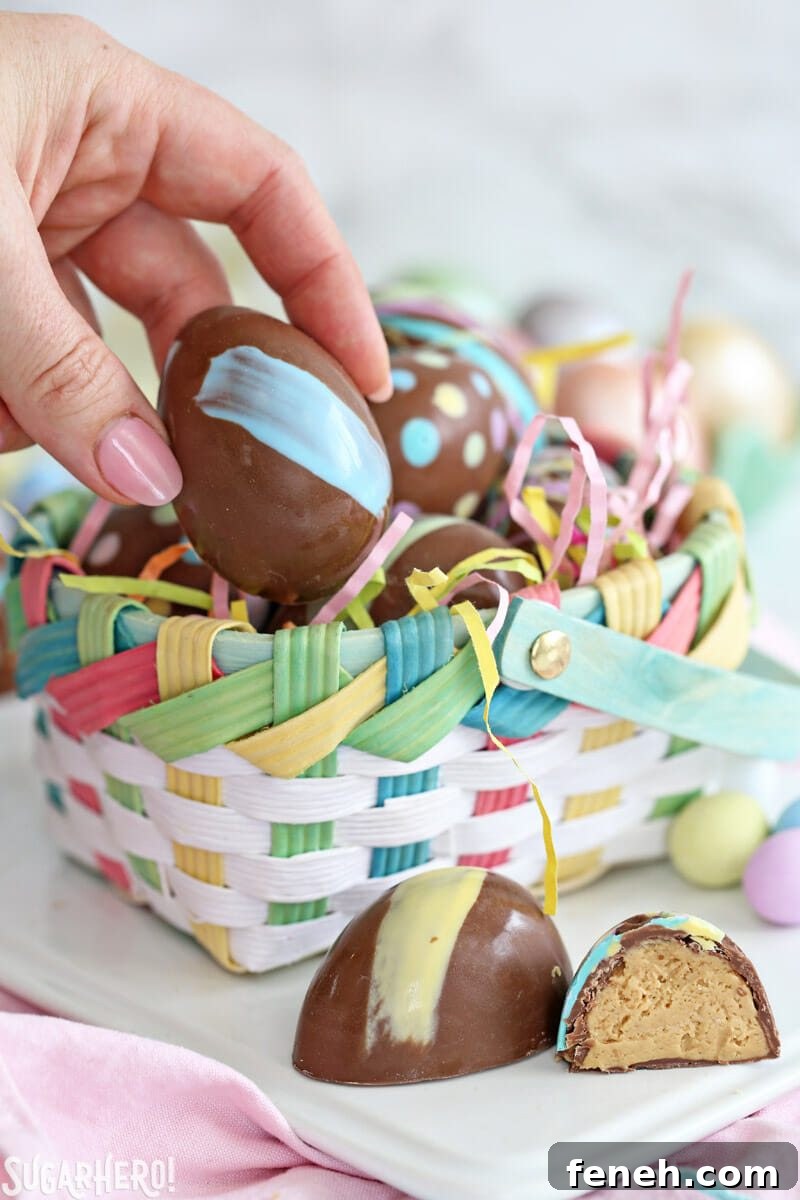
🥜 Why You’ll Love This Peanut Butter Eggs Recipe
Homemade candy has an advantage you can taste: it’s fresher, fully customizable, and free from mystery ingredients. These peanut butter eggs combine a creamy, true-peanut-butter flavor with a slightly crumbly interior and a satisfying chocolate shell. They’re ideal if you want a classic Easter candy made better at home.

Table of Contents
- 🥜 Why You’ll Love This Peanut Butter Eggs Recipe
- 🧾 What You’ll Need
- 📋 How to Make Peanut Butter Eggs
- 💭 Variations
- 💡 Tips and FAQs
- 🥜 More Peanut Recipes
- 🐣 More Easter Recipes
- Peanut Butter Easter Eggs Recipe
This recipe is inspired by classic peanut butter eggs but improves on them with generous filling, authentic peanut flavor, and a hint of graham cracker crumbs to recreate that slightly dry, crumbly texture fans expect. The candy is made in egg-shaped silicone molds and decorated in pastel shades for a festive look.
🧾 What You’ll Need
Ingredients
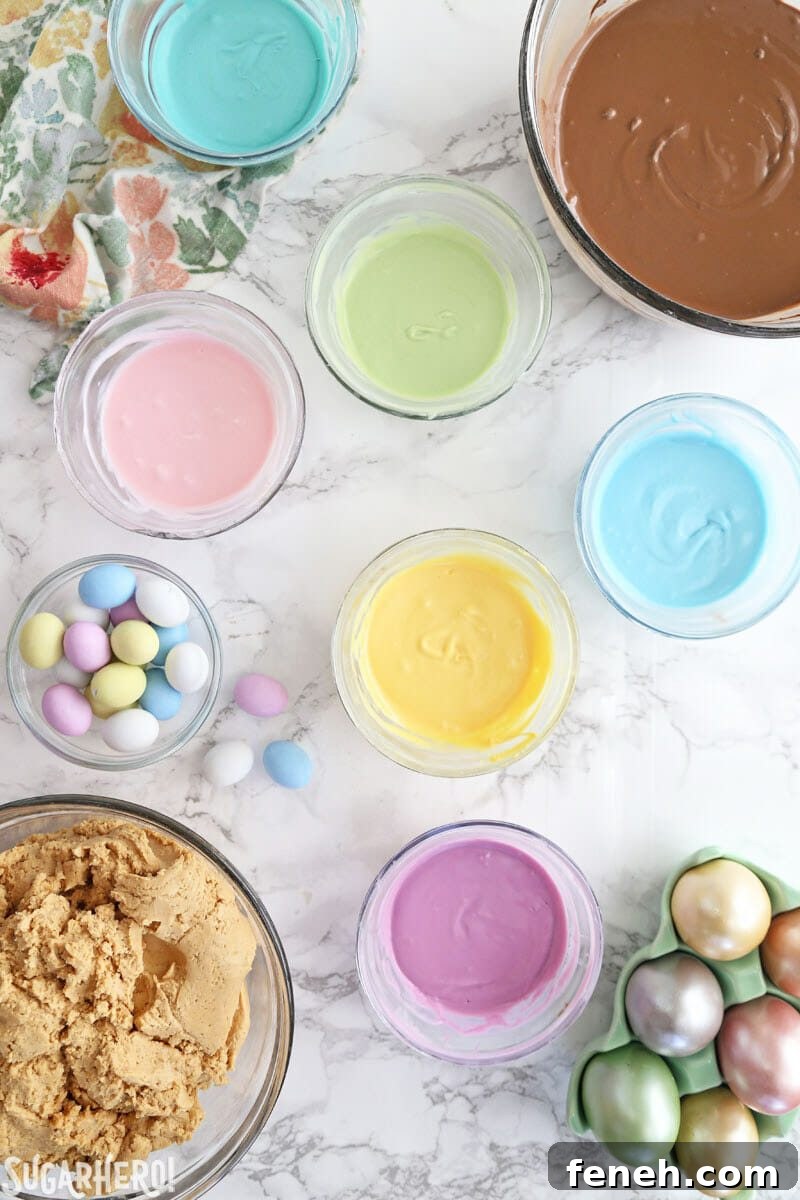
Key ingredients for these peanut butter eggs include:
- Graham crackers: Finely crushed graham crumbs add the slightly crumbly texture traditional in peanut butter eggs and prevent the filling from becoming too sticky.
- Smooth peanut butter: Use a standard creamy peanut butter for the best texture and flavor. If you choose a different nut butter, see the Variations section for tips.
- Powdered sugar: Adds structure and sweetness to the filling without making it grainy.
- Butter: Room-temperature butter gives the filling a silky richness. Adjust added salt if you use salted butter.
- Vanilla and salt: Small amounts of each enhance and balance the peanut butter flavor.
- Candy coating or chocolate: Colored coating melts work well for decorations, and chocolate candy coating or tempered real chocolate creates the outer shells. Use coatings that melt smoothly and set firm.
🥄 Equipment
Minimal equipment makes this an accessible project:
- Silicone egg mold — for uniform, polished egg shapes.
- Mixer — a stand or hand mixer to blend the filling until smooth.
- Food-safe paintbrush — useful for painting shells and creating decorations.
📋 How to Make Peanut Butter Eggs
Below is an overview of the process. Full, step-by-step instructions appear in the recipe section.
Step 1: Make the Peanut Butter Filling
Combine crushed graham crackers, peanut butter, powdered sugar, vanilla, butter, and salt in a mixer. Beat until smooth but slightly crumbly. Press plastic wrap to the surface and chill until ready to use.
Step 2: Make the Chocolate Shells
If you want pastel decorations, add them first on the inside of the mold so the final shell stays glossy and smooth. Options include polka dots, brush strokes, or color swirls. After the decorations set, paint a thick, even layer of melted chocolate or candy coating inside each cavity using a spoon and a clean paintbrush. Refrigerate until firm.
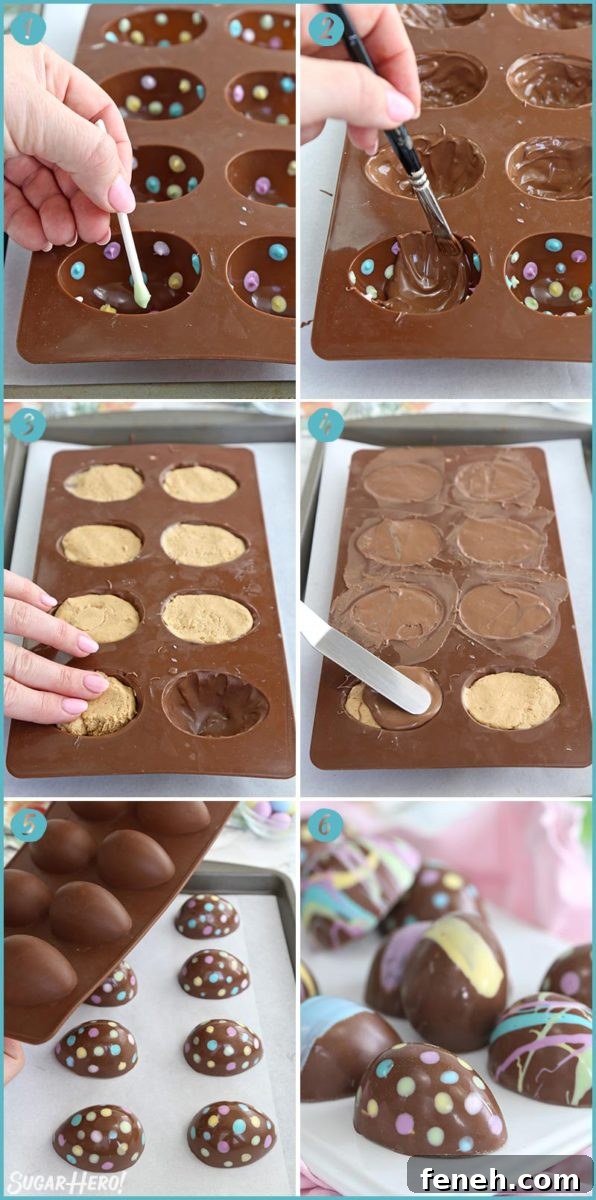
Step 3: Add the Peanut Butter Filling
Press the chilled filling into each chocolate-lined cavity, leaving a small gap at the top so there’s room to seal with more chocolate.
Step 4: Seal with Chocolate
Spoon melted chocolate over the filling and spread to the edges to form a complete seal so no filling can leak out.
Step 5: Unmold and Enjoy!
Chill the molds until the coating is completely set, then invert and gently flex to release the eggs. Allow the finished candies to come to room temperature before serving for the best texture and flavor.

💭 Variations
- Other nut butters: Natural or alternative nut butters can be substituted, but their thinner consistency may produce a softer filling. Compensate by adding more powdered sugar or graham crumbs if needed.
- Real chocolate: Use semi-sweet chocolate (55–65% cacao) if you prefer real chocolate. Temper it properly for a shiny, crisp finish.
💡 Tips and FAQs
Making Peanut Butter Eggs Without Molds
No mold? Shape the chilled filling into small patties or egg shapes with a tablespoon or candy scoop, chill again until firm, then dip each in melted candy coating using a fork or dipping tool. Place on parchment to set.
Make-Ahead and Storage Instructions
Store finished eggs in an airtight container at room temperature for up to two weeks, or refrigerate for up to a month. You can prepare the filling and empty chocolate shells ahead of time and assemble later; store shells separated with liners to prevent sticking.
🥜 More Peanut Recipes
- Snickers Cupcakes
- Chocolate Peanut Butter Milkshakes
- Peanut Butter Cup Banana Cake
- Peanut Butter and Jelly Sandwich Cake
- Peanut Butter Cup Brownies
- Peanut Butter Cup Ice Cream
- Peanut Butter Pie
- Chocolate Peanut Butter Cheesecake
🐣 More Easter Recipes
- Easter Baby Chick Cupcakes
- Easter Egg Sugar Cookies
- Easter Egg Doughnuts
- Easter Egg Brownies
- Raspberry Tangerine Petit Fours
- Easter Bunny Cupcakes
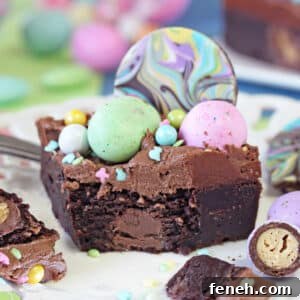
Frosted Easter Brownies

Marbled Easter Egg Truffles
Check the recipe card below for the full ingredient list, quantities, and step-by-step instructions to make Peanut Butter Easter Eggs at home.
Leave a Review!
If you make this recipe, please leave a rating and a comment, and share your photo on Instagram using #sugarhero.

Peanut Butter Easter Eggs
Equipment
-
Silicone egg mold
-
Food paintbrushes
Ingredients
- 2 graham crackers (about 2 rectangular sheets)
- 9.5 oz (1 cup) smooth peanut butter
- 8 oz (2 cups) powdered sugar
- 1 tsp vanilla extract
- 2 oz (4 TBSP) unsalted butter, room temperature
- 1/2 tsp salt
- 4 oz colored candy coating melts (pastel shades)
- 12 oz chocolate candy coating melts (about 2 cups)
Instructions
To Make the Peanut Butter Filling:
- Place graham crackers in a plastic bag and crush finely with a rolling pin.
- Combine graham crumbs, peanut butter, powdered sugar, vanilla, butter, and salt in a mixer fitted with a paddle attachment.
- Mix on low until combined, then on medium for 30–60 seconds until smooth. Press plastic wrap on the surface and chill until ready to fill the shells.
To Make the Chocolate Shells:
- Ensure silicone molds are clean and dry. Melt colored coatings in small bowls in short microwave bursts, stirring frequently.
- For polka dot eggs, dip a lollipop stick in color and dot the inside of each cavity. Chill until set.
- For brush stroke eggs, use a clean dry food paintbrush dipped in colored coating to paint strokes on the inside of each cavity. Chill until set.
- For color swirl eggs, thin one color slightly if needed and flick thin streaks inside the cavity. Chill until set.
- Melt the chocolate candy coating and spoon a little into each cavity. Use a clean paintbrush to paint the chocolate up the sides to form an even shell. Clean the tops with a metal spatula and chill until firm.
- Spoon filling into each cavity, pressing to an even layer and leaving about 1/8″ of space at the top.
- Remelt chocolate if needed and spoon a thin layer over the filling, spreading to the edges to seal. Chill until fully set and glossy.
- Invert molds and gently flex to release the eggs. Serve at room temperature for best texture. Store in an airtight container at room temperature for up to two weeks.
Recipe Notes
Measuring Tips
Recipes are developed with weight measurements in mind; using a kitchen scale will give the most consistent results. Volume measurements are provided as well, but note that weight-to-volume conversions aren’t always exact.
Nutrition