
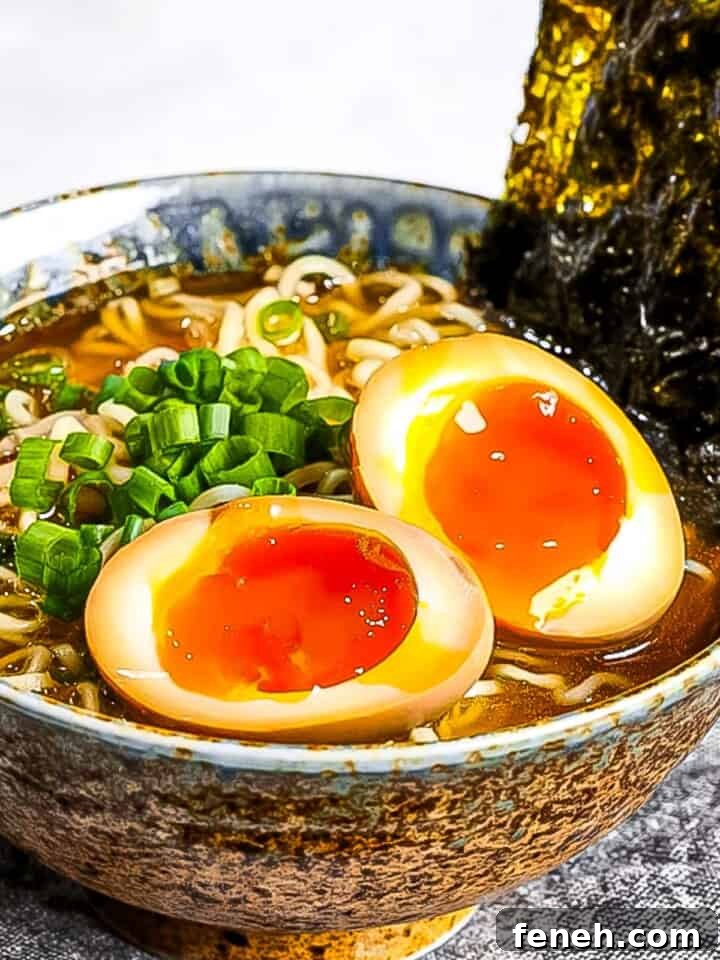
Ramen eggs are soy sauce–marinated soft boiled eggs with a runny, jammy yolk. Also called shoyu eggs or soy-marinated eggs, they’re known in Japan as ajitama or ajitsuke tamago (味付け玉子) and are commonly served atop a bowl of ramen.

Ramen eggs are simply soft boiled eggs marinated in a soy sauce and mirin mixture. They make the perfect garnish for a bowl of ramen and can be adjusted to your preference—soft and runny or firm and jammy. The longer they marinate, the more pronounced the savory, umami soy flavor becomes.
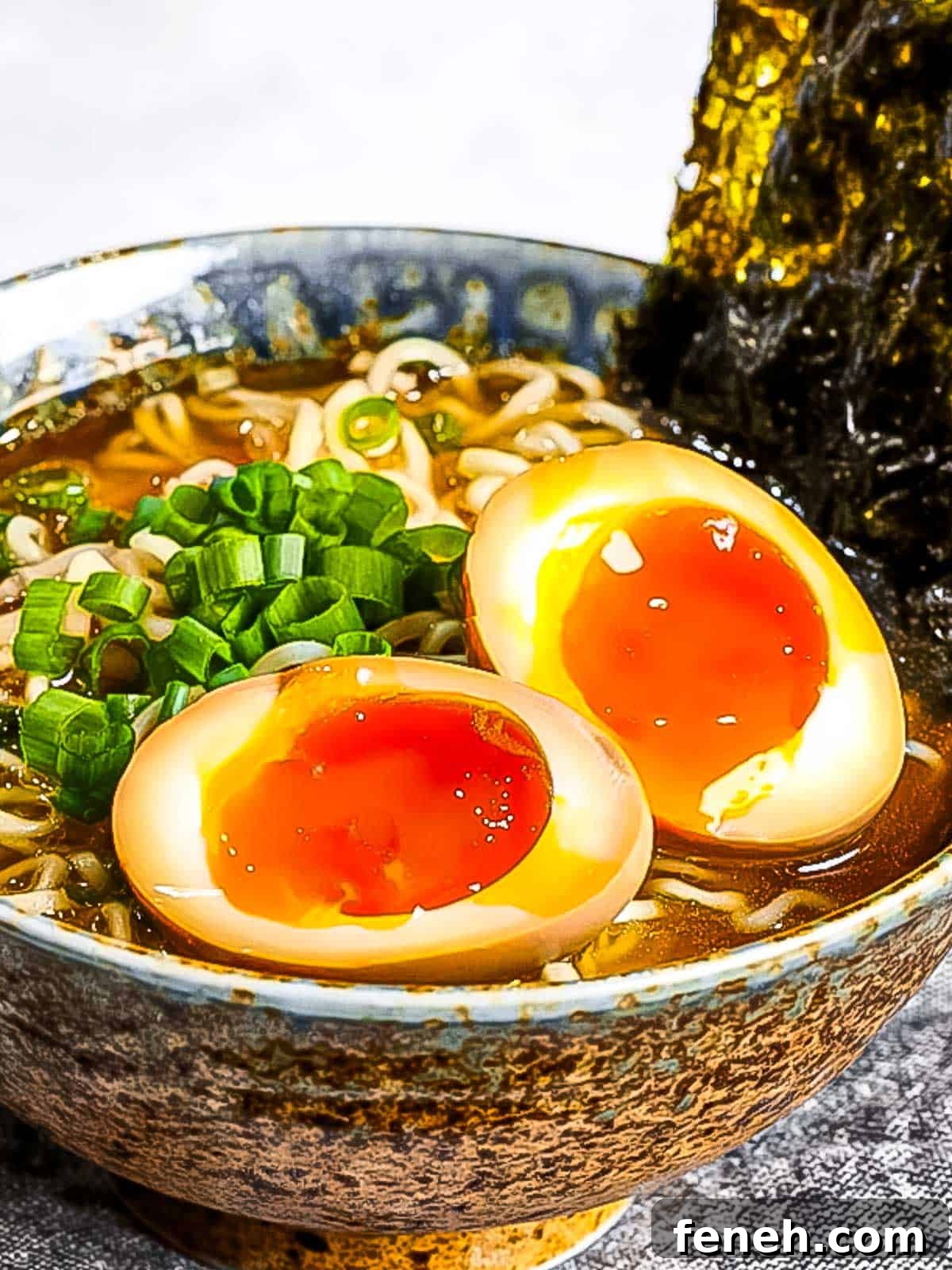
Also called soy sauce eggs or shoyu eggs, ajitama is short for ajitsuke tamago, which translates to seasoned egg. These eggs are versatile — enjoy them on noodles, rice bowls, salads, or simply as a snack. They are low in carbs, naturally keto-friendly, and a good source of protein.

Below are ingredients, tips, and step-by-step instructions to make classic ramen eggs at home.
Ingredients
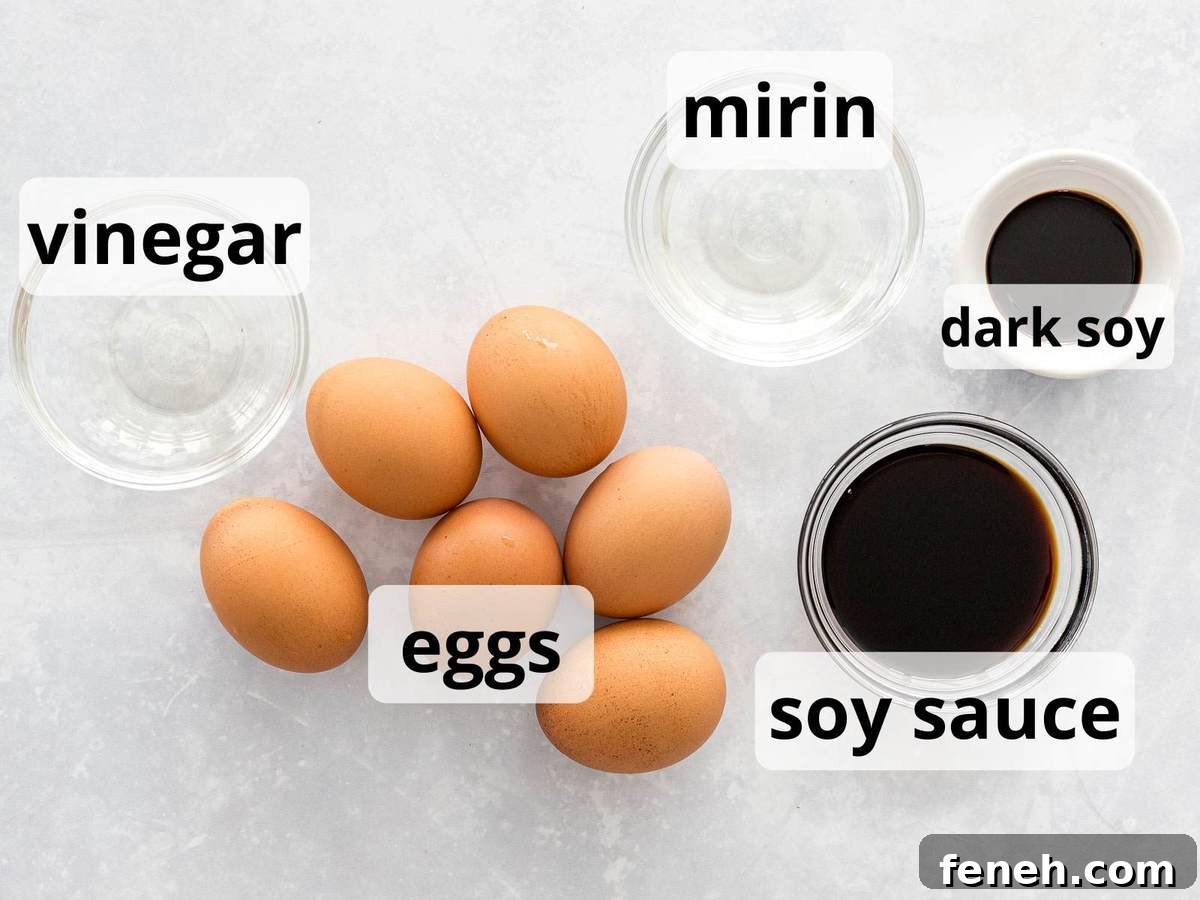
- Eggs – Large eggs used here; cooking times assume this size. Tip: slightly older eggs are often easier to peel.
- Vinegar – A splash added to boiling water helps the shell release for easier peeling.
- Mirin – A sweet Japanese rice wine used in the marinade. If you prefer not to use mirin, substitute with water or stock combined with a pinch of sugar and a few drops of vinegar.
How to Make Ramen Eggs – Soy Sauce Eggs


Soft Boiled Eggs:
Cold eggs: Boil for 7 minutes straight from the refrigerator. Starting with cold eggs helps protect the yolk from overcooking.
Room temperature eggs: Let eggs sit at room temperature for about 30 minutes before cooking and boil for 6 minutes. This reduces the chance of shells cracking from temperature shock.
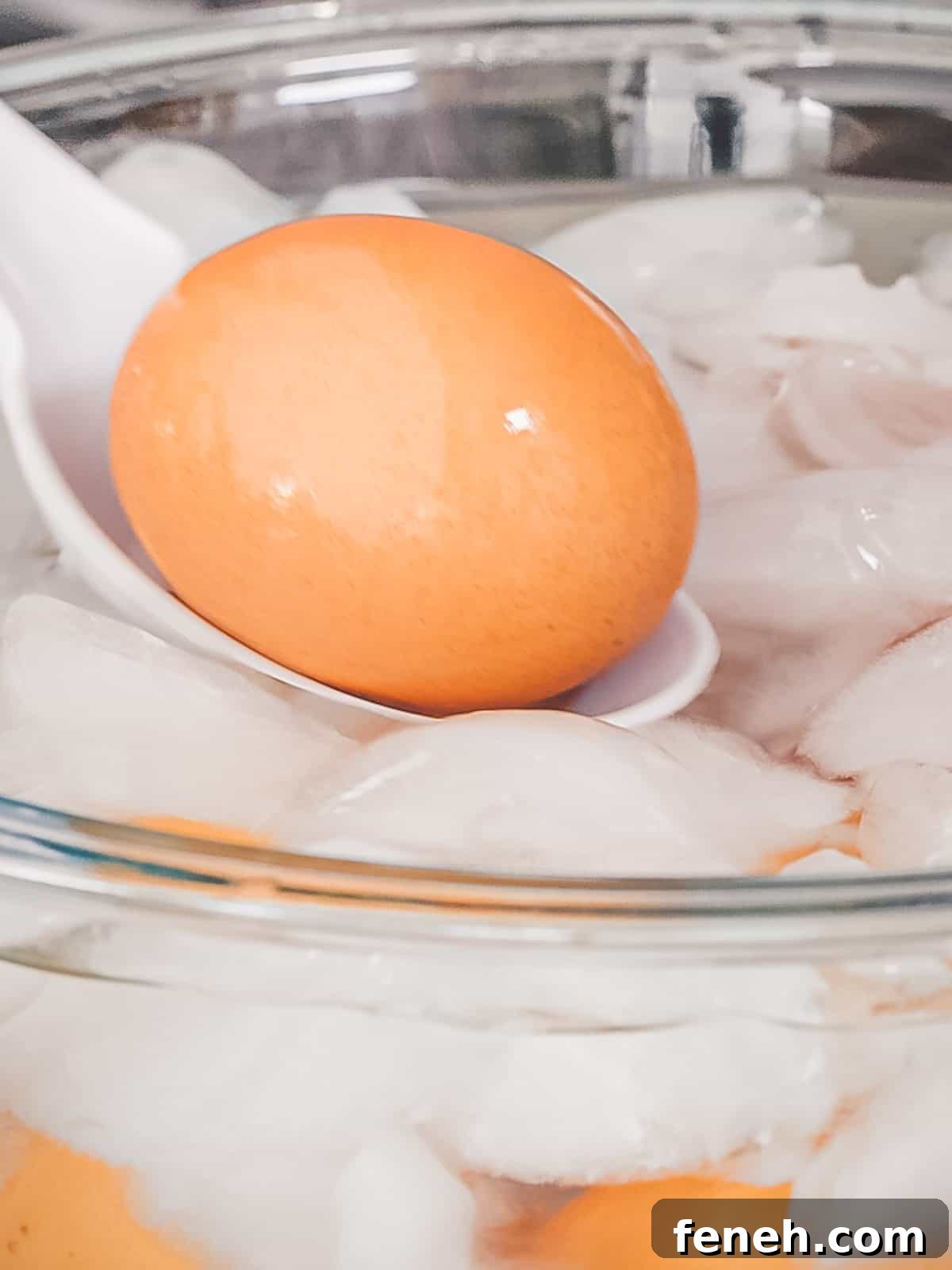
Ice bath: Prepare a bowl of ice water and immediately transfer the eggs into it after boiling to stop further cooking.
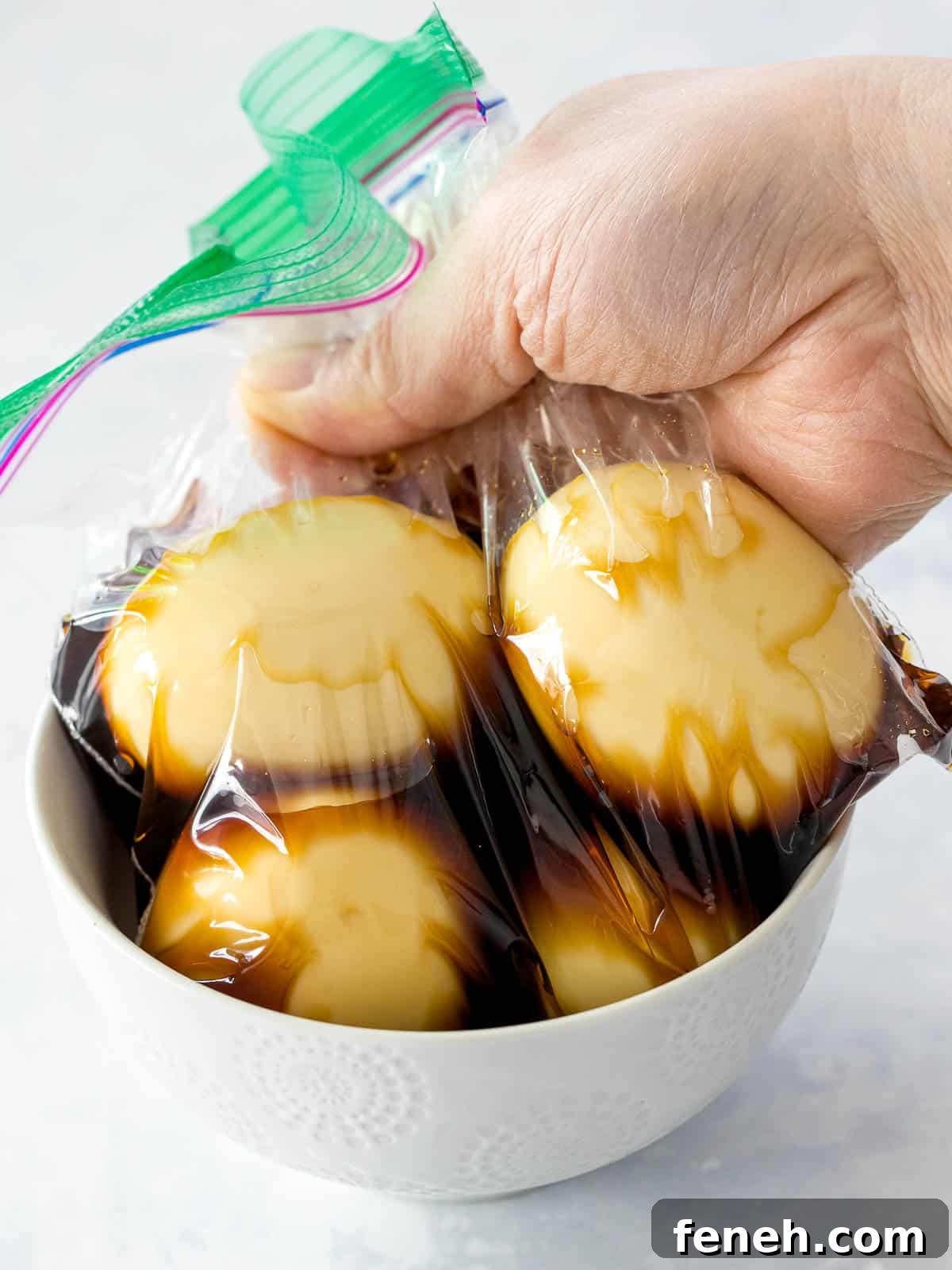
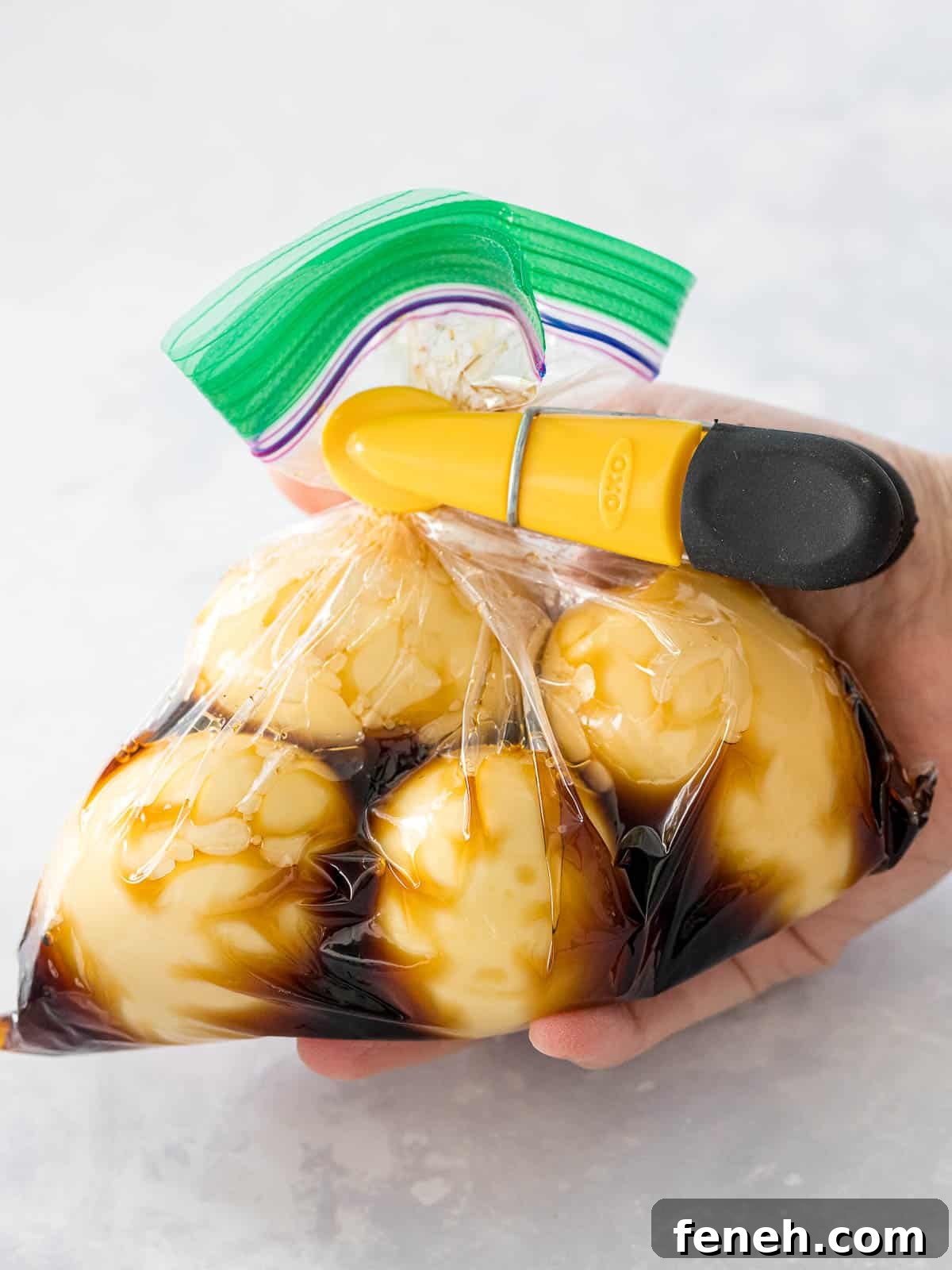
Make the Marinade:
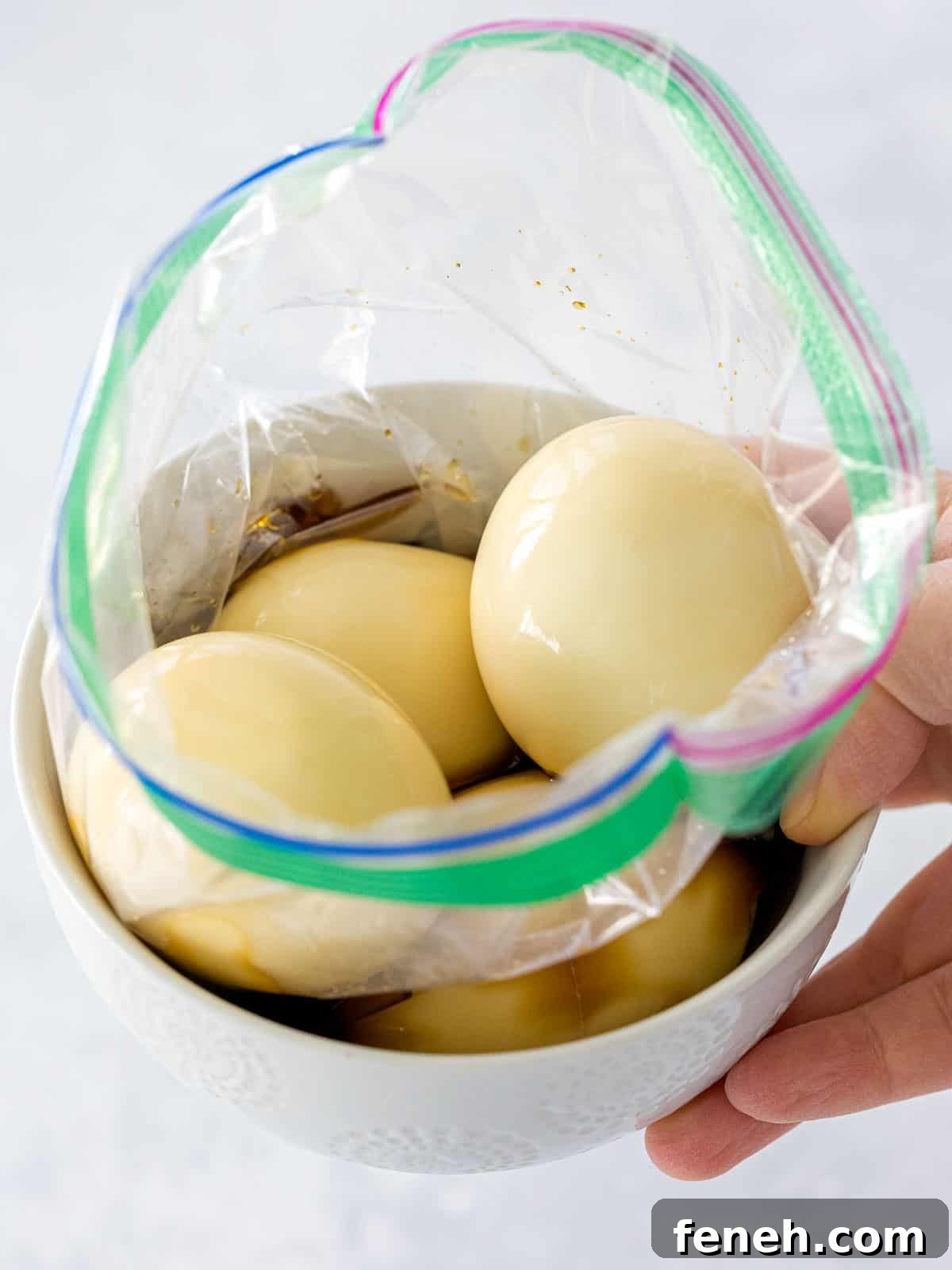
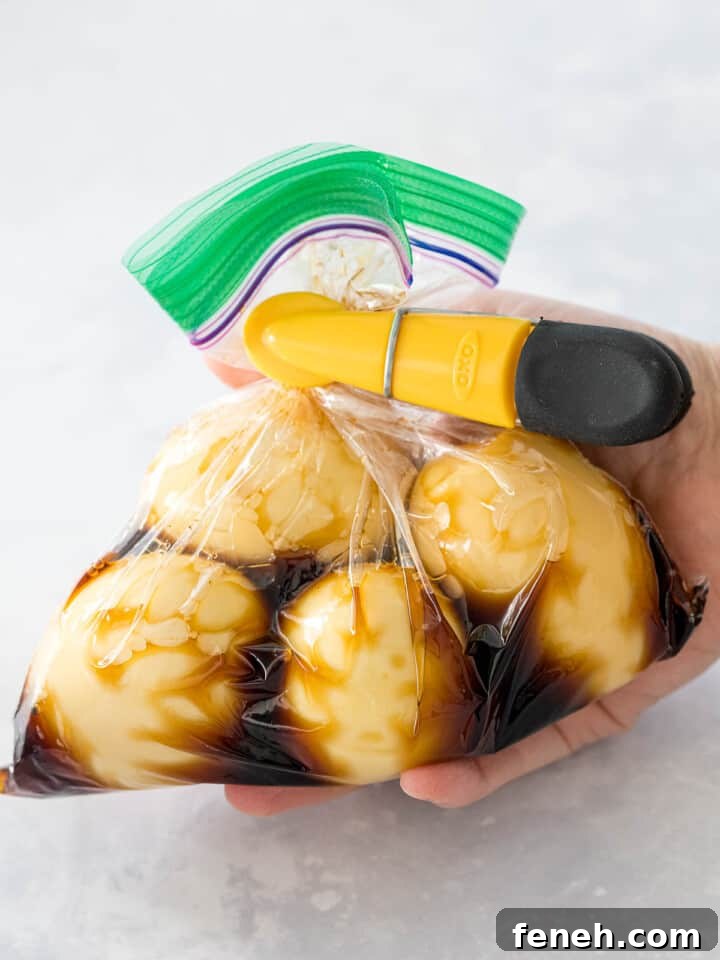
Combine the marinade ingredients in a zip-top plastic bag placed inside a small bowl for stability. Add the cooled, peeled eggs, press out excess air, and twist the bag closed so the marinade fully covers the eggs. Using a bag lets you use a smaller amount of liquid without waste.
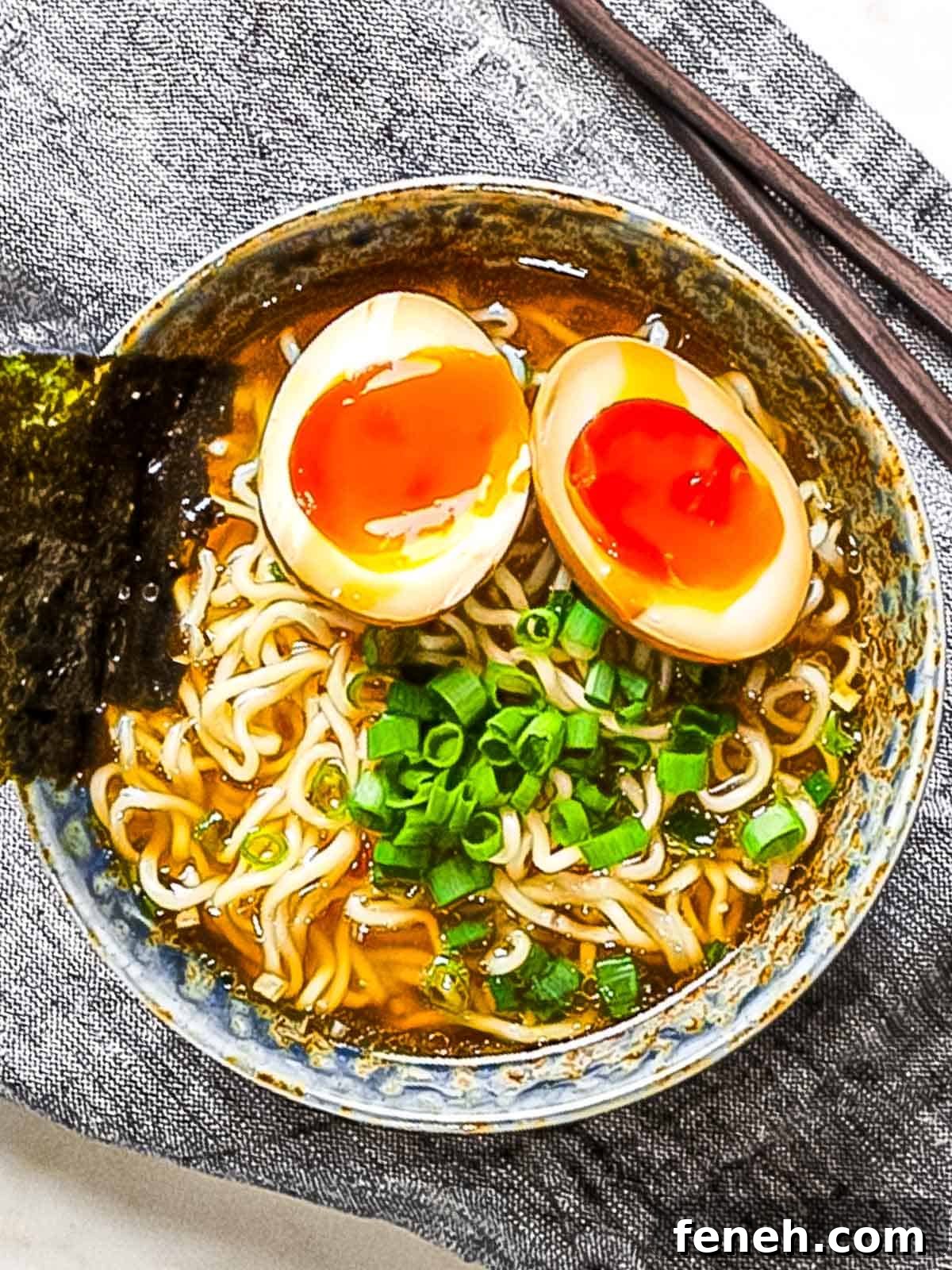
Soy sauce eggs are ready after about 1 hour but develop better flavor after longer marinating. They keep well in the refrigerator for up to 3 days. Slice in half and serve atop hot ramen or rice bowls.
Substitutions & Variations
- Without mirin: Use water or stock with a pinch of sugar and a few drops of vinegar as a non-alcoholic alternative. Mirin provides mild sweetness and acidity; non-alcoholic mirin also exists.
- Spices: Add sliced ginger or a clove of smashed garlic to the marinade for extra aroma.

FAQ
For cold eggs from the fridge, boil for 7 minutes. For room temperature eggs, boil for 6 minutes. Immediately transfer eggs to an ice bath to stop cooking.
Store eggs in the marinade in the refrigerator and consume within 3 days for best flavor and texture.
If you want to reuse it, boil the marinade to kill bacteria and cool it before using. For best flavor, though, make a fresh batch.
Enjoy this simple recipe—slice the eggs in half and place them on ramen, rice bowls, or salads. They’re an easy way to add savory richness to many dishes.
Thanks for reading! — Jamie
More recipes:

Asian Recipes
Mayak Egg (Korean Marinated Eggs)

Appetizers
Easy Classic Keto Deviled Eggs
Asian Recipes
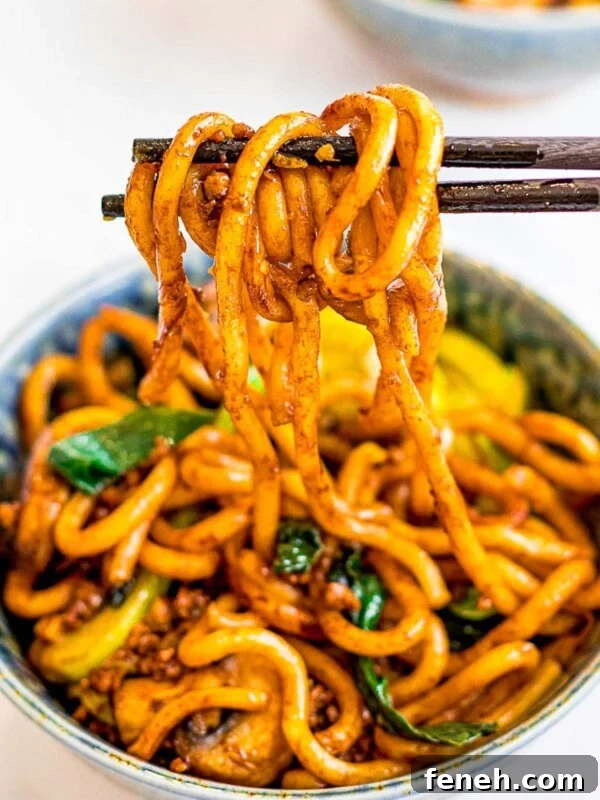
Yaki Udon | Stir Fried Udon Noodles
Main Dishes
Japanese Hamburger Steak (Hambāgu ハンバーグ)

Ramen Eggs – Soy Sauce Marinated Eggs
Ingredients
- 6 eggs
- 1 Tablespoon vinegar, for easy peeling
Ramen Egg Marinade
- ½ cup water or stock
- 5 Tablespoons soy sauce
- 4 Tablespoons mirin
- 2 teaspoons dark soy sauce, (optional for deeper color)
Instructions
Soft Boil Eggs
-
Soft boiled eggs: Bring a large pot of water to a boil and add the vinegar. Gently lower eggs into the water and set a timer for 6 minutes for room temperature eggs or 7 minutes for cold eggs from the fridge. For a tidy yolk, stir the eggs in one direction for the first 30 seconds.6 eggs, 1 Tablespoon vinegar
-
Peel: Transfer eggs to an ice bath to stop cooking. When cool, crack the shell all over and slip a spoon between the shell and egg to peel gently.


Marinate Eggs
-
Marinate: Place a zip-top bag in a small bowl, add water or stock, soy sauce, mirin, and optional dark soy. Gently add the peeled eggs, squeeze out excess air so the liquid covers the eggs, and seal. Add more liquid if needed. Refrigerate and marinate for at least 1 hour, up to 3 days.½ cup water or stock, 5 Tablespoons soy sauce, 4 Tablespoons mirin, 2 teaspoons dark soy sauce
-
Serve: Halve the eggs and place them on ramen, rice bowls, or salads. Enjoy!
Notes
- Mirin substitutions – Use water or stock with a pinch of sugar and a few drops of vinegar for a non-alcoholic alternative. Alternatively, mix half sake and half water with a pinch of sugar.
- Boiling tips – Use a pot wide enough to hold eggs in a single layer so the water temperature remains steady. Stir gently for the first 30 seconds for an even yolk cross section. Let room temperature eggs sit 30 minutes before boiling.
- Marination time – Eggs can be eaten after 1 hour but taste best after longer marinating. Keep them in the fridge for up to 3 days.
- Storage – Store remaining eggs in the marinade in the refrigerator for up to 3 days.
Nutrition
Nutrition information is automatically calculated and should be used as an approximation.
Like this? Leave a comment below!