
Chutney is simple to make at home, and this mango version is spicy, sweet and tangy — an ideal companion for roasted or grilled meats, sandwiches, and cheese boards. It requires minimal hands-on work, keeps for several weeks in the refrigerator, and is a perfect recipe to make when ripe mangoes are in season.
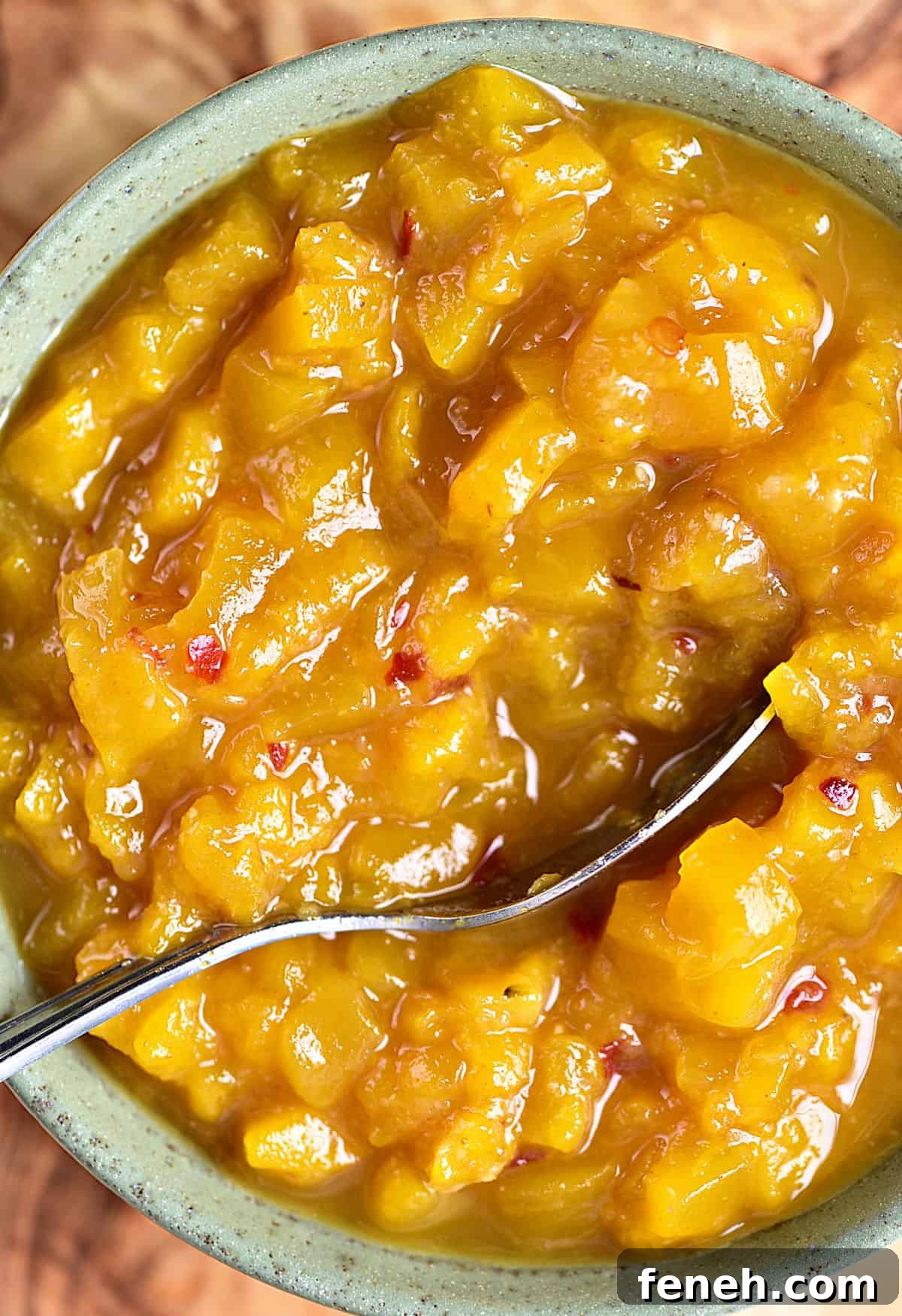
Spicy, sweet, tangy and easy to make
I enjoy making condiments at home, especially fruit-based ones. This mango chutney is one of my favorites because its flavor is layered — sweet fruit, warming spices and a bright vinegar tang. It’s even easier to prepare than other stone-fruit chutneys since mangos require less peeling and chopping when compared with some other fruits.
What to eat with chutney
- Grilled or roasted meats: pork, chicken, turkey and lamb pair beautifully with mango chutney, which brightens and balances rich flavors.
- Cheese: serve chutney with warm brie or goat cheese on toast, add it to a grilled cheese or quesadilla, or include it on a cheese board with crackers.
- Sandwiches and wraps: use the chutney as a spread to add depth and sweetness.
- Charcuterie: present a small bowl of mango chutney alongside cured meats like prosciutto, salami, or ham as a contrasting condiment.
FAQ
Sweet and spicy with a noticeable vinegar tang. Chutney often resembles sweet pickles in texture but delivers deeper, more layered flavors that vary depending on the fruit and spices used.
Fruit chutney is a versatile condiment. It complements pork, chicken and cheeses such as brie, and it adds interest to sandwiches, salads and vegetarian dishes like tofu.
You can, but it improves with time. Allowing the chutney to rest for a few days lets the flavors mellow and meld. Serving at room temperature also enhances the aroma and taste compared with eating it cold straight from the fridge.
Yes. Like homemade jam, the syrup formed by the sugar and fruit thickens as it cools. Remove the chutney from the heat while it is still slightly fluid so it will set to the right consistency as it cools.
Spices
Spices are central to a successful chutney. They add aroma, warmth and complexity. While you should adapt spice choices to your own palate, the combination of ginger, cumin, coriander and red chili flakes works particularly well in mango chutney. These spices contribute a distinctive, balanced character: fresh heat from ginger and chili, earthiness from cumin and brightness from coriander.
How to choose mangoes
Mangoes are usually at their best in spring and summer. Choose fruit that is ripe, fragrant and slightly yielding to the touch. Once ripe, mangoes will keep for a few days in the refrigerator.
- Color: many varieties show a mix of red, yellow or orange tones when ripe.
- Firmness: the fruit should give slightly when pressed but not feel mushy.
- Smell: a sweet, fruity aroma near the stem indicates ripeness.
- Skin: pick mangoes with mostly smooth skin and minimal dark spots or blemishes.
How to cut mangoes
Mangoes have a large flat seed that runs through the center of the fruit. You can peel first or work with the skin on; leaving the skin can be less messy if you score and scoop. Here are straightforward steps for cutting mangoes:
- Wash and dry the mango before cutting.
- Stand the mango upright with the stem end up and the pointy end facing away from you.
- Slice along one side to remove a cheek, then repeat on the other side to get two large pieces.
- Trim the remaining flesh from the sides of the seed, slicing as close to the pit as possible. Peel the skin from the slices if desired and cut into small pieces.
- To release cubes from a cheek, score the flesh in a grid pattern without cutting through the skin, invert the cheek to push out the cubes, and then scoop them away with a spoon.
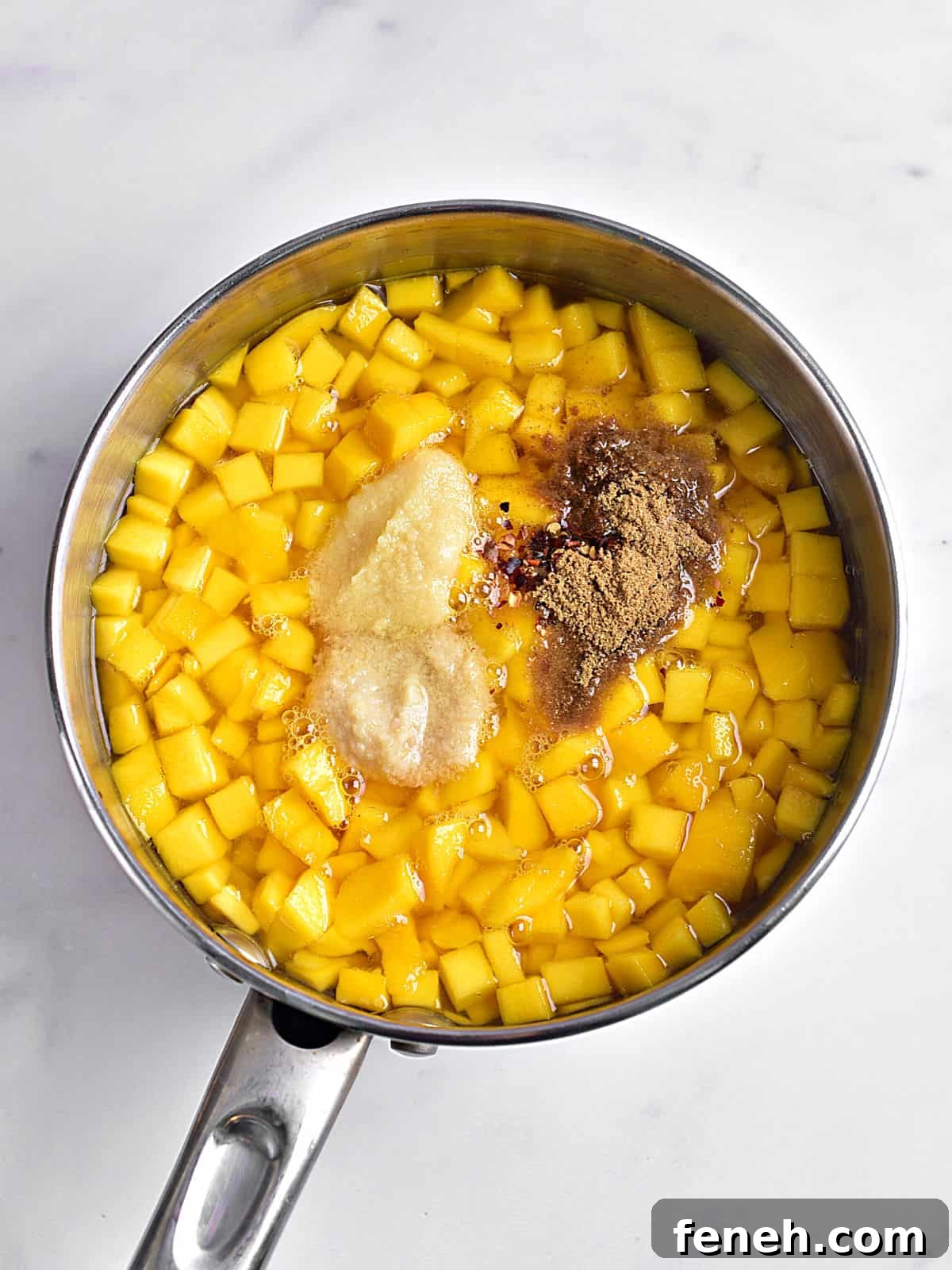
⭐️ Vintage Kitchen Tip
Cut the mango into small pieces so they are easy to eat. Remember that chutney thickens significantly as it cools, much like jam, so take it off the heat while it still has a bit of fluidity to reach the ideal texture.
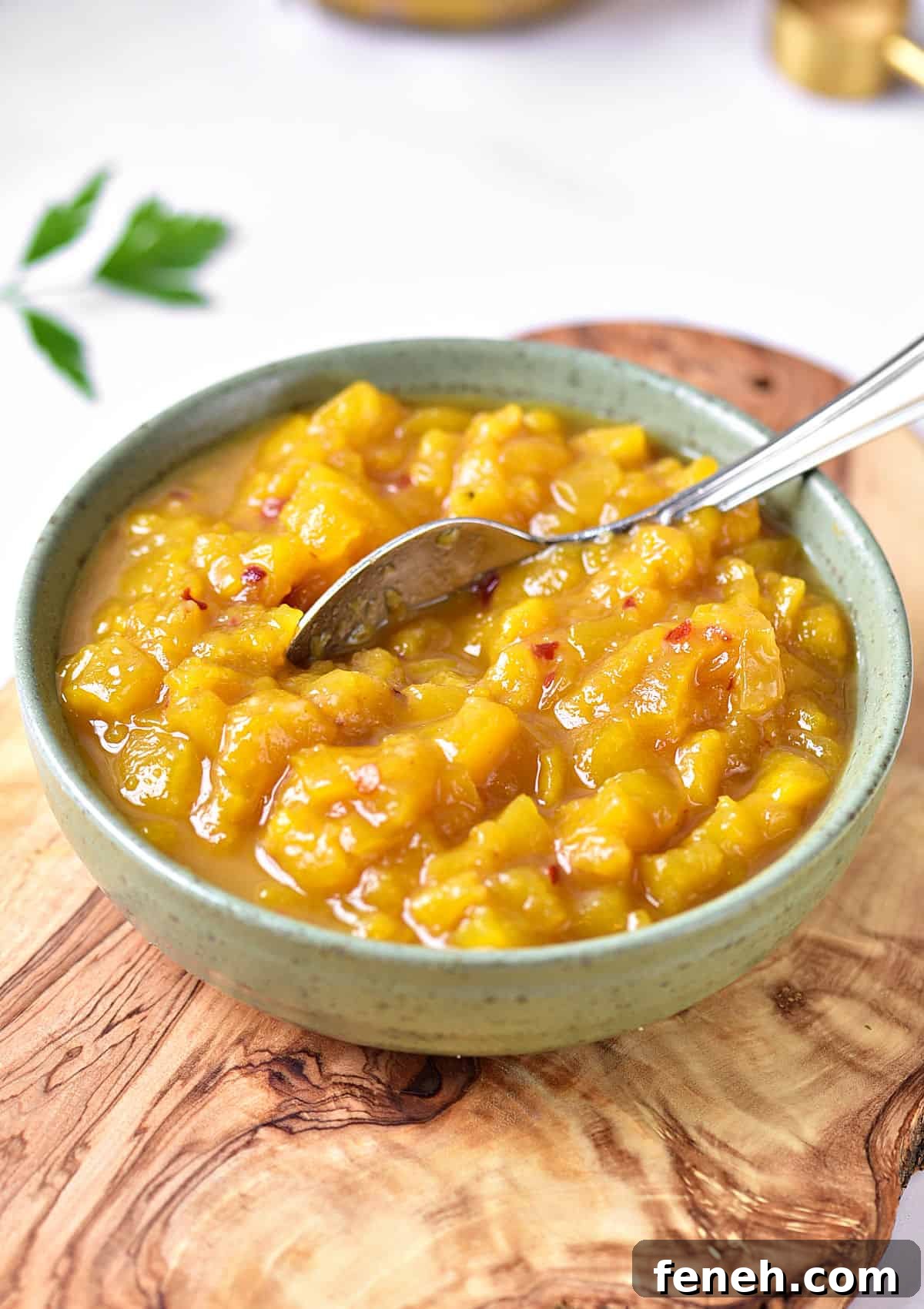
Storing chutney
Refrigeration
I usually use the chutney within a few weeks and keep it refrigerated in jars. For longer storage, preserve it using sterilized jars and an appropriate canning method.
Canning
- Sterilize the jars: wash glass jars thoroughly and warm or sterilize them before filling. Heat lids separately.
- Pour hot chutney into warm jars, place lids on while the jars are still hot and screw them down partially. Allow jars to cool before tightening lids completely. Some people place a small piece of wax paper under the lid edge if desired; this is optional.
- After cooling, store jars in the refrigerator or follow safe water-bath canning guidelines if you plan long-term shelf storage. When in doubt, refrigerate.
Freezing chutney
- Cool the chutney completely, then transfer to freezer-safe containers. It will keep for several months. Thaw in the fridge or at room temperature. The texture can change slightly, but freezing is a convenient alternative to canning.
Related recipes you might like:
- Peach Mango Salsa
- Bourbon Barbecue Sauce (two recipes)
- Cilantro Pesto (quick and easy)
- Chimichurri Sauce (authentic recipe)
If you make this chutney and enjoy it, please leave a comment and rate the recipe. If you have any issues, share them in the comments so we can troubleshoot together. You may also subscribe to the site newsletter for more recipes and tips.
This site may participate in affiliate programs. Please refer to the site’s disclosure policy for details.

Easy Mango Chutney Recipe
15
45
1
2 ½ cups
Condiments & Sauces
Ingredients
- 3 medium ripe, fresh mangoes
- 1 tablespoon vegetable oil
- 2 teaspoons minced garlic
- 2 teaspoons minced ginger
- ¼ teaspoon red pepper flakes, or chili flakes
- ½ teaspoon cumin seeds
- ½ teaspoon coriander seeds
- ⅛ teaspoon cardamom seeds
- ⅛ teaspoon ground cinnamon
- ¼ teaspoon salt
- ¾ cup sugar, white, brown or a mix
- ½ cup white vinegar
Instructions
-
Peel (if you prefer) and cut the mango flesh into small, even cubes so they cook evenly and are easy to eat.
-
In a medium skillet, heat the oil over medium heat. Add the minced garlic and ginger and stir for about one minute. Add the red pepper flakes, cumin seeds, coriander seeds and cardamom, stirring another minute until the spices become fragrant but do not brown.
-
Remove the skillet from the heat and stir in the ground cinnamon and salt. Set the spice mixture aside.
-
In a medium saucepan, combine the sugar and white vinegar and bring to a gentle simmer, stirring until the sugar dissolves completely.
-
Add the diced mango and the reserved spice mixture to the saucepan. Reduce the heat to low and simmer the chutney, stirring occasionally, for 45–50 minutes until the mango is tender and the mixture has thickened. For a smoother texture, cook longer until you reach the desired consistency. Avoid allowing all the liquid to evaporate; add a tablespoon of water if needed.
-
Transfer the chutney to a shallow dish to cool slightly, then spoon it into jars. Refrigerate jars for short-term storage and use within a few weeks, or serve the chutney immediately at room temperature for best flavor.
-
For longer storage, follow safe canning practices with sterilized jars and lids. When in doubt about canning procedures, refrigerate the chutney or freeze it in suitable containers.
Notes
Small batch: This recipe scales down easily. If you halve it, expect shorter cooking time to reach the right thickness — finely chop the mango so it softens quickly.
Optional additions: You can add ¼ cup chopped yellow onion when cooking the garlic and ginger for extra depth of flavor.
International
mango chutney