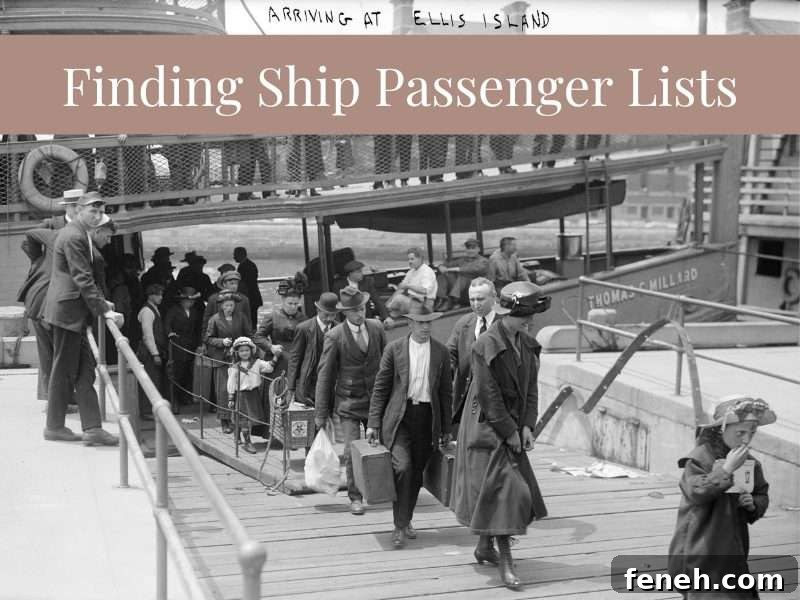
Ship passenger lists are an essential tool for genealogists. They often record immigration dates and ports, passenger names and ages, occupations, and sometimes physical descriptions. These lists can reveal previously unknown relatives, confirm family stories, and provide key leads for tracing an ancestor’s journey and settlement.
Finding Ship Passenger Lists
There are several reliable places to search for passenger lists:
- Online databases: Major genealogy sites like Ancestry, MyHeritage, FindMyPast, and FamilySearch host large collections of ship manifests. Many of these databases let you search by name, arrival date, or port of entry.
- Government archives: National archives and immigration agencies maintain passenger records and explain their historical context. These sites often provide guidance on what types of passenger lists exist and how they were created.
- Newspapers: Local papers in departure and arrival ports sometimes published passenger lists or stories about notable voyages. Historical newspaper collections can yield detailed reports, lists of passengers, and personal accounts when ships experienced delays or incidents.
- Foreign-language newspapers: Immigrant communities frequently produced newspapers in their native languages. Those publications can contain arrival notices, community news, and details not found in English-language sources.
The amount of information on passenger lists varies with time and place. Early lists may include only a name, age, and place of origin, while later manifests often add occupations, last permanent address, and closest relative in the country of origin. Keep expectations flexible and be ready to combine multiple records to build a fuller picture.
Additional Tips for Finding Ship Passenger Lists
Use multiple sources. Don’t rely on a single collection. Cross-check databases, government sites, family history centers, and local libraries to improve your chances of finding the correct manifest.
- Be flexible with search terms. Try name variations, nicknames, middle names, initials, ship names, and ports of departure or arrival.
- Ask for help. Professional genealogists, local historical societies, and family history librarians can offer search strategies, access to specialized resources, or assistance with difficult-to-read records.
Overcoming Common Challenges in Ship Passenger Lists
Working with historical passenger lists can present obstacles. Understanding typical problems and approaches to solve them will make your research more effective. Below are common issues and practical solutions.
Misspelled Names
Names were often recorded phonetically or misspelled. To address this:
- Try phonetic variations: Say the name aloud to imagine alternate spellings that a recorder might have used.
- Use wildcard searches: Many databases allow wildcards (such as * or ?) to capture different spellings.
- Look for contextual clues: Check neighboring passengers on the same manifest for family members, neighbors, or people from the same hometown. These associations can confirm identities even when names are inconsistent.
Inconsistent Dates
Dates on manifests may be written in different formats or be hard to read. To manage date discrepancies:
- Consider multiple date formats: European and American styles can be confused (e.g., 4/7/1900 might mean April 7 or July 4). Translate month names in foreign languages when needed.
- Cross-verify with other records: Compare manifest dates with census entries, naturalization papers, and vital records to establish a consistent timeline.
Ambiguous Locations
Places of birth or last residence may be vague or use historical place names. To clarify locations:
- Study historical geography: Learn about changing borders, former place names, and administrative divisions relevant to your ancestor’s era.
- Use census and local records: Other documents may list more precise birthplaces or clarify regional terms used on passenger lists.
Incomplete Information
Some manifests are sparse. When key details are missing:
- Seek supplementary documents: Naturalization records, census data, marriage certificates, and local records often fill gaps left by passenger lists.
Researching ship passenger lists is like assembling a historical puzzle. Use online collections, archives, newspapers, and community sources together to build a fuller narrative of your ancestor’s migration. Expect occasional challenges—misspellings, unclear dates, or vague places—and approach them with flexible search strategies and corroborating records.
With patience and multiple research avenues, passenger lists can yield compelling evidence about your family’s past and lead to new discoveries about relatives and their journeys.