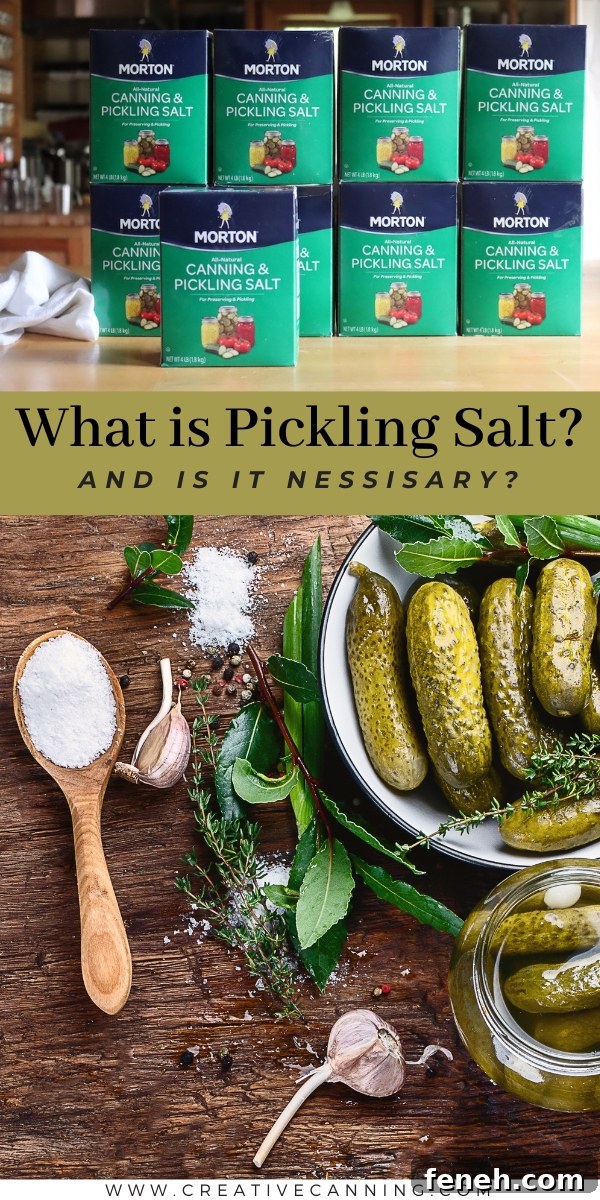
Canning salt, often called pickling salt or simply “pickling and canning salt,” appears in many canning and traditional preservation recipes. But what exactly is it, and how does it differ from regular table salt?
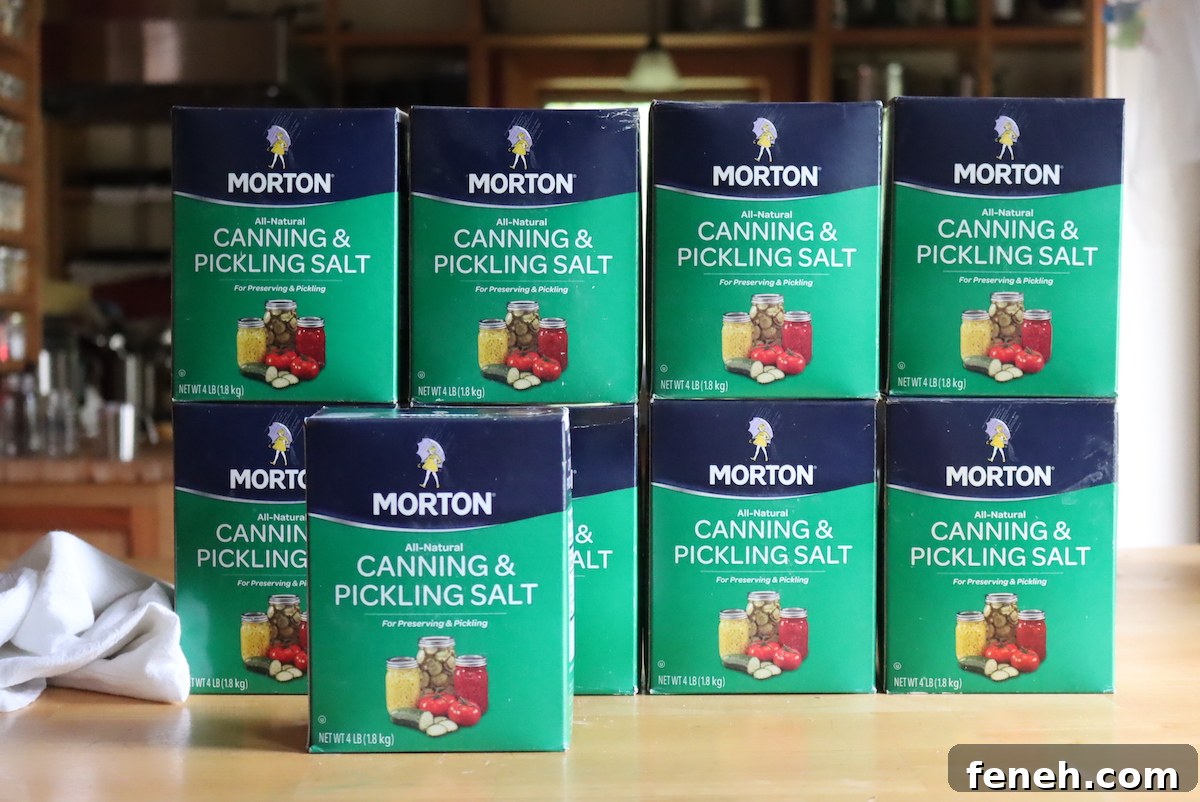
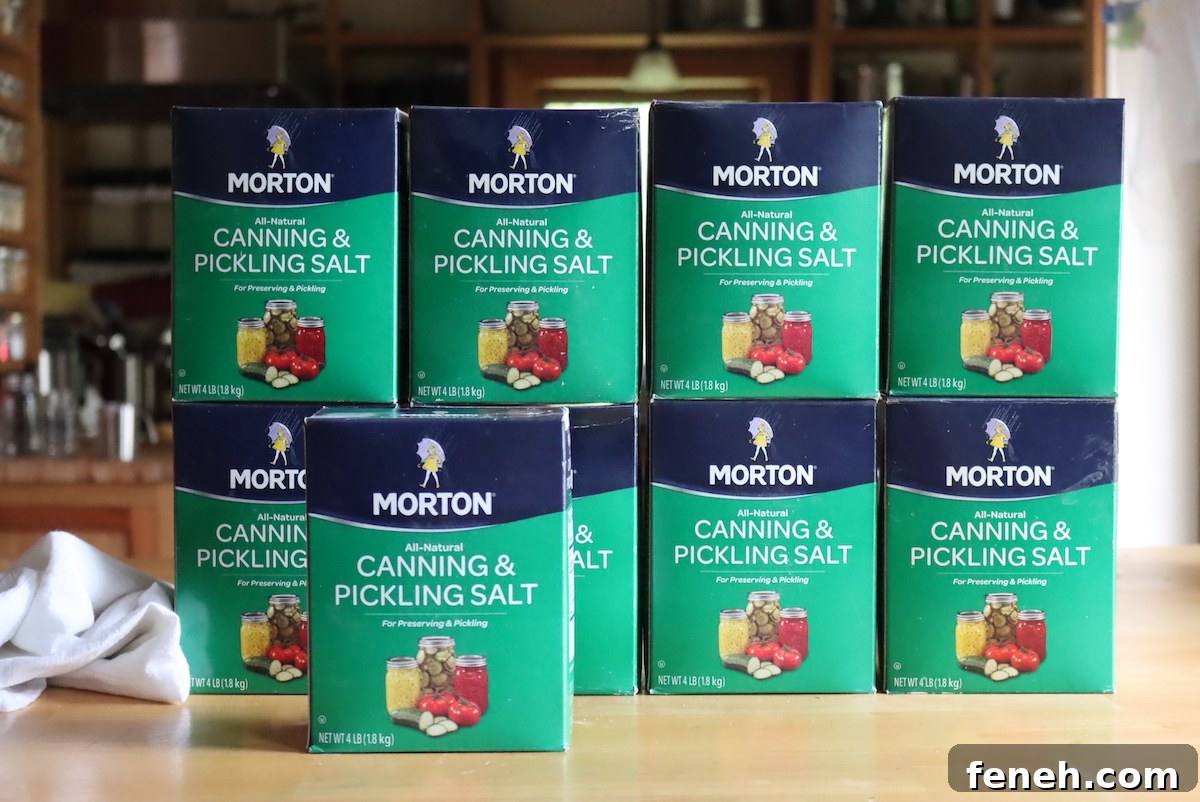
Most grocery stores stock pickling salt alongside table salt, kosher salt, sea salt and other varieties. While you can often substitute other salts in a pinch, pickling salt is specifically formulated to avoid problems that some additives in regular salts can cause in preserved foods.
What is Pickling Salt (or Canning Salt)?
Pickling salt is pure sodium chloride with no added ingredients. It is refined to be free of anti-caking agents, iodine, or other additives commonly found in table salt. When a label lists only “salt,” you likely have a product suitable for pickling and canning.
Table salt and some kosher salts often include anticaking agents or iodine to improve flow and prevent clumping. Those extra ingredients can affect flavor or appearance in jars, which is why many home canners prefer plain pickling salt.
What is Pickling Salt Used For?
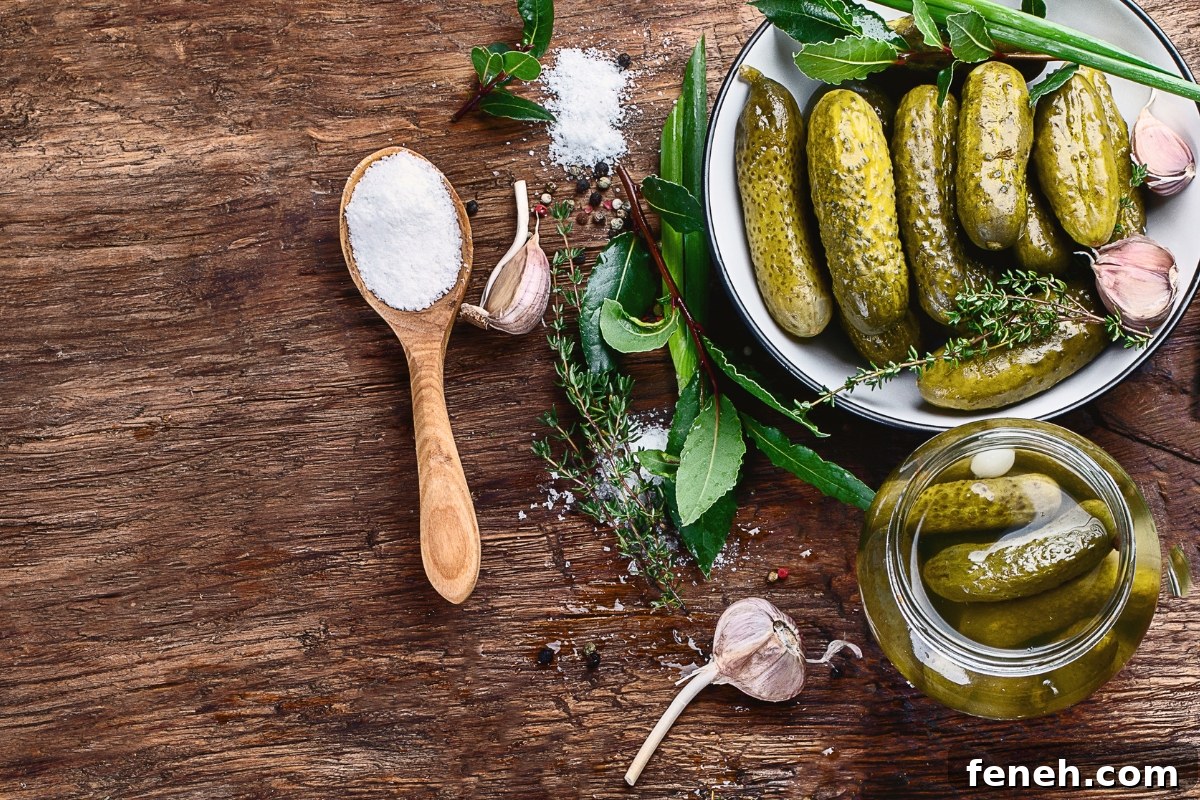
As the name implies, pickling salt is used for pickles, but it’s also ideal for many other canning applications, including pressure-canned meats and vegetables. Because it contains only salt, it dissolves fully and won’t introduce off-flavors or cause cloudiness in brines.
Pickling salt is also favored in charcuterie and meat-cure recipes that require precise salt measurements. Using a salt with additives can alter weight and volume measurements, which matters for recipes that rely on accuracy.
What Can I Substitute for Pickling Salt?
Substitutes are possible as long as the alternative contains only salt and no anti-caking agents or other additives. Natural salts like sea salt, Himalayan salt, or unrefined mineral salts are acceptable if the ingredient list reads only “salt.” These natural salts may add trace minerals and a subtle color or flavor, but they are safe for canning.
Many kosher salts are also suitable, though some brands now include anti-caking agents, so always read the label. Diamond Crystal kosher salt, for example, is commonly used and typically free of additives.
Be aware that some natural salts—Himalayan salt in particular—can cause a slight cloudiness in brine. That cloudiness is cosmetic only and does not affect preservation or safety.
What you should avoid is any salt that lists additives, since those can both cloud jars and impart unwanted flavors to preserves.
What is the Difference Between Canning Salt and Regular Table Salt?
Regular table salt generally contains additives. A common brand’s ingredient list may include salt plus items such as calcium silicate (an anti-caking agent), dextrose, and potassium iodide. These additives can affect flavor and the clarity of brine in preserved foods.
By contrast, canning or pickling salt has a single ingredient: salt. That purity is the main distinction and the reason many canners prefer it.
What is the Difference Between Canning Salt and Kosher Salt?
In many cases, kosher salt and canning salt are similar in composition—both may contain only salt. The difference often comes down to grain size and brand. Some kosher salts remain additive-free and can be used interchangeably with pickling salt, but always check the ingredient list to be sure.
Can I Use Salt Substitutes for Pickling?
Some pickling recipes call for large amounts of salt, which can be a concern for low-sodium diets. For most modern, tested water-bath canning recipes, salt is used for flavor rather than preservation, and it can often be reduced or omitted without affecting safety. Sodium-free, non-clouding salt substitutes are available and may be used in place of salt for flavor reduction.
If you choose a salt substitute, read the product instructions carefully—substitutes may be used at different rates than regular salt and can alter taste. Some leave a bitter aftertaste in certain foods, so it’s wise to test a small batch before scaling up.
Note that some preservation methods—such as salt-curing meats or lacto-fermentation—rely on real salt for safety and proper preservation. Refrigerator pickles and other non-canned fermentations also often require real salt.
Home Canning Guides
If you want to learn more about safe canning techniques and related topics, look for reliable, tested recipes and guides. Some common areas of interest include water-bath canning, pressure canning, and fruit preserves like jam. Following trusted, science-based guidance ensures both safety and the best results.
- What is Jam Sugar? (Coming Soon)
- Beginner’s Guide to Water Bath Canning
- Beginner’s Guide to Pressure Canning
- How to Make Jam