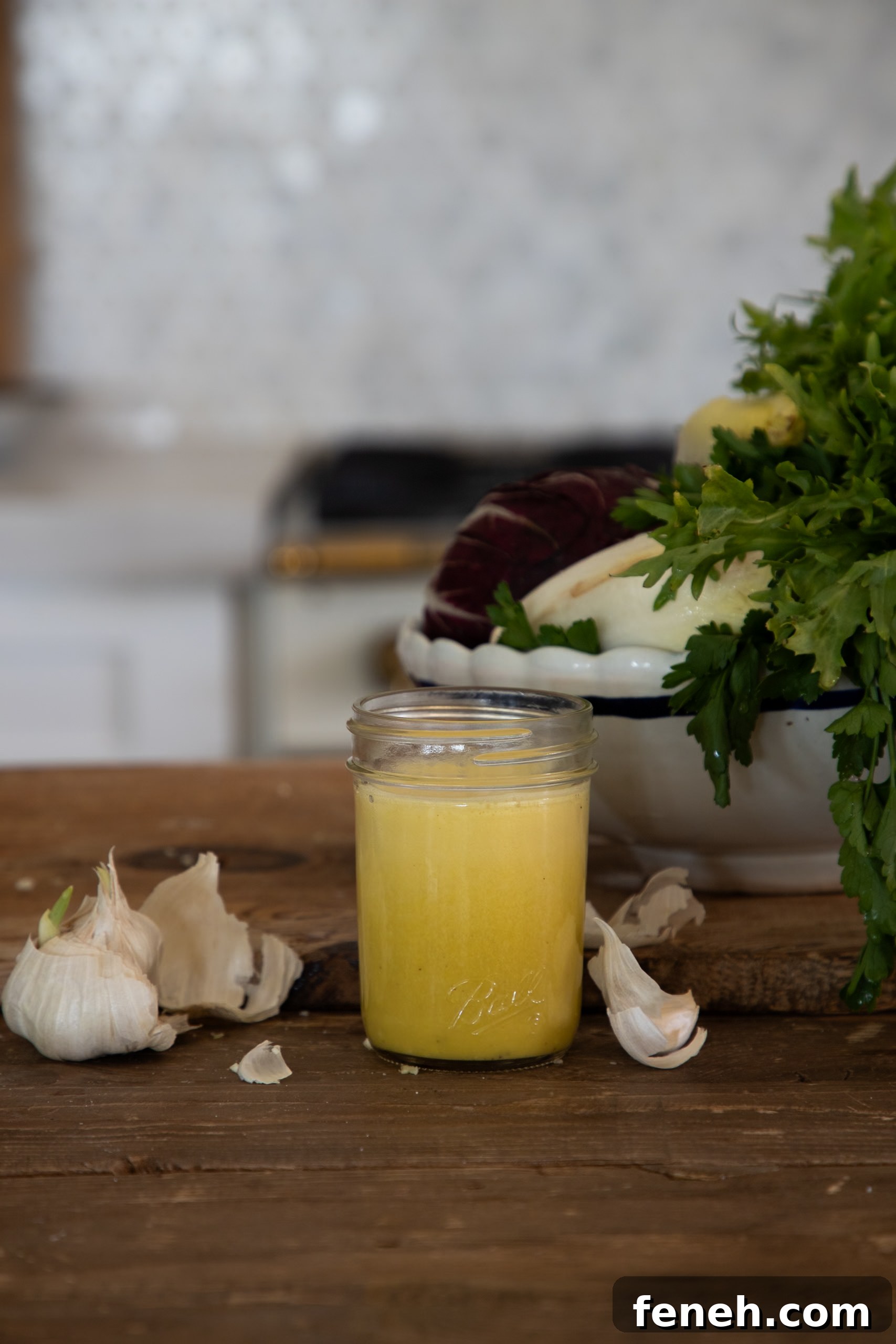
This classic French vinaigrette is my go-to when I want a simple, flavorful, and easy dressing. It adds rich taste to greens, salads, and grilled vegetables.
Rooted in family tradition, this recipe honors my French heritage. A simple vinaigrette is a staple in a French kitchen—almost as essential as good mustard—and it always brings to mind memories of family meals. I learned this dressing from my aunt, who learned it from her aunt, and I hope one day to pass it on to the next generation.
This authentic vinaigrette is easy to make and uses only a few ingredients you likely already have on hand. Making it at home means you control the quality and flavor, and you’ll never need to buy bottled dressing again. Ready? Let’s get started.
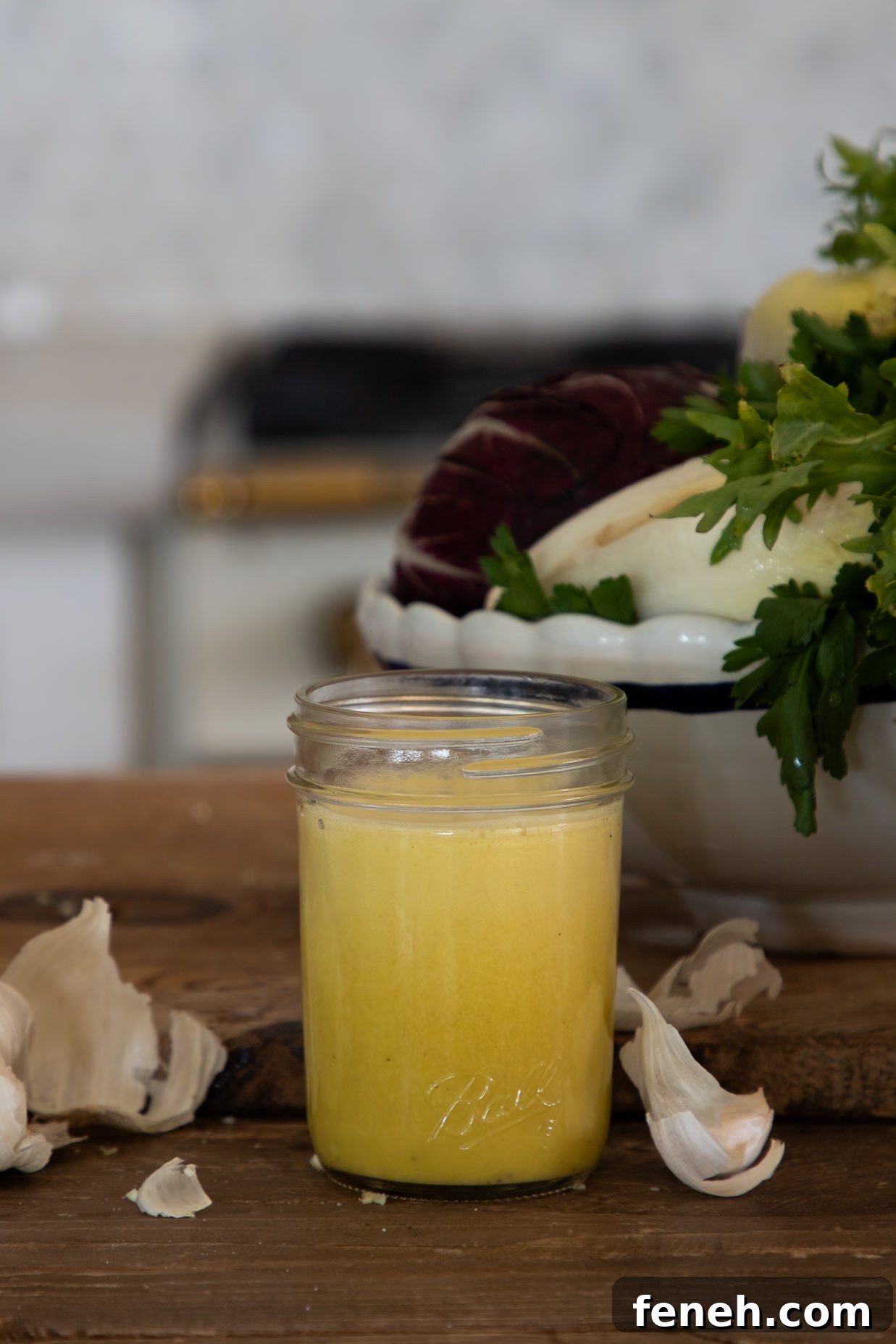
I love a simple late lunch of fresh market greens with a baguette and proper French butter, whether I’m in France or at home. When I don’t have time to prepare a full meal, making a batch of this vinaigrette ensures my salads and roasted vegetables stay flavorful all week.
Making homemade dressing is incredibly straightforward. The key is high-quality ingredients.
A classic French vinaigrette is built from three basics: high-quality extra virgin olive oil, wine vinegar (I prefer champagne vinegar), and Dijon mustard. From there, you can adjust and add ingredients—fresh lemon juice, herbs, red onion, shallot, or garlic—to suit your taste.
What Is French Dressing Anyway?
In the U.S., “French dressing” often refers to a sweet, creamy, tomato-based sauce similar to Thousand Island. That’s not what this is. A classic French vinaigrette is a bright, oil-and-vinegar-based dressing that enhances the natural flavors of vegetables instead of masking them.

Vinaigrettes can range from tart to sweet to herb-forward. I prefer dressings with some bite, but you can add a touch of honey for sweetness and extra creaminess if you like.
The recipe below is a family favorite passed down from my Aunt Michelle. It’s simple, authentic, and versatile—perfect for everyday use.
The Importance of a Good Olive Oil
Using a high-quality extra virgin olive oil makes a noticeable difference, especially in dressings. Olive oils vary widely in flavor—some are fruity, others peppery—so choose one you enjoy. A great olive oil elevates a simple green salad into a memorable dish.
High-quality olive oil also carries health benefits, and selecting one you like encourages you to use it more often in your cooking and dressings.
What Is an Emulsion?
An emulsion is a stable blend of two liquids that normally separate—like oil and vinegar. To achieve a creamy vinaigrette, add the olive oil slowly at the end while whisking quickly so the mixture comes together and remains smooth.
Why Add an Egg Yolk to French Dressings?
An egg yolk adds creaminess and acts as an emulsifier, helping oil and vinegar stay combined. It’s similar to how yolk is used in Caesar dressing. If you’re wary of raw egg, use pasteurized yolk, but many cooks value the texture and flavor the yolk contributes.
How to Store the Dressing
Because this version contains a raw egg yolk, store the vinaigrette in the refrigerator and use it within three days.
How to Use French Vinaigrette
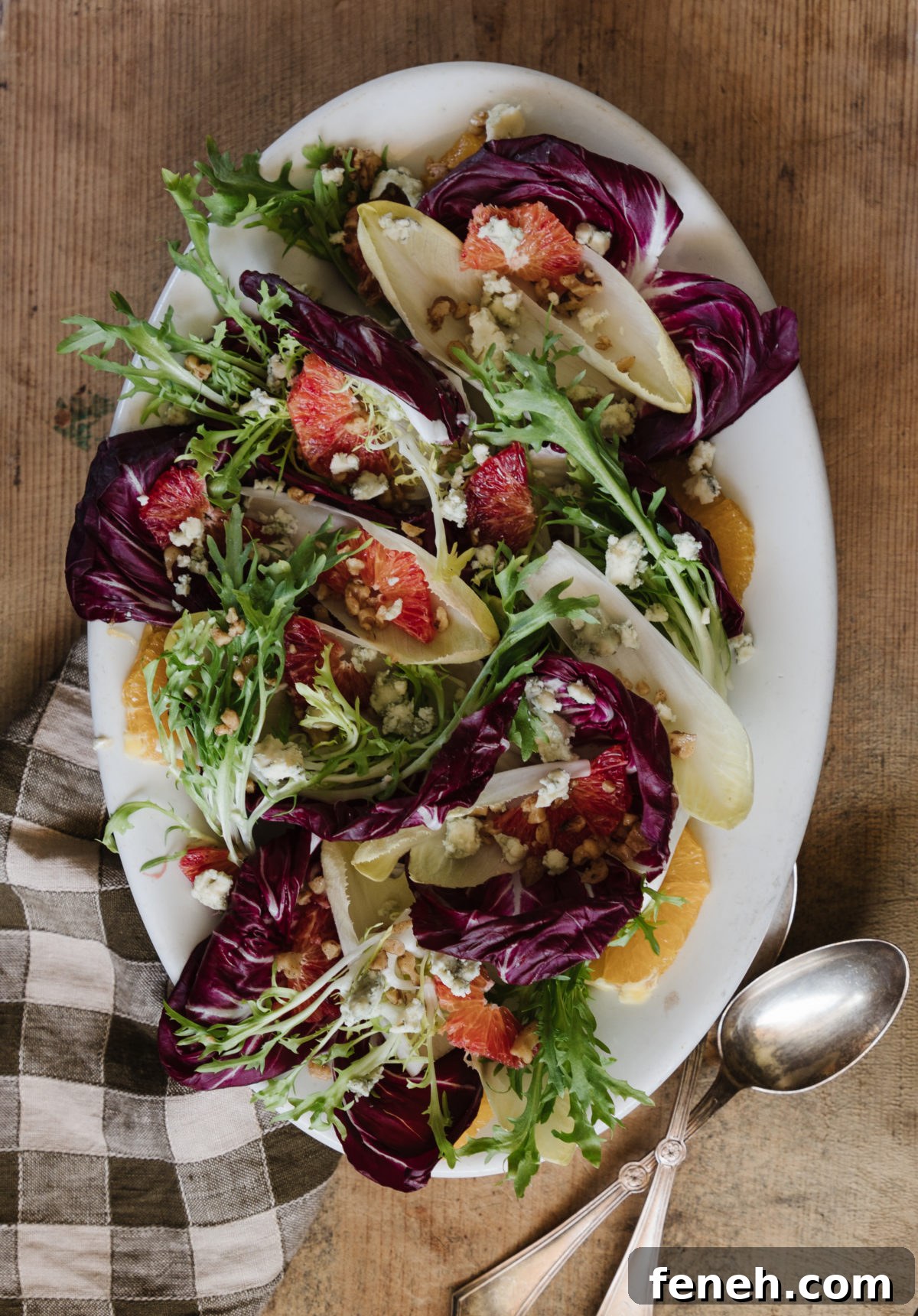
It’s excellent on fresh greens and also brightens grilled or roasted vegetables. Try it on endive, mixed lettuces, or as a finishing drizzle for warm vegetables to highlight their natural flavors.
Other Recipes You Will Love
The Best Strawberry Salad
Rustic Panzanella Salad
Garlic Greek Yogurt Sauce
The Recipe
French Vinaigrette Recipe
10 minutes
8
Ingredients
- 3 tablespoons Champagne vinegar
- ½ teaspoon Dijon mustard
- ½ teaspoon Raw garlic, finely chopped
- 1 Extra-large egg yolk, room temperature
- ¾ teaspoon Kosher salt
- ¼ teaspoon Black pepper
- ½ cup Extra virgin olive oil
Instructions
-
Finely chop the raw garlic.
-
Combine the vinegar, Dijon mustard, garlic, egg yolk, salt, and pepper in a bowl and whisk until well blended.
-
Slowly drizzle in the olive oil while whisking quickly to form a smooth emulsion.
-
Transfer to a jar and refrigerate. Use within three days.