Hello Hello!
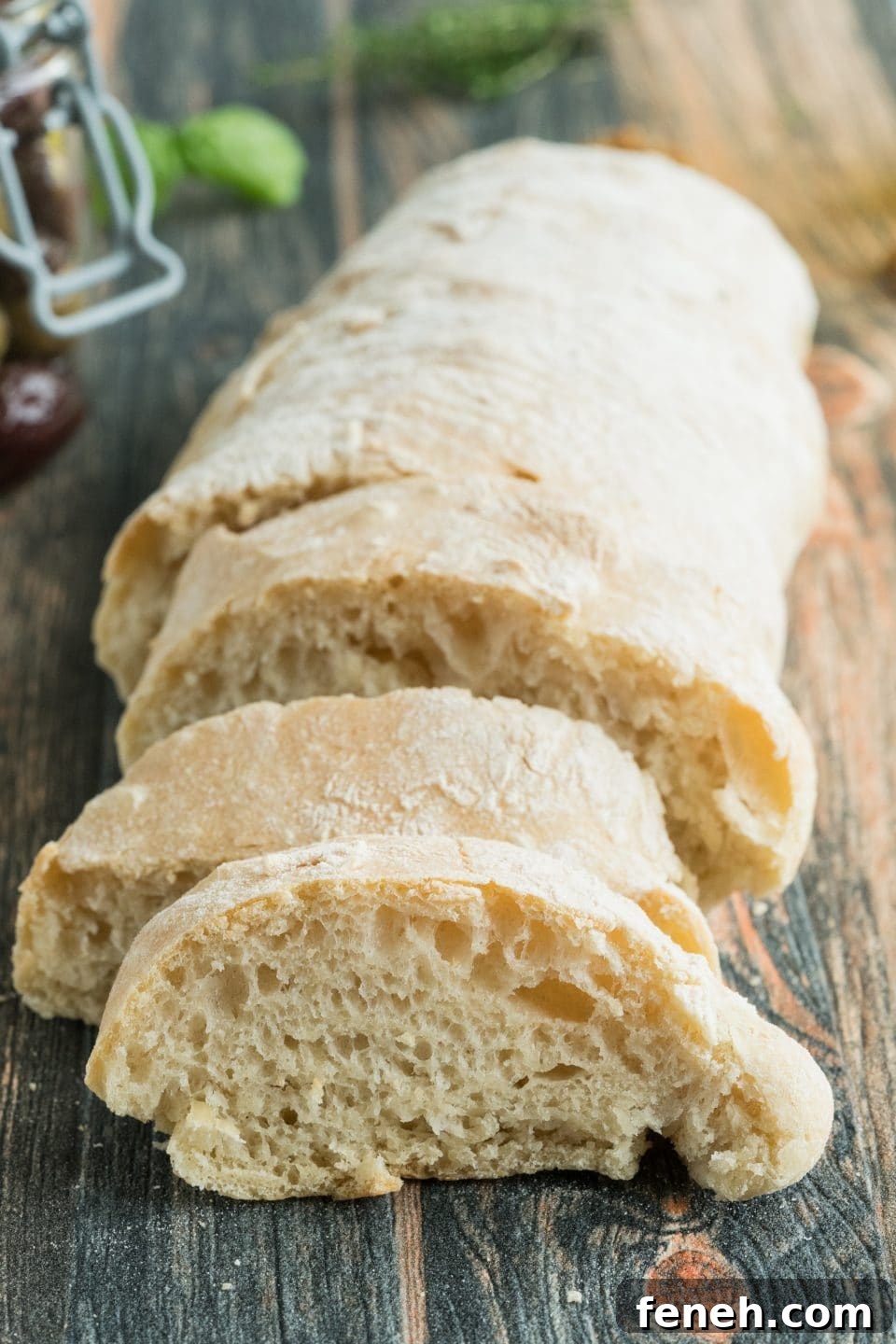
Today we’re bringing some of those holiday feelings back into our kitchens with a traditional Italian ciabatta bread made from an authentic recipe. It’s not difficult — the key is patience and letting the dough rise slowly. You’ll also enjoy watching how a small amount of yeast and a long fermentation create that light, open crumb typical of Italian ciabatta.
Ready? Let’s get started.
About this recipe
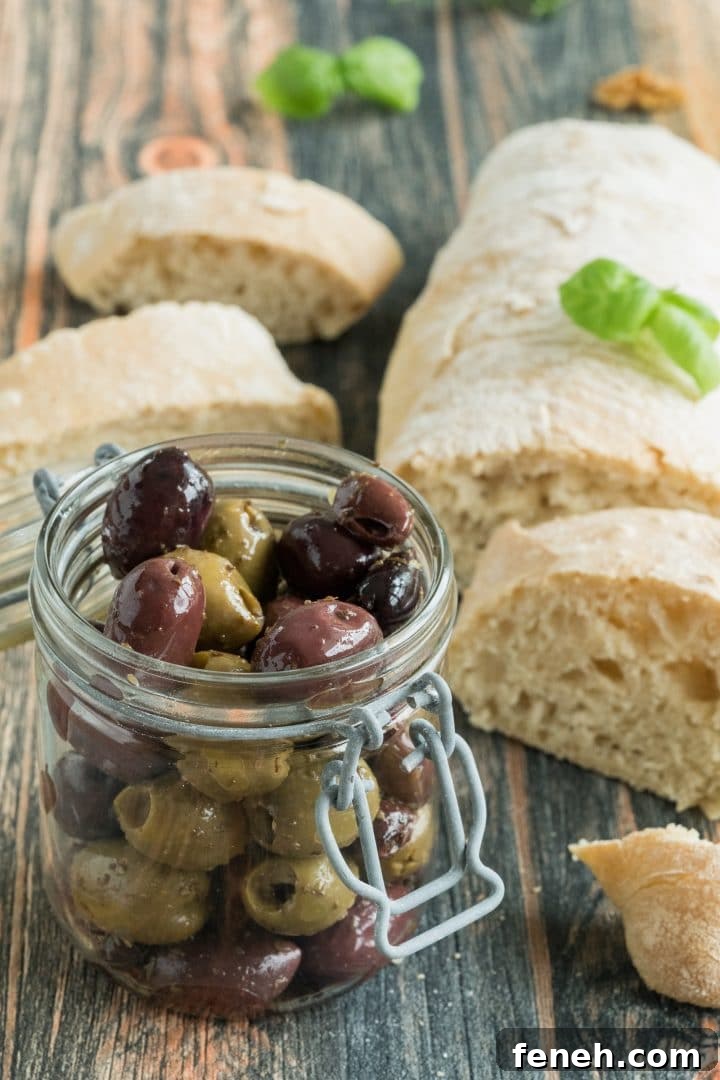
Living close to the southern German border, Italy has been a favorite holiday destination for many families for decades, and ours is no exception. Growing up with authentic Italian pizza, pasta and ciabatta makes you appreciate the real thing — and it inspired us to bake our own. Homemade ciabatta can taste just like the loaves you buy on vacation when you follow a few traditional techniques.
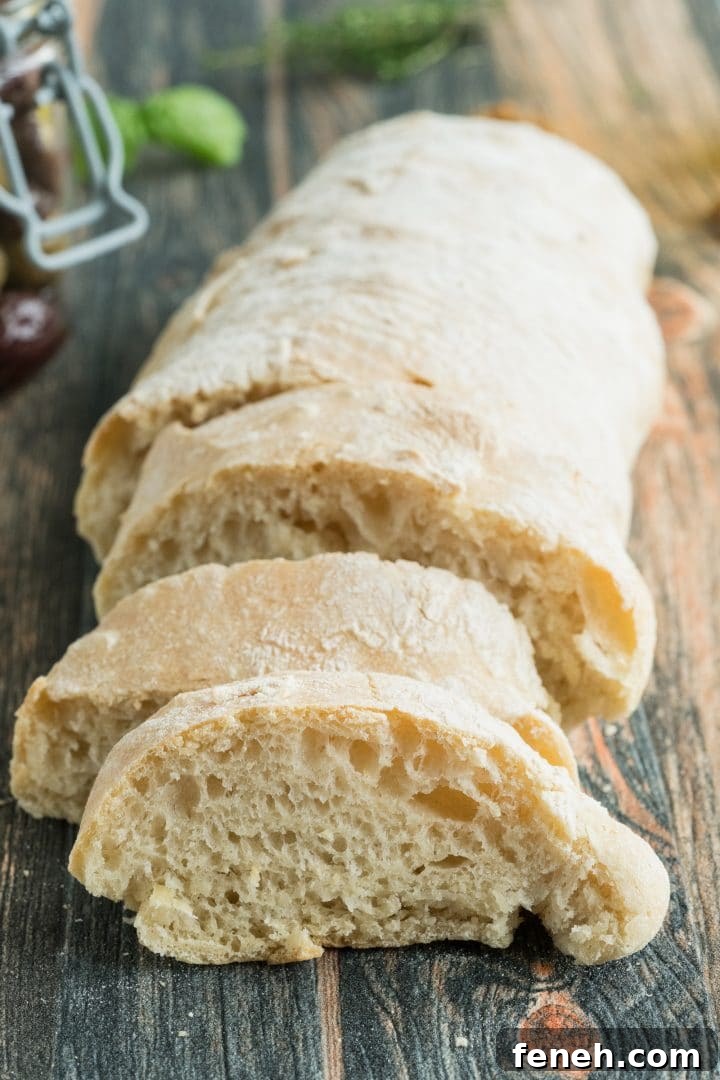
Ciabatta may look like an ordinary white loaf shaped into a long form, but its texture and flavor set it apart. You can find faster versions that use lots of yeast, but an authentic ciabatta needs time. The dough is wetter than typical white bread, includes olive oil, and is allowed to rise slowly — often overnight at room temperature. Avoid kneading the dough immediately before baking so you preserve the coarse structure and uneven holes that make ciabatta so appealing.
Ingredients
Whether you use fresh yeast or dry yeast won’t drastically change the result; I prefer fresh yeast for its flavor and performance. Below are the ingredient amounts for two ciabatta loaves. If you need conversions, use your usual yeast conversion ratio or consult a basic yeast-dough guide.
How to make Ciabatta
Plan ahead: this recipe requires long resting times. Follow this schedule for best results:
- Evening: prepare the pre-dough.
- Morning: prepare the main dough, let it rise, shape, then bake before lunch.
Step-by-step overview:
- Make the pre-dough the evening before baking. Dissolve the yeast in lukewarm water, mix with the flour and knead briefly. Cover the bowl with cling film and let the pre-dough rise for about 16 hours (overnight).
- The next morning, dissolve the yeast for the main dough in lukewarm water. Combine the pre-dough with sugar, additional flour, olive oil, salt and the dissolved yeast. Knead for about 5–10 minutes. The resulting dough will be quite moist.
- Cover the bowl and allow the dough to rise at room temperature for another 1–2 hours until noticeably puffed.
- Turn the dough onto a well-floured surface. Do not knead it further — instead, gently divide it in half and carefully push each portion into an elongated loaf shape. The flour helps prevent sticking and gives the loaves a rustic appearance.
- Place the loaves on a baking sheet lined with parchment and let them rest for about 1 hour for a final rise.
- Preheat your oven to 230°C (450°F) with top and bottom heat. Bake the ciabatta for 20–25 minutes until golden and crisp on the outside.
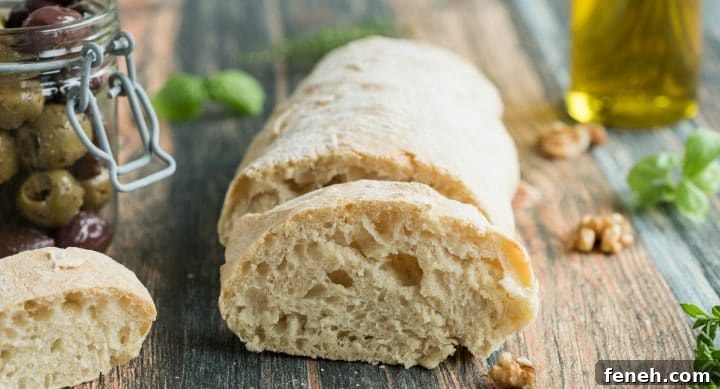
Remove from the oven and allow the bread to cool briefly. The ciabatta is perfect for lunch — sliced and served with butter, olive oil, as bruschetta, or alongside salad and soup.
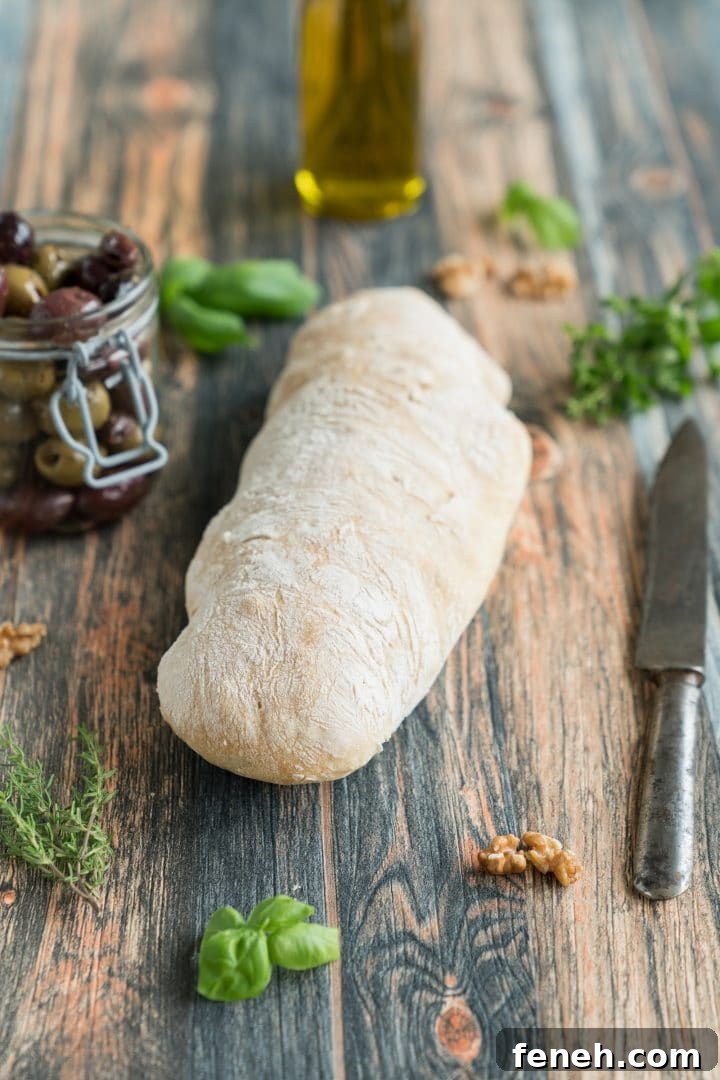
Top Tip
When shaping ciabatta, avoid kneading. The dough should remain loose and moist to develop those characteristic large, irregular holes. Use plenty of flour on your work surface and simply push the dough together to form two long loaves. The flour not only prevents sticking but also contributes to the rustic, artisan look. Bake at a high temperature for about 20 minutes to achieve a crisp crust and airy interior.
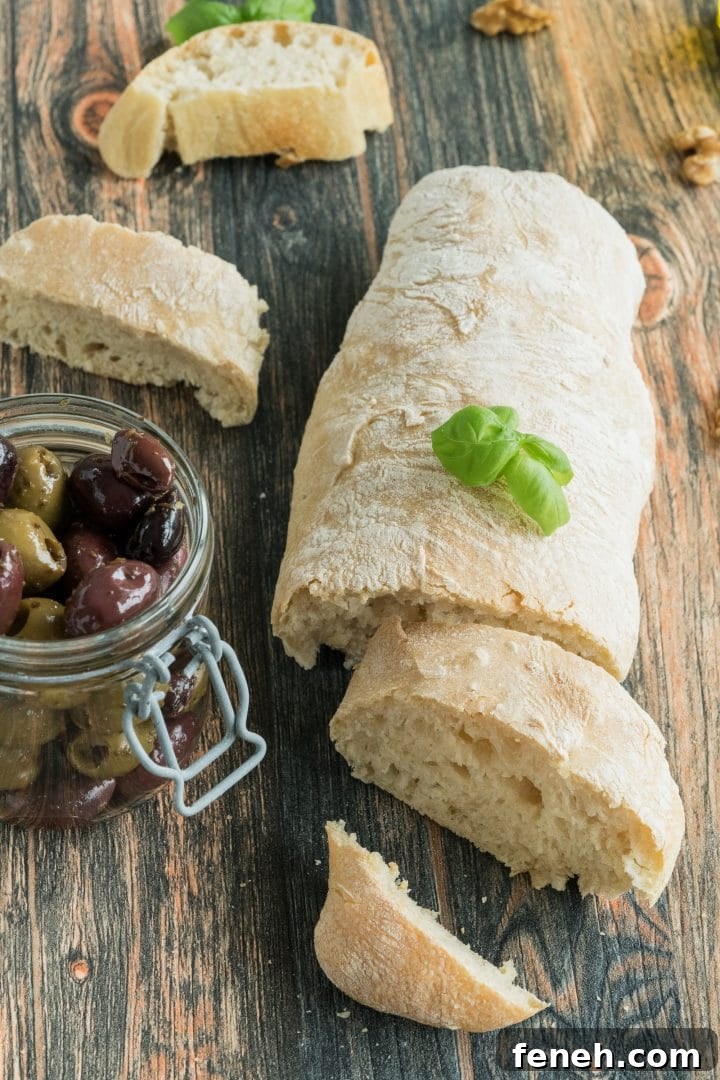
Recipe Card
Homemade Italian Ciabatta Bread
Ingredients
For the pre-dough
- 5 grams fresh yeast (0.2 oz)
- 125 ml lukewarm water (0.5 cups)
- 220 grams all-purpose flour (1.8 cups)
For the main dough
- 10 grams fresh yeast (0.4 oz)
- 220 ml lukewarm water (approx. 15 tablespoons)
- 280 grams all-purpose flour (2.2 cups)
- 3 tablespoons olive oil
- 2 teaspoons salt, or more to taste
- 1 pinch sugar
Instructions
- For the pre-dough: dissolve the yeast in lukewarm water, mix with the flour and knead briefly. Cover the bowl and let rise for about 16 hours (overnight).
- For the main dough: dissolve the yeast in water. Mix with sugar, flour, olive oil, salt and the pre-dough. Knead for 5–10 minutes. The dough will be moist. Cover and let rise at room temperature for 1–2 hours.
- Turn the dough onto a well-floured surface. Cut it in half and form two elongated loaves by gently pushing the dough together — do not knead. Place the loaves on a parchment-lined baking sheet and let rise for another hour.
- Preheat the oven to 230°C (450°F). Bake the ciabatta for 20–25 minutes until golden and crisp.
Notes
- Schedule: I usually make the pre-dough in the evening (around 5–6 pm), prepare the main dough the next morning and bake late morning so the bread is ready for lunch.
- Variations: Enhance the dough with chopped olives, walnuts, sun-dried tomatoes, fresh herbs or Italian spice blends to create flavored ciabatta.
- Storage: Ciabatta tastes best fresh, but you can freeze it. Reheat briefly in the oven to refresh the crust.
Ingredient substitutions
If you need substitutes, adjust yeast type (dry vs. fresh) using standard conversion ratios and feel free to swap a portion of all-purpose flour for bread flour for more structure.
Variations
The basic ciabatta dough adapts well to many flavors. Try adding chopped olives, sun-dried tomatoes, walnuts, or fresh herbs to the dough before the final rise. A touch of garlic, rosemary, or an Italian herb blend also works beautifully. These additions create interesting textures and flavors while keeping the classic airy crumb of ciabatta.
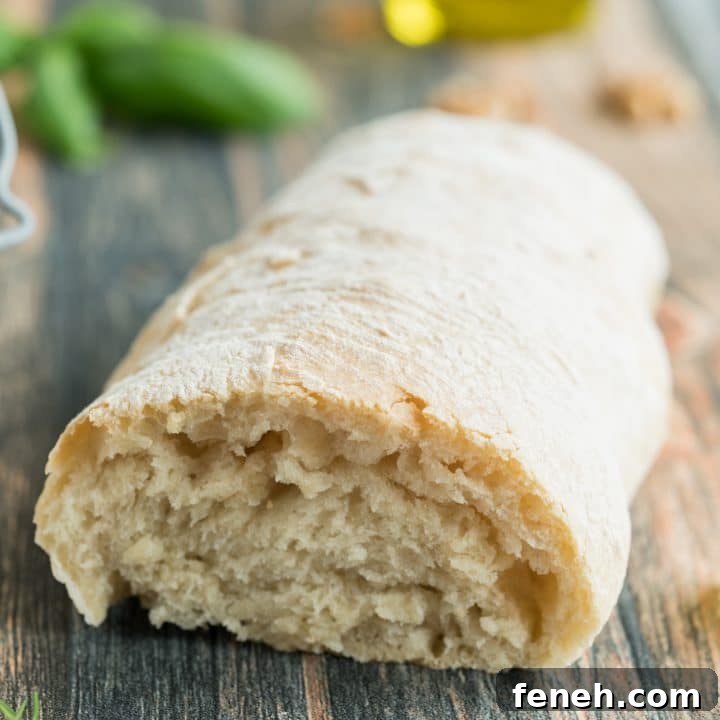
Enjoy baking — and buon appetito!